

Leica 3D Scanners – Precision and Reliability in Spatial Measurements
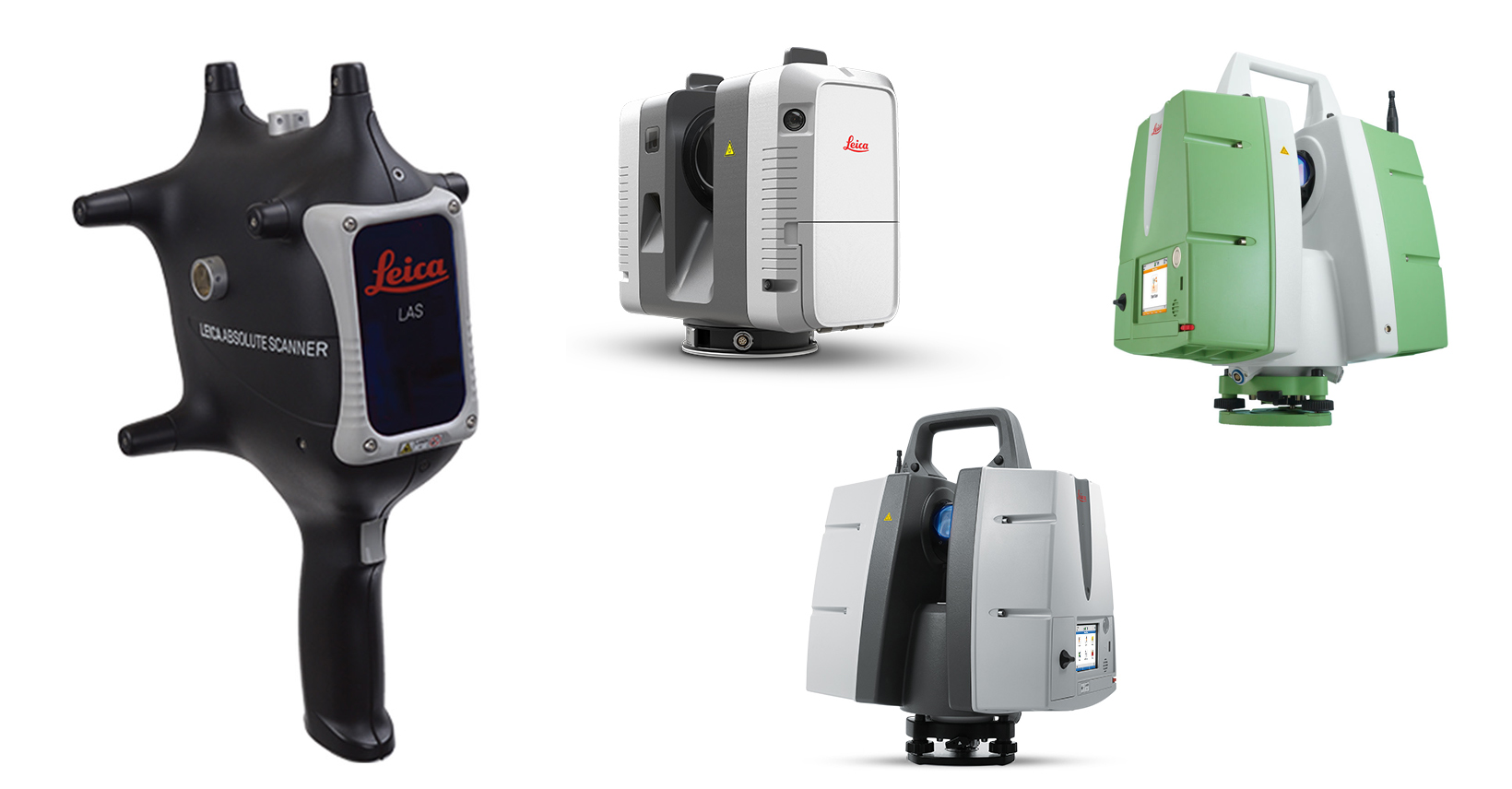

In today’s architecture, engineering, and construction industries, advanced measurement technologies are becoming essential. Among the most trusted tools on the market are Leica 3D laser scanners, which combine high precision, fast data capture, and reliability in various working conditions. These devices allow for efficient spatial data acquisition not only during design phases but also during as-built documentation, renovations, and facility management.
What Are Leica 3D Scanners?
Leica 3D laser scanners are high-end devices designed to capture the geometry of surroundings in the form of a point cloud — a collection of precisely measured points in 3D space. These datasets are used to create BIM models, technical documentation, investment planning, and quality control. Leica offers a broad range of scanners, each tailored for different distances, accuracy levels, and applications.
Why Choose Leica Scanners?
Leica Geosystems is one of the global leaders in measurement technology, renowned for its reliability, high precision, and innovative solutions. All 3D scanners from this brand are known for their robust construction, user-friendly operation, and seamless integration with advanced software such as Leica Cyclone, CloudWorx, or Autodesk ReCap. Leica also emphasizes process automation – most of its devices enable fast registration and merging of point clouds directly in the field, significantly reducing project turnaround time. Additionally, Leica scanners use LiDAR technology with geodetic accuracy, making them indispensable for both complex engineering projects and everyday tasks of architects and contractors.
Overview of Popular Leica Scanner Models
Leica RTC360
A compact and ultra-fast scanner ideal for both indoor and outdoor use. With automatic point cloud registration and a sophisticated position-tracking system, the RTC360 significantly reduces on-site scanning time.
Best used for:
- Building and interior documentation,
- BIM model preparation,
- Scanning of complex or hard-to-reach areas.
Leica BLK360
A lightweight, user-friendly scanner perfect for quick scans in small or confined spaces. The BLK360 is well suited for mobile professionals who require speed and simplicity without compromising on data quality.
Best used for:
- Room and apartment scanning,
- Architectural surveys,
- Conservation and heritage documentation.
Leica P40 / P50
Long-range, high-accuracy scanners used for large-scale industrial, infrastructure, and outdoor projects. Their robust performance makes them ideal for capturing massive structures with precision.
Best used for:
- Topographic surveys,
- Bridge and façade scanning,
- Structural monitoring and deformation analysis.
Leica C10 – Proven Classic in the Hands of ScanM2 Experts
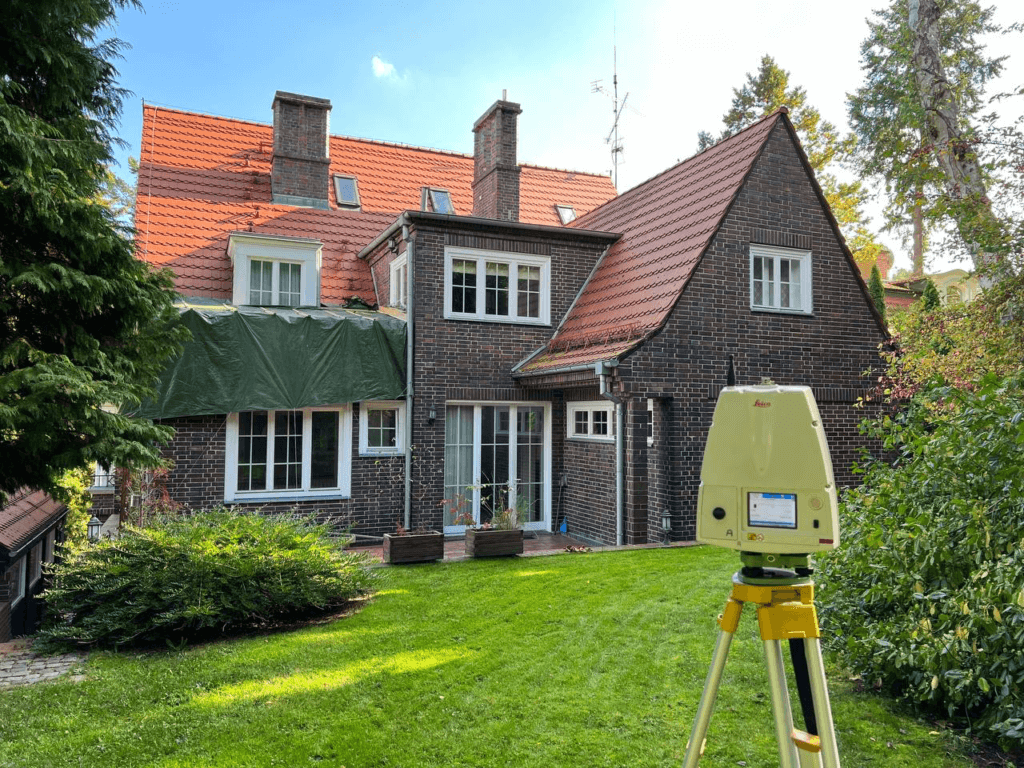
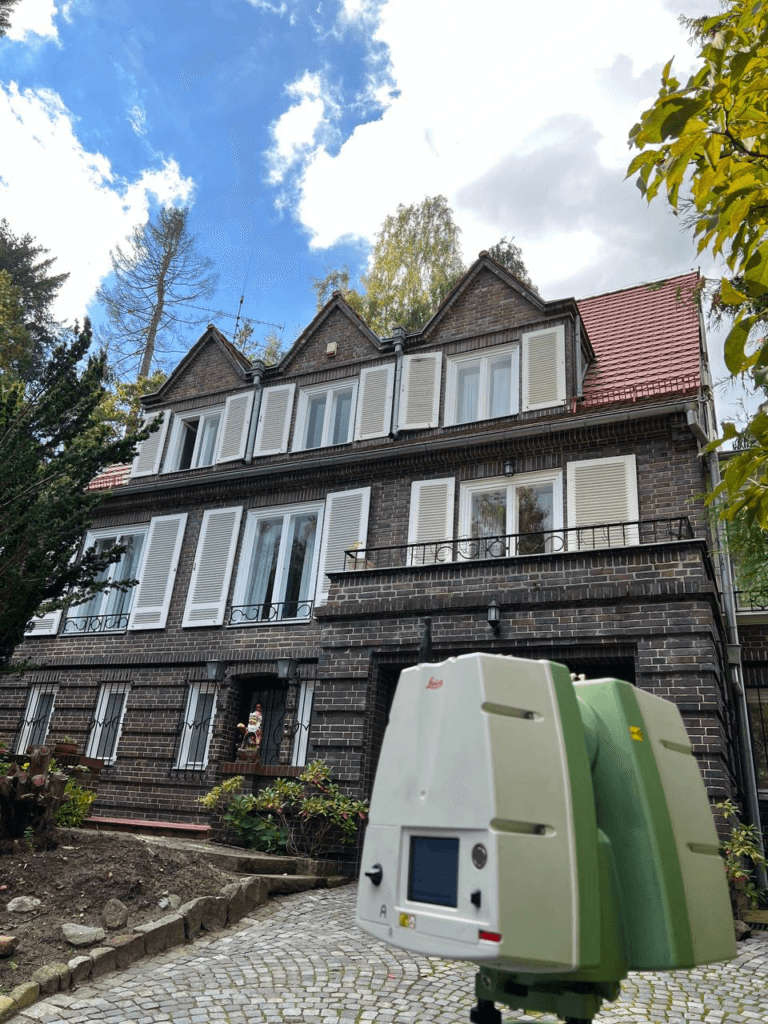
LEICA C10 SCANNING PROJECTS BY SCANM2 EXPERTS




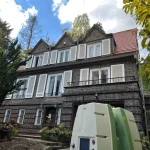
See Full Project in Our Portfolio →
Although many modern models have entered the market, the Leica C10 remains one of the most reliable tools in the ScanM2 arsenal. This stationary 3D laser scanner, with a range of up to 300 meters, excels in situations where measurement stability, precise geometry capture, and resilience to challenging conditions are essential – whether in tight interior spaces or large construction sites. Its robust design and high tolerance to variable lighting make the C10 an ideal choice for architectural documentation and façade surveys.
In ScanM2 projects, the Leica C10 is used for:
- surveying historical and post-industrial buildings, where there is no room for error,
- creating accurate BIM models for renovation and reconstruction projects,
- documenting internal installations with high precision – crucial for interior design and functional adaptations,
- preparing as-built documentation for commercial and public developments,
- conducting quality control in infrastructure projects,
- producing tender documentation and condition assessments in residential construction,
- supporting the modernization of industrial and technical facilities where high geometric detail is essential.
Thanks to the expertise of the ScanM2 team and a refined post-processing workflow, the data captured with the Leica C10 becomes a solid foundation for further modeling, clash detection, and design in software environments like Revit, Archicad, or AutoCAD.
Where Are Leica Scanners Used?
Leica 3D scanners are versatile and widely used across multiple industries—from architecture and engineering to industrial design and facility management.
| Application Area | Typical Uses |
| Architecture | As-built documentation, BIM model creation |
| MEP Engineering | Internal system modeling, clash detection |
| Industrial Environments | Equipment documentation, layout analysis |
| Heritage Conservation | Capturing architectural details of historical structures |
| Facility Management | Technical condition monitoring, digital twin updates |
Measurement Conditions – Flexibility in the Field
One of Leica’s key strengths is its flexibility to perform under various environmental conditions. Models such as the RTC360 and C10 can operate:
- Indoors, in residential, commercial, or industrial buildings,
- Outdoors, in direct sunlight, low light, or harsh weather,
- In confined or elevated areas requiring mobile and efficient solutions.
Thanks to these capabilities, Leica scanners are invaluable for both new construction documentation and the modernization of older structures, where precise as-built data is crucial.
Conclusion
Leica 3D laser scanners are indispensable tools for modern architectural, engineering, and surveying workflows. Their accuracy, speed, and adaptability make them ideal for nearly any spatial measurement challenge. For companies like Scan M2, using tested models such as the Leica C10 guarantees high-quality deliverables and effective collaboration with architects, engineers, and designers.
Want to learn how 3D scanning can elevate your project? Contact us to discover how we can support your next initiative with Leica scanning technology.

How 3D Laser Scanning Supports Construction Claims and Dispute Resolution
24.08.2026
Construction claims and disputes often arise when project participants disagree about what was actually built, when specific work was completed, whether installed elements match the ...

Point Cloud Cleaning Explained: How Scan Data Is Prepared for CAD and BIM
19.08.2026
3D laser scanning can capture millions or even billions of measurement points across an existing building, industrial facility, or construction site. However, the raw dataset ...

What Is an IFC Model and How Is It Used in BIM?
14.08.2026
Building Information Modeling projects often involve architects, structural engineers, MEP specialists, contractors, and building owners working with different software platforms. Exchanging information between these systems ...

How Existing Building Documentation Is Created Using 3D Laser Scanning
23.07.2026
From Reality Capture to Accurate CAD Drawings and BIM Models Accurate Existing Building Documentation is the foundation of every successful renovation, modernization and adaptive reuse ...

