

Heritage Surveying Services in the USA – Professional Historic Building Surveys and 3D Laser Scanning
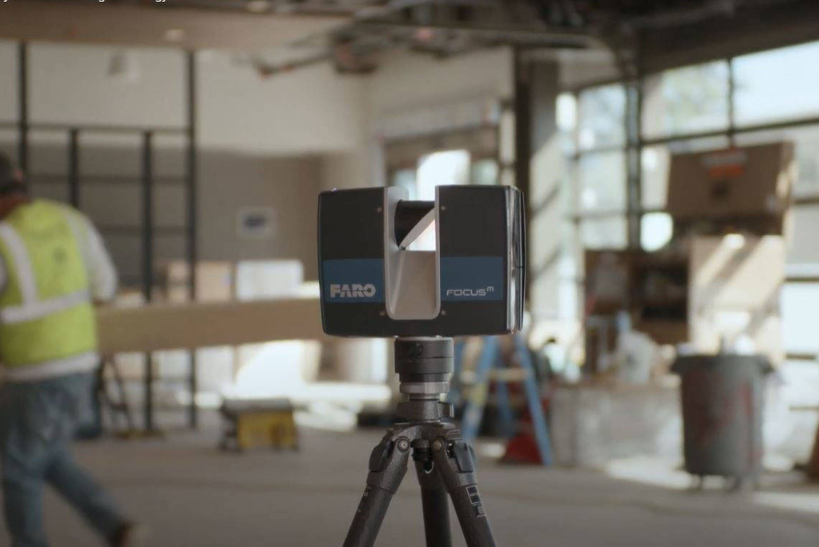
Preservation of historic and culturally significant buildings in the United States requires precise documentation, advanced measurement technologies, and a clear understanding of structural behavior. Heritage surveying combines architectural measurements, structural assessments, and digital capture techniques to record the true condition of historic assets. Today, 3D laser scanning, BIM modeling, and high-accuracy as-built documentation play a critical role in conservation, restoration, adaptive reuse, and long-term monitoring of heritage sites.onf
Heritage Surveying Services in the USA
Heritage survey companies and experts
A professional heritage survey company provides a full cycle of services: site inspection, material assessment, structural behavior analysis, point cloud capture, and heritage documentation. Experts follow strict preservation standards, ensuring accuracy within ±2 mm and delivering outputs in RVT, DWG, and IFC formats. This level of precision is essential for architects, conservation engineers, and restoration teams.
Heritage surveyor services near me
Local specialists help owners and municipalities perform detailed heritage surveyor services near me—including structural mapping, facade surveys, crack monitoring, and spatial deformation analysis. Local regulations and state-by-state preservation frameworks require surveyors familiar with regional compliance rules.
Professional heritage site survey services
A professional heritage surveyor USA investigates the structural, architectural, and material composition of historic sites. Services include heritage site survey services, dimensional verification, photogrammetry, risk identification, moisture mapping, and forensic assessment of aging materials.
Cost of Heritage Surveys in the United States
Factors influencing the cost of heritage surveys
The cost of heritage survey depends on several technical variables:
- Building size and structural complexity
- Degree of deterioration and accessibility
- Required accuracy and scanning density
- Deliverable formats (2D drawings, BIM, digital twins)
- Engineering analysis volume
According to AEC research, detailed heritage documentation projects involve 20–40% more measurement points than standard commercial surveys due to intricate geometry and architectural relief.
Average heritage survey costs in the USA
| Type of Heritage Site | Scope of Work Included | Typical Cost Range |
|---|---|---|
| Small heritage buildings | Baseline measured surveys, basic documentation, limited scanning positions | From $3,000 |
| Medium-sized historic structures | Full 3D laser scanning, measured surveys, elevations/sections, initial condition assessment | $8,000 – $25,000 |
| Complex monuments or multi-building heritage sites | High-density scanning, extensive BIM/as-built documentation, structural analysis, multi-phase work | $40,000+ |
These figures include heritage property survey USA deliverables such as point clouds, as-built drawings, and material condition reports.
Why investing in heritage property surveys saves money long-term
McKinsey studies show that early-stage accuracy reduces project overruns by up to 50%, while Autodesk states that using digital capture decreases rework by up to 70%. For heritage buildings, precise documentation prevents irreversible mistakes, structural failures, and incorrect restoration approaches.
Heritage and Historic Building Surveying
Heritage building surveyor role explained
A heritage building surveyor evaluates the geometry, structural state, materials, drainage patterns, facade integrity, and deformations. They document discrepancies between original plans and current conditions and support compliance with historic preservation standards.
Historic building surveys in the USA
A historic building survey USA includes laser scanning, crack pattern mapping, alignment checks, and mechanical system documentation. These surveys are essential for renovation permits, National Register restoration projects, and adaptive reuse initiatives.
Structural analysis and documentation of heritage sites
Heritage structure survey and analysis includes:
- Load-path identification
- Material degradation mapping
- Deformation tracking
- Anchoring and support system evaluation
- Historic fabric preservation assessment
Combined with historic site surveying and documentation, these deliverables form the technical baseline for preservation engineering.
Land and Structural Heritage Surveying
Heritage land surveying covers boundary surveys, topographic capture, utility mapping, and contextual landscape analysis around historic structures. These datasets support infrastructure planning and cultural landscape preservation.
Measured surveys for historic buildings
Measured surveys for historic buildings deliver precise floor plans, elevations, roof geometry, and structural sections. Accuracy of ±2 mm ensures reliable restoration and eliminates design conflicts.
Architectural surveys for heritage preservation
An architectural survey for heritage sites includes:
- Ornament detail mapping
- Dimensional recording of columns, vaults, arches
- Interior envelope documentation
- Deviation from verticality and settlement analysis
Heritage mapping and recording services
Heritage mapping and recording services create structured datasets to capture the architectural, cultural, and historical value of the site. These maps support future restoration, research, and long-term monitoring.
Heritage Documentation and 3D Laser Scanning
Heritage documentation services in the USA
Heritage documentation services USA include multi-format deliverables:
RVT for BIM workflows, DWG for 2D drawings, IFC for cross-platform exchanges.
Documentation follows HABS/HAER/HALS guidelines and preservation standards.
As-built documentation for heritage buildings
As-built documentation for heritage buildings establishes the exact geometry and structural state. It captures real deviations—cracks, settlement, misalignments—that standard documentation often overlooks.
Cultural heritage building documentation
Cultural heritage building documentation integrates historical references, photographic records, material analysis, and digital archives, ensuring a complete record for future generations.
3D laser scanning and digital preservation
Heritage 3D laser scanning USA is now the industry standard.
Benefits:
- Sub-millimeter precision
- Non-contact, safe data capture
- Complete geometry of complex historical details
- Compatibility with BIM and digital twins
Autodesk reports that 3D scanning improves documentation accuracy by up to 90%, especially in heritage environments.
Technical Comparison Table: Survey Methods
| Method | Accuracy | Best For | Limitations |
|---|---|---|---|
| 3D Laser Scanning | ±2 mm | Complex geometry, facades, interior details | Requires processing expertise |
| Photogrammetry | 5–10 mm | Ornament documentation, large exteriors | Less effective indoors |
| Manual Measuring | 20–30 mm | Simple areas | Not suitable for heritage precision |
| Total Station Survey | 2–5 mm | Structural grids, control points | Limited detail on surface geometry |
Case Example: 3D Laser Scanning and BIM for the Restoration of the National Museum of Ethnography
Detailed Restoration Documentation
The laser scanning and BIM process resulted in a set of comprehensive documents that were crucial for the restoration of the museum. The documentation included:
- Precise 2D Drawings: These drawings provided a clear blueprint for the restoration team, ensuring that every aspect of the building was accurately represented.
- Accurate 3D Model: The 3D model offered a detailed view of the museum, allowing for precise planning and execution of the restoration work.
- Millimeter-Level Accuracy: The entire documentation, from the 3D model to the 2D drawings, was accurate to within 1 millimeter, ensuring the highest level of detail.
National Museum of Ethnography


Professional Heritage Surveying Services
Preserve your historic building with engineering-grade accuracy.
We deliver complete heritage surveying solutions: 3D laser scanning, BIM documentation, structural analysis, and high-precision as-built data for restoration, compliance, and long-term preservation.
✔ Accuracy up to ±2 mm
✔ Deliverables in RVT, DWG, IFC
✔ Full heritage documentation (HABS/HAER/HALS)
✔ Experts in complex historic geometry and fragile materials
Need a precise heritage survey?
Reach out today for a technical consultation and project evaluation.
Conclusion
Heritage surveying is essential for preserving the architectural and cultural identity of the United States. High-precision measurements, structural analysis, and comprehensive documentation ensure safe restoration, accurate planning, and long-term conservation. With the integration of 3D laser scanning, BIM workflows, and advanced mapping techniques, heritage surveyors provide the accuracy and reliability needed to protect historic sites for future generations.

