

What Is BIM Management in Construction Projects
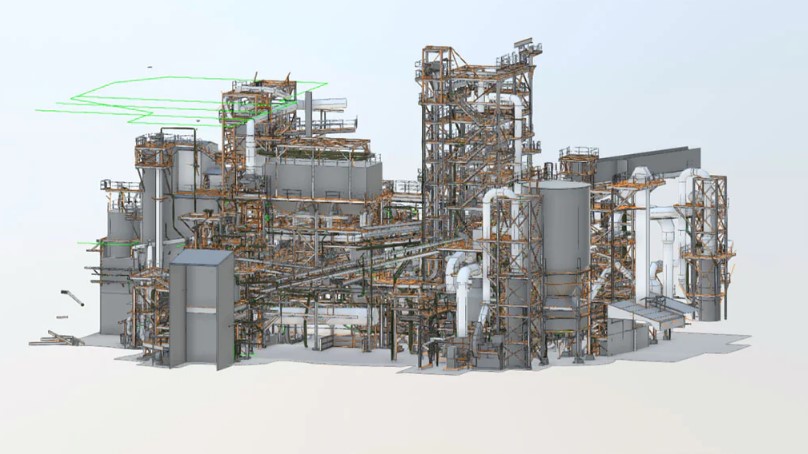

As construction projects become more complex, traditional document-based coordination is no longer sufficient. Multiple disciplines, large volumes of information, and tight schedules require a structured approach to managing digital data. This is where BIM management becomes essential.
BIM management focuses on how BIM models and related information are structured, coordinated, and controlled throughout the project lifecycle. Rather than concentrating only on 3D modeling, it establishes rules and workflows that ensure project teams work with accurate, consistent, and up-to-date data during design, construction, and delivery.
What Is BIM Management and Its Role in Construction
To understand BIM management, it is important to view it as a management framework, not a software feature. BIM management defines how building information is created, validated, shared, and maintained across all project stages. Unlike traditional CAD-based approaches, which primarily focus on drawing production
In construction projects, BIM management ensures that BIM information is:
- Created according to agreed standards
- Coordinated between architectural, structural, and MEP disciplines
- Controlled during design changes
- Accessible to the right stakeholders at the right time
By establishing clear BIM workflows and coordination rules, BIM management reduces conflicts between disciplines, improves planning reliability, and supports smoother construction execution.
Why BIM Management Matters in Real Construction Projects
In real-world projects, the absence of BIM management often leads to inconsistent models, outdated information, and coordination breakdowns. Design changes may not propagate correctly across disciplines, resulting in clashes, rework, and delays on site.
Effective BIM management helps prevent these issues by introducing control mechanisms that regulate how BIM information evolves throughout the project. This allows project teams to rely on BIM data not only for design coordination, but also for construction planning, progress tracking, and decision-making.
BIM Roles and Responsibilities in BIM Management
| BIM Role | Key Responsibilities | Relation to BIM Management |
| BIM Manager | Defines BIM standards, oversees coordination, controls BIM workflows | Core role in BIM management and BIM management systems |
| BIM Coordinator | Coordinates discipline models, resolves clashes | Supports BIM model management |
| Design Team | Creates and updates discipline models | Contributes to structured BIM information |
| Contractors | Use BIM data during construction | Applies BIM in construction workflows |
| Project Manager | Aligns BIM processes with project goals | Integrates BIM project management |
Clear role definition is critical for BIM management. Without it, responsibilities become blurred and BIM workflows lose consistency.
BIM Model Management vs BIM Data Management
Although closely related, BIM model management and BIM data management address different aspects of BIM management.

BIM model management focuses on the geometric and coordination side of BIM, including:
- Centralized model management
- Coordination between disciplines
- Version control and updates
- Maintaining aligned and usable models
BIM data management deals with non-graphical information embedded in BIM models, such as parameters, classifications, quantities, and technical attributes. Effective BIM data management ensures:
- Data consistency across models
- Structured information workflows
- Controlled updates during design and construction changes
Together, model and data management form the foundation of BIM management in construction projects, ensuring that both geometry and information remain reliable.
This relationship between model detail and effective information control is examined in BIM Level of Detail Explained: When More Detail Stops Adding Value , which highlights why excessive detail can reduce the efficiency of BIM management rather than support it.
BIM Management Systems in Construction Projects
A BIM management system provides the technical and organizational framework that supports BIM workflows throughout a construction project. Rather than replacing traditional project management tools, it complements them by focusing specifically on BIM information control and governance.
In construction projects, BIM management systems support:
- Centralized storage of BIM models and related data
- Controlled access based on project roles
- Version tracking, approvals, and auditability
- Structured BIM coordination across stakeholders
From an engineering perspective, BIM management systems act as a control layer between project teams and BIM data. They regulate how design updates are introduced and how construction feedback is incorporated into the BIM environment.
BIM Management vs Traditional Construction Management
| Aspect | Traditional Management | BIM Management |
| Information format | 2D drawings, documents | Structured BIM information |
| Data updates | Manual and fragmented | Centralized BIM workflows |
| Coordination | Meeting-based | Model-based coordination |
| Construction control | Reactive | BIM-based project control |
This shift allows construction teams to move from reactive problem-solving to proactive coordination based on reliable BIM data.
How BIM Management Supports Project and Construction Control
One of the key benefits of BIM management is its contribution to project control. Well-managed BIM information enables:
- Accurate quantities and schedules
- Better alignment between design changes and construction activities
- More reliable decision-making
During construction, BIM management ensures that contractors work with coordinated and current information, reducing on-site errors and supporting quality control.
Ultimately, BIM management in construction is not about technology alone. It is about establishing clear rules for managing BIM models and data so that digital information actively supports project delivery rather than creating confusion.
FAQ – Frequently Asked Questions
What is the main purpose of BIM management in construction projects?
The main purpose of BIM management is to ensure consistent control, coordination, and governance of BIM models and data across all project stages.
How does BIM management differ from BIM modeling?
BIM modeling focuses on creating discipline-specific models, while BIM management governs how those models and their data are coordinated, validated, and maintained.
What is the role of a BIM management system?
A BIM management system supports centralized data storage, acc
How does BIM management support construction-phase activities?
It ensures that construction teams use coordinated

