

Outdoor Laser Scanning: Precision Mapping for Modern Land and Infrastructure Projects


In recent years, outdoor laser scanning has become a cornerstone technology in modern surveying, construction, and infrastructure management. Whether you’re planning a new building, analyzing a road network, or updating a topographic map, 3D laser scanning allows you to capture the real-world environment with unmatched accuracy and speed.
What Is Outdoor Laser Scanning?
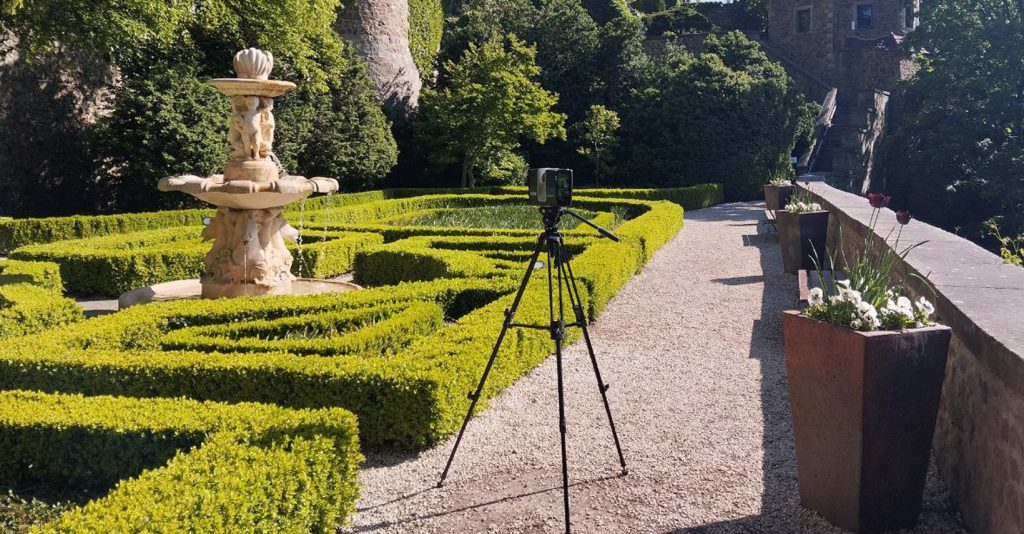
Outdoor laser scanning, also known as terrestrial laser scanning (TLS), is a non-contact method of collecting spatial data using high-precision laser beams. Mounted on tripods or mobile platforms, laser scanners emit rapid pulses of light that bounce off surrounding surfaces—like buildings, roads, vegetation, and terrain. The scanner records the time it takes for each pulse to return, generating a dense and highly accurate point cloud that represents the scanned environment in three dimensions.
Outdoor scanning is commonly used for:
- Topographic surveys
- Land development and construction
- Infrastructure maintenance and renovation
- 3D documentation of buildings and monuments
- Monitoring deformations and environmental changes
For a deeper dive, read our full guide: Everything You Need to Know About 3D Laser Scanning
How Outdoor Laser Scanning Works
The process of outdoor 3D laser scanning typically involves several key steps:
- Site preparation and scanning: Before scanning begins, proper preparation of the measurement area is essential. For greenfield sites, tall grass, shrubs, and other obstructions that may cover the ground surface must be removed, as they can hinder accurate measurements. 3D laser scanners capture only what is “visible”—which means ensuring maximum visibility of the surface is crucial, especially when documenting terrain features, technical infrastructure, or foundations. It’s also recommended to prepare reference points (e.g., target markers or GPS measurements) to facilitate accurate scan registration later on.
- Data Registration: Individual scans are aligned and merged into a single point cloud using reference targets or GPS data.
- Post-Processing: The data is cleaned, filtered, and converted into usable outputs such as 3D models, contour maps, cross-sections, or as-built documentation.
- Deliverables: The final outputs can include DWG, IFC, RVT, or PDF files compatible with AutoCAD, Revit, or GIS software.
Advantages of Outdoor Laser Scanning
1. High Precision
Laser scanning delivers millimeter-level accuracy, essential for planning, design, and structural analysis. Whether you’re evaluating terrain slope, mapping utility lines, or measuring facade deformation, precision is critical—and scanning delivers it reliably.
2. Comprehensive Data Collection
Unlike traditional surveying methods that collect discrete measurements, 3D scanning captures complete geometries. Every object within the scanner’s range—trees, utility poles, curbs, rooflines—is recorded. This dense data makes outdoor laser scanning ideal for complex sites or areas with limited documentation.
3. Faster Turnaround
Scans can be completed much faster than manual surveying, reducing time spent on-site and speeding up project workflows. The Scan M2 team, for example, typically delivers processed data within a few days of fieldwork.
4. Safety and Accessibility
Outdoor scanning minimizes the need for physical access to hazardous or difficult-to-reach areas. Elevated structures, highways, or construction zones can be captured without placing surveyors at risk.
5. Seamless Integration
Laser scanning results integrate smoothly into BIM, CAD, and GIS platforms, making them ideal for project documentation, design coordination, and as-built surveys.
Use Cases: Where Outdoor Scanning Excels
Urban Planning and Development
Cities and municipalities rely on 3D laser scanning to update base maps, monitor land use, and design public spaces. Outdoor scans capture road geometry, sidewalks, building facades, green areas, and utilities—creating a detailed geospatial database for long-term planning.
Infrastructure Projects
Highways, bridges, tunnels, and pipelines require accurate, up-to-date documentation for expansion, maintenance, or compliance. Outdoor scanning provides an efficient way to monitor wear, verify tolerances, and update as-built documentation.
Terrain and Land Surveys
From rural plots to mountainous terrain, topographic laser scanning is a powerful tool for engineers and developers. Digital elevation models (DEMs), terrain profiles, and contour lines can be extracted directly from the point cloud, enabling fast and detailed terrain analysis.
Heritage Preservation
Outdoor scanning is also used in preserving cultural heritage. Historical buildings, sculptures, and archaeological sites can be documented without physical contact—preserving their form digitally for future generations.
Sample Project: Outdoor Laser Scanning of a Residential Property
Scan M2 recently completed a comprehensive outdoor laser scanning project for a 1450 m² single-family residential plot located on sloped terrain. The scope included:
- 3D scanning of the house exterior and surrounding land
- Generation of a digital terrain model (DTM)
- 2D as-built plans for the house and garden
- As-built documentation for permitting and planning
- Final deliverables in DWG and Revit formats
This data provided the client with a detailed overview of the site for planned renovations and ensured accurate integration with future construction work.
What to Look for in an Outdoor Laser Scanning Provider
When choosing a laser scanning service, consider the following:
- Experience: Look for providers with a strong portfolio in outdoor and land survey applications.
- Technology: Ensure the company uses modern scanners (e.g., Leica, Faro, or Trimble) and processes data in reliable platforms like Revit or AutoCAD.
- Accuracy Standards: Professional providers follow local and international surveying standards (e.g., ISO or DIN).
- Data Security: Ensure secure file transfer and storage protocols, especially for sensitive projects.
- Flexible Deliverables: Look for output formats that fit your workflow—whether DWG, RVT, or GIS-compatible files.
FAQ
What is the accuracy of outdoor laser scanning?
How long does an outdoor scanning project take?
What file formats can I receive?
Is outdoor laser scanning safe for use in active construction zones?
Can outdoor scanning be used for sloped or uneven terrain?
Why Choose Scan M2?
Scan M2 offers end-to-end outdoor laser scanning services tailored to your project’s needs. Our team specializes in:
- High-accuracy 3D surveys for buildings and land
- Terrain mapping and volume calculations
- As-built documentation in Revit and AutoCAD
- Fast data delivery and transparent pricing
With years of experience across construction, infrastructure, and real estate projects, we ensure reliable results every time.
Contact Us
Need precise documentation for your outdoor project? Let’s talk. Contact Scan M2 today for a free consultation and discover how outdoor laser scanning can simplify your next land or construction project.

Reverse Engineering in the Automotive Industry: From a Classic Corvette to Electric Buses
25.04.2025
Reverse engineering is gaining increasing relevance in the automotive sector – from reconstructing unavailable parts to developing modern aerodynamic components and electrifying existing vehicles. Thanks to 3...

3D Scanning for Reverse Engineering and Technical Documentation
25.04.2025
Unlock Engineering Precision with Reverse Engineering Reverse engineering with 3D scanning is essential when original technical documentation is missing, incomplete, or outdated. At SCANM2, we ...

When Is Reverse Engineering Essential Applications and Benefits Across Industries
25.04.2025
Reverse engineering is the process of extracting technical and functional data from an existing physical object – without having access to the original design documentation. Using ...

Stages of the Reverse Engineering Process – from 3D Scanning to Final Product
11.04.2025
Reverse engineering is increasingly becoming a key component of modern production strategies, allowing companies to quickly and accurately recreate unavailable or obsolete components. Advanced 3D ...

