

3D Engineering Design Support Services for Construction and BIM Projects
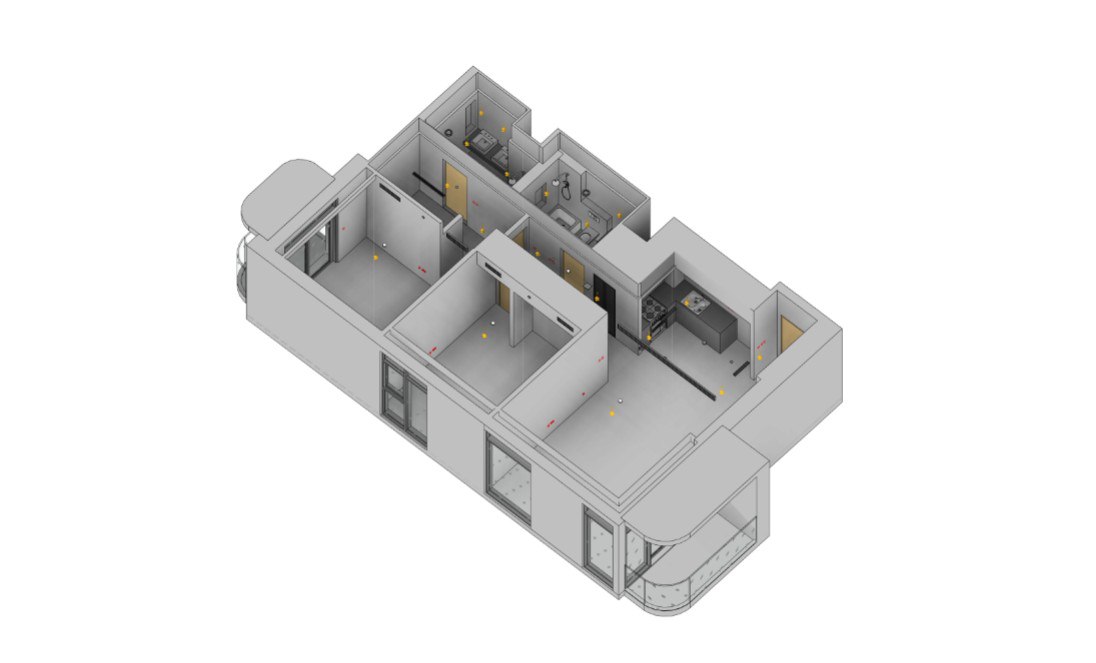
3d engineering design support services focus on producing technically accurate 3D models that support design development, coordination, and BIM implementation in construction projects. The service does not replace engineering responsibility but provides a reliable, coordination-ready 3D foundation used directly in BIM workflows, coordination reviews, and construction documentation.
Our 3d design engineering support is intended for AEC professionals, developers, and engineering teams working in environments where spatial accuracy, system coordination, and BIM readiness are essential. It bridges the gap between basic CAD drafting and licensed engineering by delivering technically structured models ready for BIM workflows.
Unlike conventional CAD production, 3d modeling for engineering is driven by construction logic, system relationships, and coordination requirements. Models are developed with clear consideration of their use in clash detection, coordination reviews, and construction documentation.
What Are 3D Engineering Design Support Services
3D engineering design support services represent a technical modeling discipline focused on transforming design intent and source data into coordinated, engineering-oriented 3D geometry. The emphasis is placed on accuracy, consistency, and usability within BIM-based project environments rather than on conceptual or visual design.
In construction and engineering workflows, 3d models engineering function as a shared technical reference that supports coordination between disciplines, spatial validation, and constructability analysis. These models are structured to align with engineering processes while remaining independent from licensed engineering calculations and approvals.
The key distinction between engineering design support and licensed engineering lies in scope. Support services deliver geometry and coordination-ready models, while licensed engineers remain responsible for analysis, compliance, and regulatory sign-off.
Table 1: 3D CAD Drafting vs 3D Engineering Design Support vs Licensed Engineering
| Parameter | 3D CAD Drafting | 3D Engineering Design Support | Licensed Engineering |
|---|---|---|---|
| Purpose | Drafting and visualization | Engineering coordination and BIM support | Design approval and compliance |
| Focus | Geometry representation | Constructability and coordination | Calculations and regulations |
| BIM readiness | Limited | High | Varies |
| Use in construction | Indirect | Direct | Direct |
| Responsibility | Drafting accuracy | Technical coordination | Legal and regulatory |
| Output formats | DWG | RVT / IFC / DWG | Project-specific |
When 3D Engineering Design Support Is Required
3D engineering design support becomes essential in projects where spatial complexity, data reliability, and coordination requirements exceed the capabilities of standard drafting workflows. These conditions are common in modern construction environments where multiple disciplines operate within shared BIM models.
Typical scenarios where this service is required include:
- Complex construction projects involving tightly coordinated systems
- Renovation and retrofit projects with incomplete or outdated documentation
- Multidisciplinary coordination environments with architectural, structural, and MEP overlap
- Projects developed from laser scanning or verified as-built conditions
In such cases, 3d cad models engineering enable the structured translation of raw or fragmented data into engineering-ready geometry suitable for coordinated BIM use.
What You Get from 3D Engineering Design Support
- Engineering-grade 3D geometry…
- Models aligned with constructability…
- Reliable inputs for clash detection…
- Consistent geometry across disciplines…
- Outputs ready for BIM workflows
Our 3D Engineering Design Support Capabilities
ScanM2 provides engineering design support services that are structured around practical project needs rather than abstract modeling tasks, delivering engineering-grade 3D modeling for BIM coordination and construction workflows. Each model is developed with a clear understanding of how it will be used during coordination, documentation, and construction planning.
Our capabilities include:
- Engineering-oriented 3D modeling focused on constructability
- Design development support aligned with technical requirements
- Technical coordination between architectural, structural, and MEP disciplines
- Preparation of clash-aware models for coordinated BIM environments
- Creation of BIM-ready engineering geometry
- Support for construction documentation and coordinated layouts
All services are delivered with a focus on technical clarity and coordination efficiency.
3D Engineering Design Support in BIM Workflows

Within BIM-based projects, 3d engineering design support serves as a connecting layer between source data, design intent, and coordinated project models. The service is designed to integrate seamlessly into established BIM workflows without disrupting existing engineering responsibilities.
Our support services contribute to:
- Scan to BIM project pipelines
- Point cloud–based engineering modeling
- BIM coordination and model validation processes
- Accurate representation of design intent within shared models
According to Autodesk, BIM-based coordination can reduce design-related rework by up to 40%, significantly improving construction efficiency and data reliability across project teams.
The resulting models support coordination reviews, issue resolution, and integration with cad to bim modeling services, construction documentation, and planning activities.
Table 2: Role of 3D Engineering Design Support in BIM Projects
| BIM Task | Without Engineering Design Support | With Engineering Design Support |
|---|---|---|
| Coordination | Fragmented | Centralized |
| Clash detection | Reactive | Proactive |
| Design updates | Manual | Structured |
| Data reuse | Limited | High |
| Construction readiness | Low | High |
Supported Disciplines and Systems
Effective engineering design support requires a multidisciplinary perspective. ScanM2 delivers coordinated modeling services across key building and infrastructure systems to ensure consistent spatial and technical alignment.
Supported disciplines include:
- Structural design support for load-bearing and framing systems
- Architectural design support for spatial and envelope coordination
- MEP systems coordination with emphasis on clearance and routing
- Industrial and technical layouts for complex facilities

This approach ensures that 3d models engineering accurately represent interactions between systems within a unified model environment.
Deliverables and Formats
Deliverables are prepared to support engineering coordination, BIM integration, and construction documentation. Each output is structured according to project-specific requirements and intended use cases.
Typical deliverables include:
- BIM models with LOD defined by project scope
- Coordinated 3D models for interdisciplinary coordination
- CAD drawings generated from validated engineering models
- Engineering-ready geometry suitable for construction documentation
Supported formats include:
- RVT
- IFC
- DWG
All deliverables comply with agreed BIM standards and coordination protocols.
Accuracy, Standards, and Data Sources
Accuracy and data reliability are fundamental to effective 3D engineering design support. ScanM2 applies controlled modeling practices to ensure that geometry is suitable for coordination and downstream use.
Key principles include:
- Use of point cloud data derived from laser scanning
- Defined tolerance ranges based on project objectives
- Alignment with BIM coordination standards
- Geometry structured for clash detection and validation
These principles ensure consistent, reliable, and coordination-ready engineering models.
Industry studies show that coordinated BIM models can reduce clash-related RFIs by up to 50%, especially in projects involving complex MEP and structural systems.
How 3D Engineering Design Support Integrates with ScanM2 Services
3D engineering design support is designed to operate as part of SCANM2’s integrated service ecosystem. It is commonly combined with:
This integration enables the delivery of reality-based, coordinated engineering models that support design development and construction workflows.
Why Choose ScanM2 for 3D Engineering Design Support
ScanM2 is selected for projects that require technical rigor and coordination reliability rather than generic modeling output.
Key reasons include:
- Engineering-first modeling methodology
- Experience with coordination-intensive and complex geometry projects
- Reality-based data as the foundation for modeling
- Deliverables structured for BIM coordination and construction use
McKinsey reports that poor coordination and design inconsistencies account for up to 30% of construction cost overruns, highlighting the importance of coordinated engineering-ready 3D models.
Our 3d design engineering support is focused on practical application within real project environments.
FAQ
What is the difference between 3D CAD design and 3D engineering design support?
Does this service replace licensed engineering?
What types of projects use 3D engineering design support?
Can 3D engineering design support be combined with Scan to BIM?
Request 3D Engineering Design Support for Your Project
Contact ScanM2 to request professional 3d engineering design support aligned with your BIM coordination and construction requirements.

How 3D Laser Scanning Measures Floor Flatness and Levelness
22.09.2026
Floor flatness and levelness can directly affect equipment installation, racking systems, automated material handling, production lines, flooring systems, and other construction activities that depend on ...

How 3D Laser Scanning Supports Construction Claims and Dispute Resolution
24.08.2026
Construction claims and disputes often arise when project participants disagree about what was actually built, when specific work was completed, whether installed elements match the ...

Point Cloud Cleaning Explained: How Scan Data Is Prepared for CAD and BIM
19.08.2026
3D laser scanning can capture millions or even billions of measurement points across an existing building, industrial facility, or construction site. However, the raw dataset ...

How Existing Building Documentation Is Created Using 3D Laser Scanning
23.07.2026
From Reality Capture to Accurate CAD Drawings and BIM Models Accurate Existing Building Documentation is the foundation of every successful renovation, modernization and adaptive reuse ...

