

How Point Clouds Improve HVAC and Electrical BIM Coordination
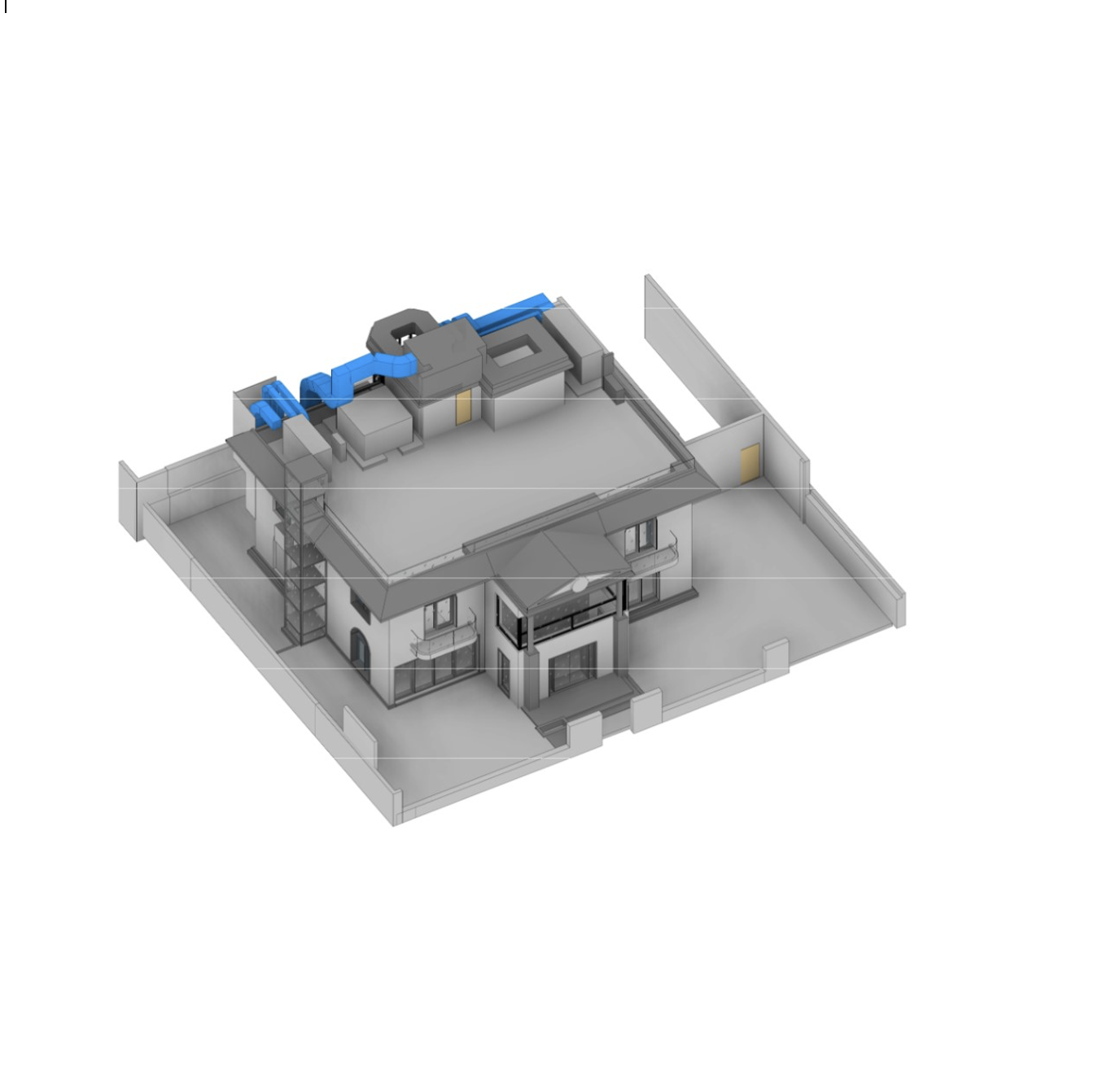

HVAC and electrical system coordination becomes significantly more reliable when design teams work from verified field data rather than assumptions. In renovation and retrofit environments, integrating point cloud data into BIM workflows reduces uncertainty, strengthens clash detection, and prevents costly site conflicts.
Modern 3D laser scanning services capture millions of spatial data points that represent actual building geometry. When this data is used correctly inside BIM environments, it strengthens coordination between ductwork, cable trays, conduits, and structural elements — without relying on outdated drawings.
Why HVAC and Electrical Coordination Is Challenging in Existing Buildings

Unlike new construction, existing facilities rarely match their original drawings. Over time, undocumented modifications, rerouted electrical systems, and mechanical upgrades create discrepancies between design intent and reality.
For commercial HVAC coordination in operational buildings, common challenges include:
- Unknown ceiling plenum congestion
- Structural deviations from plans
- Previously rerouted conduits and cable trays
- Limited clearance around existing ductwork
- Inaccurate as-built documentation
In renovation projects, coordinating HVAC systems in renovation projects becomes particularly complex when new mechanical systems must integrate with existing electrical infrastructure.
Without verified site data, even small dimensional errors can lead to major HVAC clash detection issues and electrical routing conflicts during installation.
Common Clash Issues Between Ductwork and Electrical Systems
Clashes between ductwork and electrical systems are among the most frequent coordination problems in retrofit MEP coordination projects.
Typical issues include:
- Ductwork intersecting cable trays
- Conduits running through mechanical clearances
- Electrical panels blocking maintenance access to air handling units
- Insufficient vertical clearance for large ducts
- Conflicts between sprinkler lines, ducts, and electrical trays
Traditional 2D documentation often fails to reveal these spatial conflicts. Even in 3D modeling environments, assumptions about existing conditions can lead to inaccurate ductwork clash detection results.
Electrical system clash detection in BIM becomes much more accurate when the coordination model reflects real-world geometry rather than estimated dimensions.
Using Point Cloud Data to Improve HVAC BIM Coordination

Point cloud for HVAC workflows begin with high-density site capture using laser scanning technology. The collected data must then go through a structured point cloud registration process to align and merge multiple scans into a unified, spatially accurate dataset.
Once properly registered, the point cloud becomes a geometric reference inside the BIM environment. Engineers can:
- Validate existing duct locations
- Confirm ceiling heights and beam depths
- Detect structural deviations
- Measure real clearances before routing new systems
- Improve HVAC clash detection accuracy
This scan-based MEP coordination approach ensures that new mechanical systems are designed around actual conditions, not assumptions. Instead of modeling ductwork based on outdated drawings, teams model directly against verified spatial data.
For MEP coordination in existing buildings, this significantly reduces design uncertainty and improves interdisciplinary collaboration.
Electrical System Routing and Clearance Validation in BIM
Electrical BIM coordination benefits equally from point cloud integration. When routing conduits, cable trays, and feeders through congested spaces, even minor dimensional inaccuracies can create installation conflicts.
Using point cloud for electrical systems allows teams to:
- Validate routing paths before fabrication
- Confirm equipment placement against real wall conditions
- Check headroom and clearance compliance
- Coordinate electrical panels with mechanical systems
- Prevent interference with existing utilities
Electrical routing validation becomes especially important in commercial retrofit projects where downtime must be minimized.
By integrating point cloud data, electrical system clash detection in BIM moves from theoretical to reality-based coordination. This is particularly valuable when multiple trades must share limited ceiling and riser space.
This approach significantly improves MEP coordination in complex renovation environments where mechanical and electrical systems overlap.
Reducing Rework in Commercial Retrofit Projects
Rework is one of the largest hidden costs in commercial HVAC coordination projects. Field modifications due to unforeseen clashes increase labor, delay schedules, and strain budgets.
How point clouds improve HVAC coordination becomes most evident during installation:
- Fewer change orders
- Reduced on-site adjustments
- More accurate prefabrication
- Better fit for large duct sections
- Improved coordination between trades
When ductwork clash detection is performed against actual site geometry, fabrication errors decrease. Electrical routing validation becomes more predictable, reducing costly reinstallation.
In retrofit MEP coordination, the ability to simulate system integration using verified geometry directly lowers risk.
When Accurate Existing Condition Data Becomes Critical
There are scenarios where relying on drawings is simply too risky:
- Hospital renovations
- Data centers
- Industrial facilities
- High-rise tenant improvements
- Congested mechanical rooms
In these cases, accurate verification of existing conditions is not optional — it is essential. Without accurate as-built documentation, HVAC and electrical upgrades may result in cascading coordination failures.
Laser scanning for HVAC systems provides reliable dimensional control. It supports as-built MEP documentation that reflects actual field conditions rather than theoretical layouts.
When integrating new systems into legacy infrastructure, scan-based MEP coordination becomes a risk mitigation strategy rather than a design enhancement.
Choosing Professional Scan-to-BIM Support for MEP Coordination
Effective HVAC BIM coordination and electrical BIM coordination require more than raw scan data. The value lies in how point clouds are processed, registered, interpreted, and integrated into structured BIM workflows.
Key considerations when evaluating technical support include:
- Registration accuracy
- Modeling tolerance standards
- MEP system experience
- Clash detection methodology
- Understanding of retrofit MEP coordination challenges
The goal is not simply converting scans into models, but enabling informed design decisions. When used strategically, point cloud data strengthens collaboration between mechanical and electrical teams, improves ductwork clash detection, enhances electrical routing validation, and reduces field risk.
In renovation and commercial upgrade projects, accurate spatial intelligence becomes the foundation for efficient HVAC and electrical coordination — transforming uncertainty into controlled, data-driven execution.
FAQ
How do point clouds improve HVAC BIM coordination?
Why is point cloud data important for electrical BIM coordination?
What types of clashes can point clouds help prevent?
How does laser scanning support MEP coordination in existing buildings?

How 3D Laser Scanning Supports Construction Claims and Dispute Resolution
24.08.2026
Construction claims and disputes often arise when project participants disagree about what was actually built, when specific work was completed, whether installed elements match the ...

Point Cloud Cleaning Explained: How Scan Data Is Prepared for CAD and BIM
19.08.2026
3D laser scanning can capture millions or even billions of measurement points across an existing building, industrial facility, or construction site. However, the raw dataset ...

What Is an IFC Model and How Is It Used in BIM?
14.08.2026
Building Information Modeling projects often involve architects, structural engineers, MEP specialists, contractors, and building owners working with different software platforms. Exchanging information between these systems ...

How Existing Building Documentation Is Created Using 3D Laser Scanning
23.07.2026
From Reality Capture to Accurate CAD Drawings and BIM Models Accurate Existing Building Documentation is the foundation of every successful renovation, modernization and adaptive reuse ...

