

Point Cloud Processing for Machine Building Enterprises
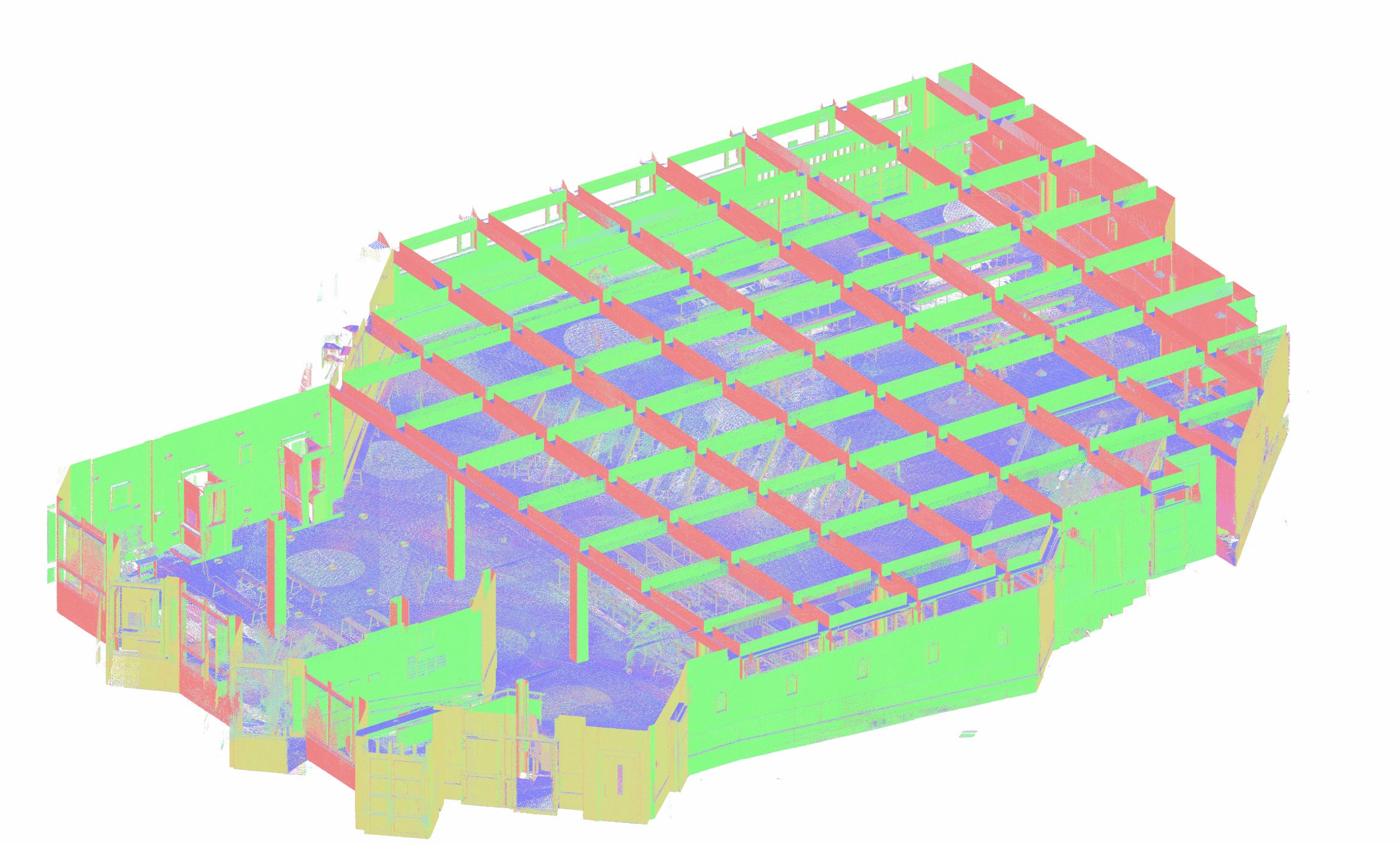
Point cloud processing for machine building enterprises transforms raw laser scanning data into structured, engineering-ready datasets used in industrial modernization and production planning. In manufacturing environments, accurate processing is essential for documenting production lines, equipment layouts, and workshop configurations.
Processed point cloud data provides a reliable basis for engineering, reconstruction, and modernization projects. It supports layout validation, equipment integration, and upgrade planning within active production environments.
The quality of processing directly depends on accurate source data obtained through 3D laser scanning services for industrial facilities, which provide high-resolution spatial capture of equipment, structures, and production lines.
Contact Us Now for a Free Consultation!
Data Processing Workflow for Machine Building Facilities
Raw point cloud data collected from manufacturing sites contains noise, overlaps, and inconsistencies caused by reflective metal surfaces, moving machinery, and occlusions within tight production zones. Processing this data requires a structured workflow tailored to machine building environments.
This data is typically generated within integrated workflows such as scan to BIM services for manufacturing facilities, where scanning and processing are combined into a unified pipeline for engineering applications.
The first stage is point cloud registration, where multiple scans are aligned into a unified coordinate system. In machine building plants, this step must account for long production lines, repetitive geometries, and limited reference points in workshop areas.
Following registration, the dataset undergoes cleaning and filtering. This includes removal of noise caused by reflective steel surfaces, filtering out temporary objects such as operators or moving components, and isolating stable structural and equipment elements.
The next stage is segmentation, where the point cloud is divided into logical zones. In machine building enterprises, segmentation is typically performed by:
- production lines
- assembly stations
- machining zones
- robotic cells
- utility systems
This structured segmentation allows engineers to work with specific areas independently without overloading CAD or BIM environments.
Industry-Specific Challenges in Machine Building
Machine building enterprises present several technical challenges that directly affect point cloud processing quality and methodology.
One of the key complexities is the presence of CNC machining centers and multi-axis equipment, which include intricate geometries and dense assemblies. Capturing and processing these elements requires high-resolution datasets and careful noise filtering to preserve critical dimensions.
Another important factor is conveyor systems and automated transfer lines, which often span large distances across workshops. These systems introduce alignment challenges during registration due to repetitive structural elements and minimal geometric variation.
Additionally, robotic welding cells and enclosed production modules create occlusions, limiting visibility during scanning. Processing must compensate for missing data by combining multiple scan positions and ensuring continuity of geometry.
Machine building facilities also frequently include overhead crane systems, which add vertical complexity and require accurate spatial referencing for safe operation planning and clearance analysis.
Engineering Applications of Processed Point Clouds
Processed point cloud datasets are used across multiple engineering tasks within machine building enterprises.
One of the primary applications is factory layout documentation, where the processed data reflects actual equipment positions, clearances, and spatial relationships. This enables accurate planning of equipment relocation or installation of new production lines.
Point cloud processing is also essential for equipment geometry extraction. Engineers can derive precise dimensions of existing machinery, foundations, and support structures, which is critical when integrating new equipment into legacy environments.
For modernization projects, processed datasets support retrofit planning by providing measurable existing conditions. This reduces the risk of clashes during installation and minimizes downtime in active production facilities.
Another important use case is preparation for CAD and BIM workflows. Cleaned and segmented point clouds serve as a reference for developing detailed engineering models, ensuring that digital representations match real-world conditions.
Point Cloud Processing for Production Line Upgrades
Production lines in machine building plants are frequently reconfigured to accommodate new products or improve efficiency. Point cloud processing enables accurate assessment of existing layouts before implementing changes.
By working with a segmented and engineering-ready point cloud, engineers can:
- evaluate available space for new machinery
- analyze clearances between equipment
- verify alignment of conveyor systems
- detect deviations in installed components
This approach significantly reduces uncertainties during design and installation phases.
Integration with BIM and Digital Engineering
Processed point clouds are commonly used as input data for BIM and digital engineering environments. In machine building enterprises, this integration supports coordinated design and planning across multiple disciplines.
Point cloud preparation for BIM includes:
- alignment with project coordinate systems
- classification of elements (equipment, structures, utilities)
- optimization of data density for modeling purposes
The resulting dataset allows BIM teams to develop accurate models of workshops, production lines, and equipment zones without relying on outdated drawings.
Benefits for Machine Building Enterprises
Point cloud processing provides measurable benefits for industrial facilities focused on machinery production and assembly.
First, it ensures accurate representation of existing conditions, eliminating discrepancies between documentation and reality.
Second, it improves engineering reliability by providing precise spatial data for decision-making during upgrades and реконструкция.
Third, it supports efficient project execution, reducing rework and minimizing disruptions in active production environments.
Finally, processed datasets create a consistent digital foundation for long-term facility management and future modernization initiatives.
FAQ
What is point cloud processing for machine building enterprises?
Point cloud processing is the transformation of raw laser scanning data into structured datasets that represent actual factory conditions. In machine building, it is used to document production lines, equipment, and workshop layouts with high accuracy.
How is processed point cloud data used in engineering projects?
Processed datasets are used for layout validation, equipment integration, retrofit planning, and preparation of CAD and BIM models. They provide measurable existing conditions for accurate engineering decisions.
Can point cloud processing support factory modernization?
Yes. It allows engineers to assess current layouts, detect spatial constraints, and plan upgrades with reduced risk of clashes or installation errors.
How does it integrate with BIM workflows?
Processed point clouds are aligned, cleaned, and segmented to serve as a reference for BIM modeling. This ensures that digital models accurately reflect real-world conditions.

