

Reverse Engineering for Open-pit quarries
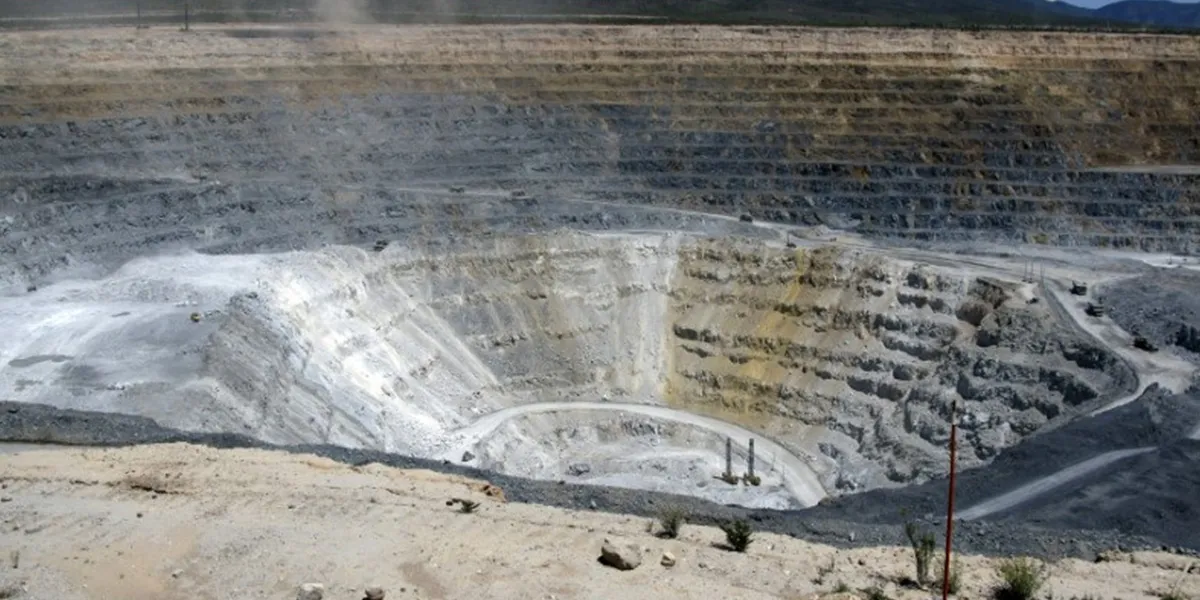
Reverse engineering for quarry equipment is a specialized discipline focused on reconstructing accurate digital representations of machinery and components used in open pit quarry and open pit mining facility environments. Unlike standard industrial assets, quarry machinery operates under continuous abrasive loads, exposure to dust, vibration, and dynamic terrain conditions, which significantly accelerate wear and complicate documentation maintenance.
Many operators of quarry plant and mining site infrastructure face incomplete or outdated technical documentation, especially for legacy equipment such as crushers, conveyor systems, and bucket wheel excavators. In such cases, reverse engineering provides a structured method to recreate geometry, assemblies, and functional relationships for maintenance, modernization, or duplication.
Our approach to reverse engineering quarry equipment combines high-resolution data capture, advanced geometry reconstruction, and engineering validation to support reliable operation and lifecycle extension within active quarry operations.
Contact Us Now for a Free Consultation!
When Reverse Engineering is Required in Quarry Operations
Reverse engineering becomes critical when existing engineering data is unavailable, inaccurate, or no longer reflects the actual condition of machinery operating in a quarry infrastructure environment.
Typical scenarios include:
- Absence of original CAD drawings for imported or legacy mining machinery
- Structural deformation of equipment due to long-term loading in open pit quarry conditions
- Component wear in crushers, feeders, and conveyor transfer points
- Retrofit or upgrade projects within an operating quarry plant
- Integration of new systems into existing mining site infrastructure
- Emergency replacement of critical components with no available documentation
In these cases, reverse engineering mining equipment ensures that reconstructed models reflect real-world conditions rather than outdated design assumptions.
Data Acquisition: Capturing Real Geometry in Harsh Environments
The first stage of reverse engineering quarry machinery involves precise data capture of physical assets. Due to the scale and operational constraints of open pit mining facility environments, this process requires non-contact, high-speed measurement technologies.
We typically use 3D Laser Scanning to capture detailed spatial data of equipment directly in the field. This method allows accurate documentation of:
- Large-scale crushing units (jaw crushers, cone crushers)
- Conveyor systems with variable alignment and sag
- Transfer stations and chutes affected by material flow erosion
- Stacker-reclaimers and radial stackers
- Steel support structures integrated into quarry infrastructure
Laser scanning is particularly effective in quarry environments where direct measurement is limited by accessibility, safety constraints, or ongoing operations.
Captured data is then processed through Point Cloud Processing workflows to remove noise caused by dust, vibration, and reflective surfaces common in quarry conditions.
Geometry Reconstruction and CAD Modeling
Once scan data is processed, the reverse engineering workflow proceeds to geometry reconstruction. This stage involves converting raw point cloud data into structured 3D models suitable for engineering use.
Through advanced Reverse Engineering techniques, we reconstruct:
- Parametric CAD models of mechanical components
- Surface models of worn or deformed parts
- Assembly-level models reflecting real installation conditions
- Interfaces between machinery and mining site infrastructure

Particular attention is given to components subject to high wear, such as:
- Crusher liners and concaves
- Conveyor idlers and pulley systems
- Chute geometries affected by abrasive material flow
- Dust suppression system housings
In quarry machinery reverse engineering, the goal is not only geometric accuracy but also functional fidelity — ensuring that reconstructed models reflect actual operational behavior.
Integration into Digital Engineering Workflows
Reconstructed models are often integrated into broader digital environments to support engineering and operational decision-making.
Using Scan to BIM methodologies, reverse-engineered assets can be embedded into coordinated models of the entire quarry plant.

This enables:
- Clash detection between new and existing equipment
- Planning of equipment relocation or expansion within quarry infrastructure
- Coordination of maintenance shutdowns
- Visualization of equipment interactions across the open pit quarry
For larger facilities, BIM Modeling provides a structured framework for managing reconstructed data alongside civil, structural, and process systems.
This integration is particularly valuable for modernization projects where legacy machinery must coexist with new installations.
Engineering Validation and Functional Analysis
Reverse engineering mining machinery is not limited to geometry reconstruction. Engineering validation is a critical step to ensure that reconstructed models can be used reliably for manufacturing, repair, or optimization.
This includes:
- Dimensional verification against critical tolerances
- Alignment analysis for rotating equipment
- Evaluation of wear patterns in material handling systems
- Structural assessment of load-bearing components within quarry operations
For example, conveyor systems in an open pit mining facility often experience misalignment due to ground settlement. Reverse engineering allows accurate modeling of these deviations, enabling corrective design adjustments.
Similarly, chute geometries in a quarry plant can be analyzed to identify inefficiencies in material flow, leading to redesign opportunities that reduce wear and downtime.
Deliverables for Quarry Equipment Reverse Engineering
Our reverse engineering services for quarry equipment provide structured outputs tailored to engineering and operational needs.
Typical deliverables include:
- Parametric 3D CAD models of machinery and components
- 2D engineering drawings via As-Built Drawings for fabrication and documentation
- Surface models for complex or worn geometries
- Assembly models reflecting real installation conditions in mining site infrastructure
- Deviation reports comparing nominal and actual geometry
- Digital datasets suitable for integration into BIM environments
All outputs are developed with consideration of the operational constraints and environmental factors specific to open pit quarry systems.
Industry-Specific Technical Considerations
Reverse engineering in quarry environments involves several technical challenges that are not typically encountered in other industries.
1. Abrasive Wear and Geometry Degradation
Continuous exposure to aggregates leads to non-uniform material loss, particularly in crushers and chutes. Geometry reconstruction must account for wear patterns rather than idealized shapes.
2. Large-Scale Equipment with Limited Accessibility
Equipment such as stacker-reclaimers and long conveyor lines spans large areas within quarry infrastructure, often requiring segmented scanning and alignment strategies.
3. Dynamic Structural Behavior
Ground movement in open pit mining facility environments affects equipment alignment over time. Reverse engineering must capture actual installed conditions rather than theoretical positions.
These factors require a tailored approach that combines field data acquisition with engineering interpretation.
Applications Across Quarry and Mining Facilities
Reverse engineering quarry equipment supports a wide range of engineering and operational tasks:
- Replacement of worn or obsolete components
- Modernization of existing quarry plant systems
- Capacity expansion within open pit quarry operations
- Integration of automation and monitoring systems
- Documentation of undocumented mining site infrastructure
- Support for procurement and fabrication processes
By providing accurate digital representations of physical assets, reverse engineering enables better planning, reduced downtime, and improved reliability.
Conclusion
Reverse engineering for quarry equipment is a critical capability for maintaining and upgrading machinery in demanding quarry operations. By combining precise data capture, advanced modeling techniques, and engineering validation, it is possible to reconstruct accurate and functional representations of equipment operating within complex quarry infrastructure.
Whether applied to individual components or entire systems within an open pit mining facility, reverse engineering provides the foundation for informed decision-making, efficient maintenance, and long-term operational sustainability.
FAQ
What is reverse engineering in quarry equipment?
Reverse engineering quarry equipment involves capturing the physical geometry of machinery and reconstructing it into accurate digital models. This is commonly used when original documentation is missing or outdated in quarry plant environments.
How accurate is reverse engineering for mining machinery?
Accuracy depends on the data capture method and processing workflow. Using 3D Laser Scanning and advanced modeling techniques, high levels of precision can be achieved, even in large-scale open pit quarry conditions.
Can reverse-engineered models be used for manufacturing?
Yes. Parametric CAD models and As-Built Drawings generated through reverse engineering can be used for fabrication, component replacement, and system upgrades within mining site infrastructure.
How is reverse engineering different from Scan to BIM?
Reverse engineering focuses on reconstructing individual components or machinery, while Scan to BIM integrates these elements into a coordinated digital model of the entire quarry infrastructure.

