

Reverse Engineering Services for Ore Processing Plants
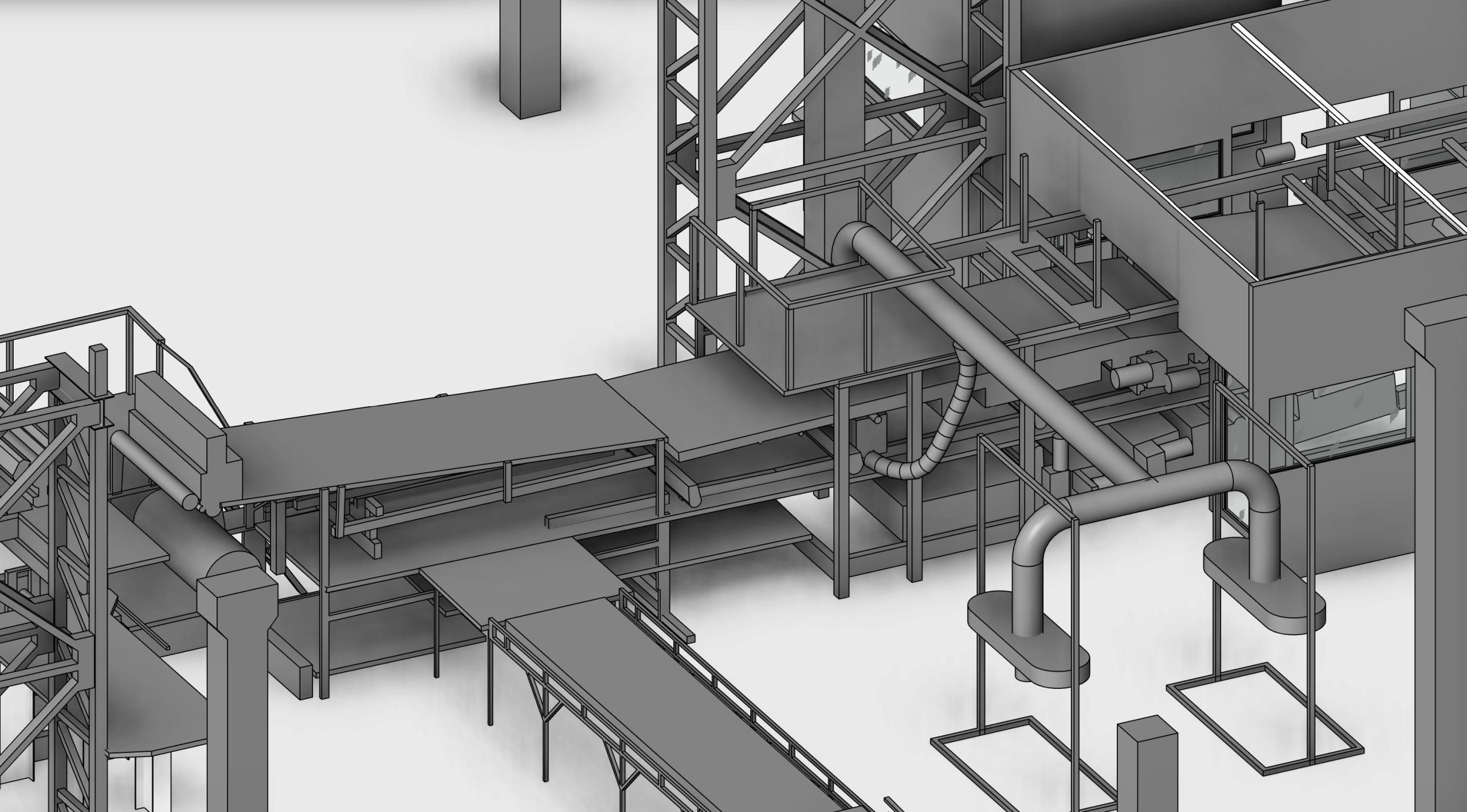
re processing plants often rely on equipment, assemblies, and custom components that have been modified over time or no longer have complete technical documentation. When original drawings are missing, outdated, or unavailable, reverse engineering for ore processing plants provides a practical way to recreate the geometry of existing parts for replacement, redesign, and fabrication.
Contact Us Now for a Free Consultation!
For plant owners, maintenance teams, and contractors, this is especially important when downtime is costly and replacement components must match existing interfaces, supports, and operating conditions. Ore processing plant reverse engineering helps recover accurate part geometry from real components instead of working from assumptions.
Where Reverse Engineering Is Used in Ore Processing Plants
Reverse engineering is typically used for:
- crusher components
- conveyor components
- chutes and hoppers
- mill components
- flotation equipment parts
- structural steel details
- brackets, supports, and custom assemblies
- material handling equipment parts
These tasks usually involve worn parts, legacy assemblies, discontinued components, or non-standard items that need to be reproduced or adapted for continued plant operation.
Reverse Engineering of Ore Processing Equipment and Plant Components
Our reverse engineering services for ore processing plants are focused on the recovery of usable engineering geometry from existing components. This may involve direct measurement, digital capture, or supporting geometry data from 3D Laser Scanning and Point Cloud Processing, depending on the size and type of the object.
Reverse engineering of ore processing equipment is commonly required when:
- the original manufacturer documentation is unavailable
- replacement parts are no longer supplied
- existing components have been modified on site
- equipment must be adapted to updated plant layouts
- worn parts need to be reproduced for continued operation
The goal is to give the client a reliable engineering base for production, redesign, or fit verification.
Reverse Engineering for Crusher Components, Conveyor Parts, and Mill Elements
Reverse Engineering for Crusher Components
Reverse engineering for crusher components is used when wear parts, housings, supports, or interface elements need to be recreated without complete drawings. This helps prepare new components for manufacturing with better dimensional confidence.
Reverse Engineering for Conveyor Components
Reverse engineering for conveyor components supports the recreation of brackets, support elements, rollers, mounts, frames, and connection parts that are no longer documented or require modification before replacement.
Reverse Engineering for Mill Components
Reverse engineering for mill components is often required for custom supports, connection elements, surrounding assemblies, and plant-specific details that need to be reproduced or adjusted during maintenance and upgrade work.
Reverse Engineering for Chutes, Hoppers, Wear Parts, and Custom Steel Components
Ore processing plants also contain many non-standard parts that are difficult to replace using catalog solutions. These may include chute sections, hopper elements, liners, transition parts, steel brackets, support details, and fabricated assemblies.
This is where reverse engineering for chutes and hoppers, reverse engineering for industrial wear parts, and reverse engineering for custom plant parts becomes especially useful. Instead of rebuilding geometry from incomplete records, teams can work from the actual component condition and prepare more accurate production files.
For custom fabrication tasks, reverse engineering for structural steel components can also help recover the geometry of existing steel details, welded assemblies, supports, and plant-specific connections.
What Reverse Engineering Delivers
A reverse engineering project for an ore processing plant can deliver:
- 3D CAD models of parts and assemblies
- dimensional drawings
- fabrication-ready geometry
- digital files for manufacturing
- reconstructed assembly models
- verified geometry for fit checks
- models for redesign or adaptation of existing components
Depending on project scope, the outputs can also support As-Built Drawings or selected BIM Modeling tasks where component-level geometry needs to be integrated into wider engineering work.
When Reverse Engineering Is Needed in Ore Processing Plants
Reverse engineering is commonly used when:
- a worn component must be replaced quickly
- original part drawings are missing
- the supplier is no longer available
- a discontinued component must be reproduced
- an existing part must be modified before manufacturing
- legacy equipment needs adaptation during plant upgrades
- custom steel or fabricated details must match actual site conditions
For ore processing facilities, this reduces risk during replacement works and gives engineering teams a more dependable basis for manufacturing decisions.
Table: Typical Reverse Engineering Deliverables for Ore Processing Plants
| Deliverable | Practical Use |
|---|---|
| 3D CAD model of a component | Basis for fabrication or redesign |
| Dimensional drawing set | Production and technical review |
| Reconstructed assembly geometry | Replacement of existing part sets |
| Model of worn component | Analysis before manufacturing a new part |
| Custom steel detail model | Fabrication of non-standard plant components |
| Verified part geometry | Fit check before installation |
How Reverse Engineering Supports Plant Upgrades and Maintenance
In ore processing plants, the value of reverse engineering is practical. It helps reduce delays when components fail, improves confidence in replacement part fit, and supports work on legacy systems where technical records are incomplete.
This is especially relevant during plant modernization, shutdown works, equipment adaptation, and maintenance programs where accurate component geometry is needed before manufacturing begins. Instead of relying on approximate dimensions or outdated drawings, plant teams can work from verified data based on the real part.
Reverse engineering services for ore processing plants help recover the geometry of critical components, custom assemblies, and legacy equipment parts for replacement, fabrication, and redesign. For maintenance teams, contractors, and plant operators, this creates a more reliable path from an existing physical part to a usable engineering deliverable.
FAQ
What is reverse engineering for ore processing plants?
Reverse engineering for ore processing plants is the process of recreating the geometry of existing components, assemblies, or equipment parts when original drawings or digital models are missing, outdated, or unavailable.
What components can be reverse engineered in ore processing plants?
Typical components include crusher parts, conveyor components, chutes, hoppers, wear parts, custom steel details, brackets, supports, mill elements, and selected process equipment parts.
Why is reverse engineering used in ore processing plants?
It is used when parts are worn, suppliers are unavailable, documentation is incomplete, or a replacement component must be manufactured based on the existing physical part.
What are the deliverables in a reverse engineering project?
Typical deliverables include 3D CAD models, dimensional drawings, reconstructed assembly geometry, fabrication-ready files, and verified part models for fit checks or redesign.
Can reverse engineering support ore processing plant modernization?
Yes. Reverse engineering is often used during modernization and maintenance projects when legacy plant components need to be replaced, adapted, or reproduced without reliable original documentation.
Can reverse engineering be combined with other services?
Yes. Reverse engineering can be combined with 3D Laser Scanning, Point Cloud Processing, As-Built Drawings, and BIM Modeling depending on the scope of the ore processing plant project.

