
Laser Scanning for Existing Buildings: Challenges and Solutions
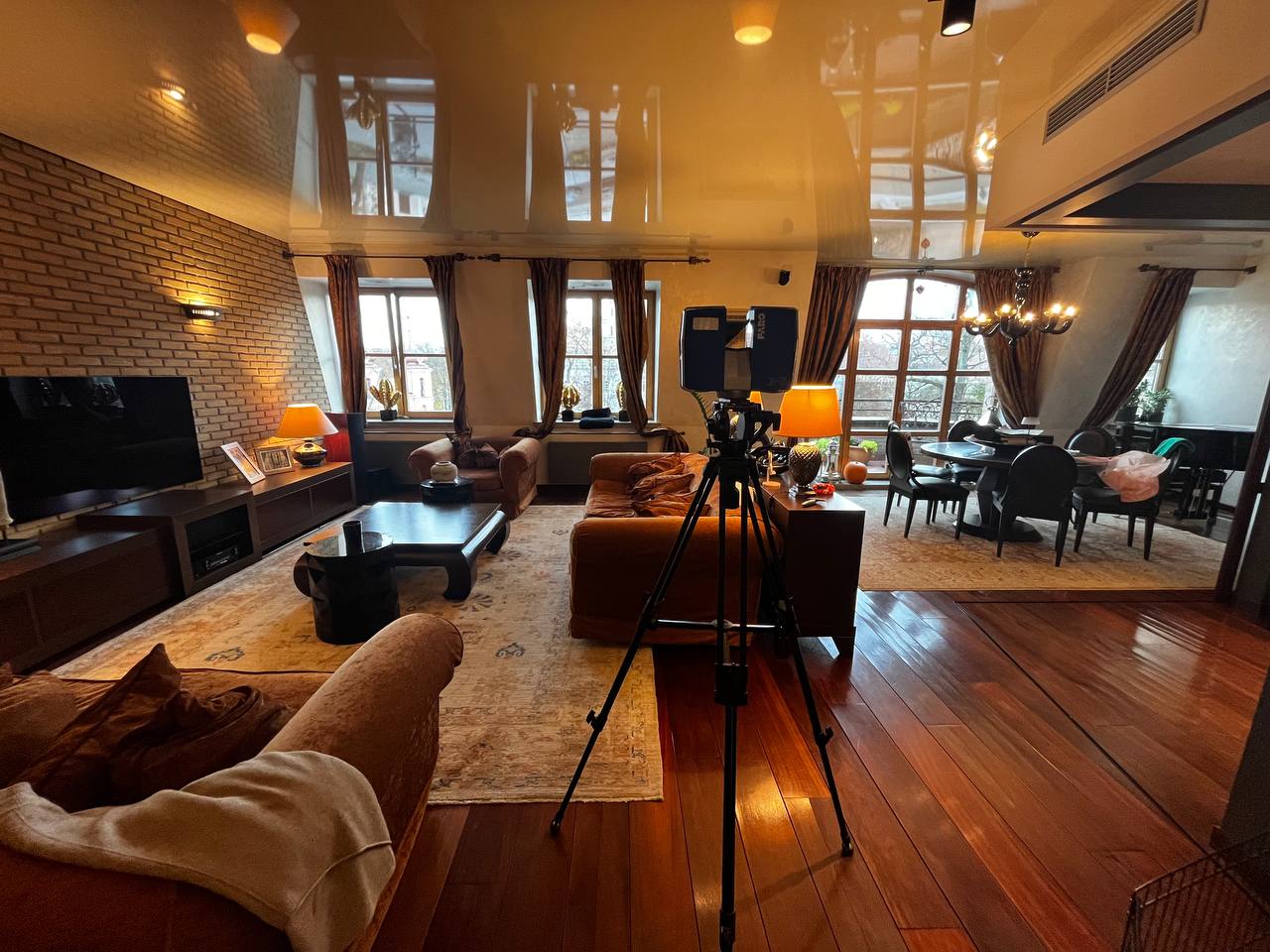

Laser scanning for existing buildings is a core method for capturing real-world geometry when documentation is missing or unreliable. On renovation and operational sites, assumptions based on old plans often lead to clashes, rework, and delays.
With 3D laser scanning for existing buildings, project teams can capture accurate geometry and create a reliable digital base for design, coordination, and construction. In practice, laser scanning existing structures supports consistent decision-making when space constraints, complex layouts, and ongoing operations make traditional surveys insufficient.
For teams working with renovations, expansions, or upgrades, laser scanning for as-built conditions and laser scanning of existing buildings help verify what is actually built—not what drawings claim is built.
Why Existing Building Documentation Is Often Unreliable
A major reason scanning is required is the quality of documentation. Many facilities face:
- inaccurate as-built drawings
- lack of reliable existing documentation
- changes over time that were never recorded
- inconsistencies between disciplines (architecture, structure, MEP)
These gaps can derail design coordination. That is why existing building documentation based on reality is essential—especially for laser scanning for building surveys where accuracy and coverage directly affect downstream modeling and construction planning.
Challenges of Laser Scanning Existing Buildings
The challenges of laser scanning existing buildings differ significantly from scanning new construction.

Key Technical and Operational Challenges
| Challenge | Description | Professional Solution |
| Limited site access for laser scanning | Restricted rooms, tight corridors | Strategic scan planning & multiple setups |
| Occlusions in laser scanning | Hidden areas behind equipment | Multi-angle scanning & scan redundancy |
| Complex building geometry | Irregular walls, deformations | High-density point cloud capture |
| Point cloud accuracy challenges | Noise & data inconsistencies | Advanced filtering & verification |
| Registration errors in existing buildings | Misalignment of scans | Precise control points & quality checks |
| Scanning occupied buildings | Operational constraints | Phased scanning & off-hour surveys |
This structured approach ensures reliable data for laser scanning for renovation projects and laser scanning for retrofit projects.
Laser Scanning for Renovation Projects and Retrofit Projects
In renovation environments, even small deviations can lead to major clashes. Laser scanning for renovation projects reduces uncertainty by capturing real geometry before design decisions are locked.
For complex upgrades, laser scanning for retrofit projects is especially important when new systems must fit into existing constraints (shafts, ceilings, plant rooms). Old buildings often include hidden offsets, uneven slabs, and undocumented modifications—issues that scanning can reveal early.
Typical use cases include:
- facility upgrades with strict downtime requirements
- industrial and commercial renovations
- integration of new MEP systems
- phased modernization where operations must continue
Accuracy Control and Point Cloud Processing
After scanning, data quality is determined by how the point cloud is handled.Point cloud accuracy challenges can increase if the site contains reflective surfaces, long corridors, glass, or moving objects.
To minimize registration errors in existing buildings, professional workflows typically include:
- a control network or verified reference geometry
- overlap verification between scan stations
- quality checks and tolerance reporting
- structured processing and cleaning before modeling
This is where reliable deliverables come from: accurate geometry that supports design coordination, fit checks, and disciplined decision-making—especially for laser scanning for as-built conditions.
Conclusion: Turning Challenges into Predictable Results
Laser scanning for existing buildings is not only a field activity. It is a controlled technical workflow designed to reduce uncertainty in older or modified facilities.
By combining disciplined planning, 3D laser scanning for existing buildings, and rigorous point cloud processing, teams can create dependable existing building documentation, reduce clashes, and avoid costly surprises during construction.
FAQ – Laser Scanning for Existing Buildings
Why is laser scanning for existing buildings important for renovation projects?
What are the main challenges of laser scanning existing buildings?
How accurate is 3D laser scanning for existing buildings?
Can laser scanning be performed in occupied buildings?

How Existing Building Documentation Is Created from Laser Scanning
10.04.2026
Accurate existing building documentation is the foundation of renovation, reconstruction, retrofit, and technical upgrade projects. Before architects, engineers, or contractors can move into design and ...

Why Choosing the Right 3D Scanning Provider Matters for Construction Projects in New York
21.02.2026
Choosing the right partner for your project starts with understanding how to choose a 3D scanning company that meets your technical, scheduling, and documentation needs. ...

Laser Scanning Workflow from Site to Point Cloud
19.02.2026
The laser scanning workflow is a structured and highly technical process that transforms raw field measurements into a precise digital model. A well-executed 3D laser ...

From Assumptions to Verified Geometry: How Laser Scanning Reduces Construction Risk
12.02.2026
Construction projects rarely fail because of design intent. They fail because of deviations between design and site conditions. Outdated drawings, undocumented modifications, uneven slabs, shifted ...

