

3D Laser Scanning for Workshops and Production Areas
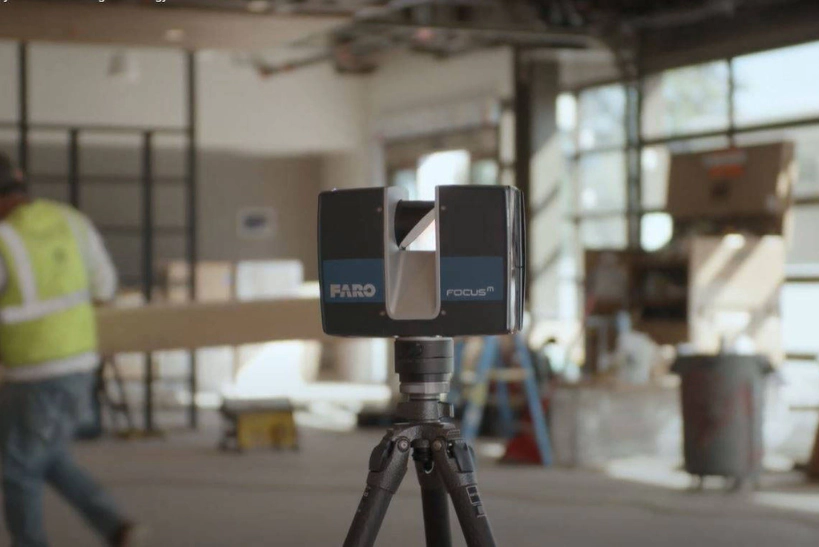
3D laser scanning for workshops and production areas provides precise spatial data required for engineering, modernization, and operational optimization of industrial environments. Manufacturing facilities contain dense equipment layouts, interconnected production lines, and strict tolerances that require accurate digital representation. Traditional measurement methods are insufficient for capturing these conditions at scale and speed.
Laser scanning technology enables full digital capture of factory infrastructure, including production lines, structural elements, and equipment positioning. The resulting point cloud dataset supports engineering workflows, retrofit planning, and layout validation without interrupting ongoing operations.
3D laser scanning services for manufacturing facilities are widely used by engineering companies, industrial operators, and contractors to support modernization, expansion, and digital transformation of production environments. Accurate spatial data allows teams to reduce project risks, improve planning accuracy, and ensure efficient coordination between equipment, structures, and engineering systems.
Contact Us Now for a Free Consultation!
Application in Manufacturing Facilities
3D laser scanning is applied across various types of production environments, including machining workshops, assembly halls, and processing plants. The method ensures accurate documentation of existing conditions before design, reconstruction, or equipment installation.
Typical use cases include:
- Capture of production facility geometry for redesign and expansion
- Documentation of factory floor layouts and equipment positioning
- Measurement of production line alignment and tolerances
- Verification of installed systems against design models
- Support for maintenance planning and infrastructure upgrades
In manufacturing plants, even small deviations in equipment placement or structural elements can impact workflow efficiency and safety compliance. Laser scanning provides reliable spatial data for engineering decision-making.
Data Acquisition Process
Laser scanning in industrial workshops is performed using terrestrial LiDAR systems capable of capturing millions of measurement points per second. Scanning is conducted from multiple positions to ensure full coverage of equipment, structures, and production lines.
Key stages include:
- Site assessment and scan planning
- On-site data acquisition with high-resolution scanners
- Registration and alignment of scan positions
- Generation of a unified point cloud dataset
- Data export for engineering and modeling workflows
Production environments often include complex geometries such as conveyor systems, robotic cells, cable trays, and piping networks. Accurate capture of these elements requires careful scanner placement and overlap control.
Point Cloud as a Digital Foundation
The primary output of 3D laser scanning is a point cloud representing the exact geometry of the facility. This dataset serves as the basis for further engineering processes.
Point cloud data supports:
- Spatial analysis of production areas
- Clash detection for new equipment installation
- Measurement of clearances and access zones
- Documentation of existing infrastructure
For further processing, point clouds can be integrated into BIM workflows or converted into structured 3D models. More details about this process can be found in our services:
Industrial-Specific Technical Considerations
Manufacturing environments introduce specific technical challenges that require tailored scanning approaches:
1. Production Line Complexity
Factories often contain continuous production lines with interconnected machinery such as CNC machines, conveyor systems, and robotic arms. These systems require high-density scanning to capture interfaces and alignment.
2. Equipment Layout and Anchoring
Heavy machinery is typically fixed to the floor with precise positioning. Laser scanning captures anchor points, base plates, and alignment references necessary for relocation or replacement.
3. Overhead Infrastructure
Cable trays, ventilation ducts, and suspended pipelines form dense overhead networks. Accurate scanning of these elements is critical for planning modifications without disrupting existing systems.
4. Limited Access Zones
Certain areas, such as enclosed machine cells or active production lines, restrict physical access. Laser scanning allows remote data capture from safe positions without interfering with operations.
Benefits for Engineering and Operations
Accurate Geometry Capture
Laser scanning provides millimeter-level accuracy, ensuring reliable measurements for engineering calculations and design validation.
Reduced Downtime
Data acquisition can be performed with minimal interruption to production processes, which is critical for operational facilities.
Improved Planning
Engineers can work with precise digital replicas of workshops and production areas, reducing design errors and rework.
Integration with Digital Workflows
Point cloud data can be used in CAD and BIM environments for modeling, simulation, and coordination.
3D Laser Scanning Services for Manufacturing Facilities
3D Laser Scanning of Manufacturing Equipment


Professional 3D laser scanning services for manufacturing facilities include full-cycle support from data capture to engineering-ready deliverables.
Typical services:
- Industrial workshop laser scanning services
- 3D scanning services for production plants
- Factory laser scanning services
- Industrial facility scanning for modernization projects
- Spatial documentation of manufacturing infrastructure
These services are used by engineering companies, plant operators, and contractors involved in reconstruction, expansion, or digital transformation of industrial sites.
Integration with Engineering Workflows
Laser scanning data is integrated into engineering and design processes to support:
- Equipment installation planning
- Factory layout optimization
- Retrofit and reconstruction projects
- Safety and compliance verification
- Digital twin development
For advanced workflows, point cloud data is converted into BIM models, enabling structured representation of factory infrastructure. Learn more about this process:
Use in Production Line Modernization
Modernization of production facilities requires accurate documentation of existing conditions. Laser scanning enables engineers to:
- Evaluate available space for new equipment
- Identify conflicts with existing infrastructure
- Plan routing of utilities and services
- Simulate installation sequences
This approach reduces risks associated with manual measurements and incomplete documentation.
Data Deliverables
Depending on project requirements, deliverables may include:
- Registered point cloud datasets
- 2D drawings derived from scans
- 3D CAD models of workshops and equipment
- BIM models of production facilities
- Spatial analysis reports
Deliverables are formatted to integrate with standard engineering tools such as Revit, AutoCAD, and other CAD platforms.
Quality and Accuracy Control
Industrial laser scanning projects require strict quality control procedures, including:
- Verification of scan alignment accuracy
- Validation of control points
- Consistency checks across datasets
- Comparison with existing design documentation
These steps ensure that the resulting data can be used reliably for engineering and construction purposes.

