Laser Scanning for Small Apartment Redesigns

Laser scanning, also known as 3D laser scanning, is a contactless technology used to accurately capture the geometric details of physical spaces. It involves the use of specialized equipment called a laser scanner that emits a series of laser beams across a space. These beams reflect off surfaces and return to the scanner, allowing the device to measure the time of flight for each pulse. This method produces a detailed dataset known as a point cloud, consisting of millions of data points that map the scanned environment with precision. This data is then processed to create a digital representation of the space, which can take the form of 3D models, floor plans, or As-Built drawings. The level of detail and accuracy makes laser scanning especially useful for projects where precise measurements are critical, such as redesigning small apartments. 

Why Laser Scanning is Essential for Small Apartment Redesigns

Redesigning a small apartment often involves working with limited square footage where every measurement matters. Measurement inaccuracies can result in expensive errors, inefficient use of space, and complications during the construction process. Laser scanning addresses these issues by providing highly accurate data that can be used at various stages of the redesign process. 

1. Precision in Apartment Measurements

One of the primary benefits of laser scanning is its exceptional accuracy. Conventional measurement techniques, like tape measures or handheld laser distance meters, are susceptible to human error and may miss finer architectural details. 

Laser scanning offers millimeter-level precision, capturing

  • Exact measurements of walls, ceilings, and floors.
  • Complex architectural features such as niches, columns, or sloped ceilings.
  • Placement of windows, doors, and structural elements.

This accuracy allows designers to plan furniture layouts, cabinetry installations, and space adjustments with confidence, ensuring a perfect fit in confined areas. 

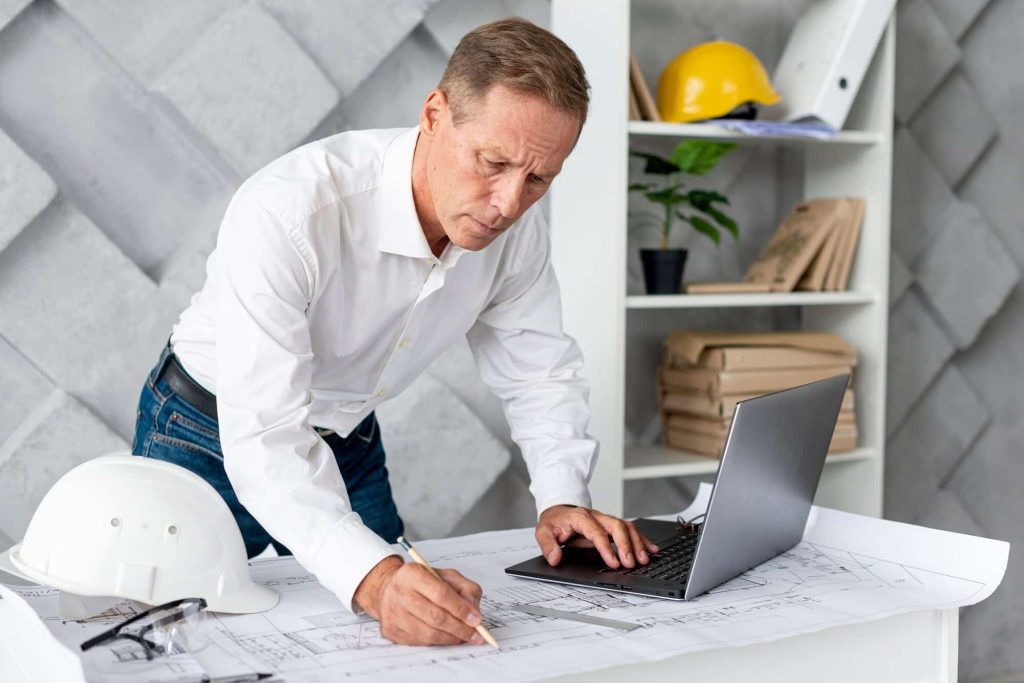
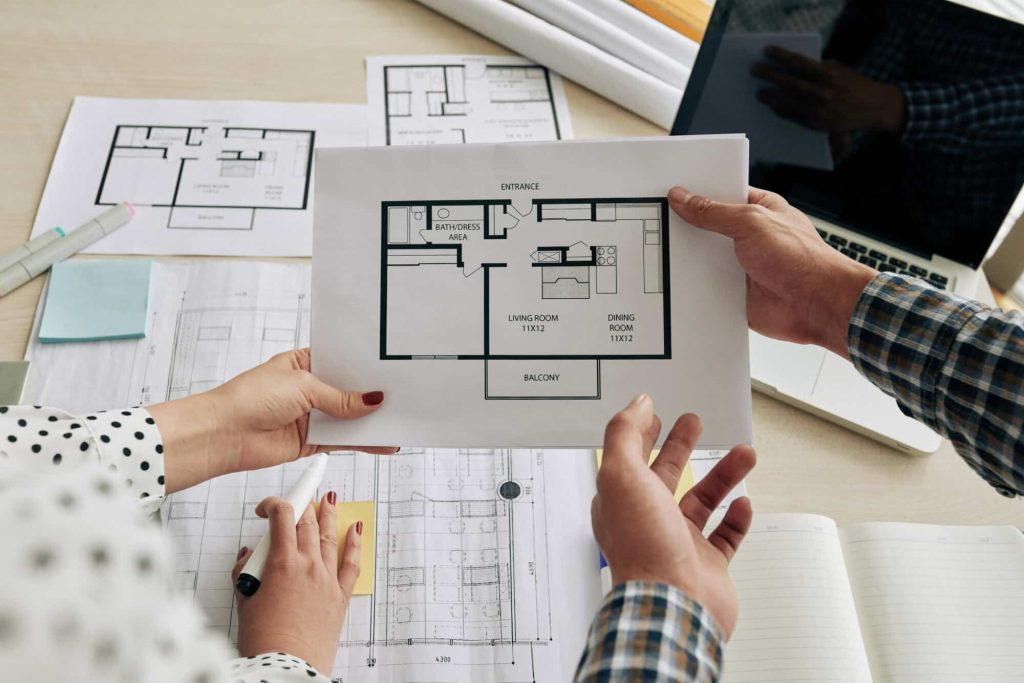
Reviewing apartment renovation plans with As-Built drawings for small apartment redesign.

2. Creation of As-Built Drawings for Small Apartments

As-Built drawings are technical documents that reflect the current state of a building or apartment, including structural elements and spatial dimensions. These drawings are crucial in redesign projects where existing plans are outdated or unavailable. 

Laser scanning simplifies the creation of As-Built drawings by capturing precise data of the apartment’s current conditions. These drawings typically include

  • Floor plans with detailed measurements.
  • Elevations and sectional views.
  • Structural features, load-bearing walls, and ceiling heights.

As-Built drawings help architects and designers work with an accurate foundation, reducing the risk of design conflicts during the renovation process. 

3. Generation of 3D Models for Design Visualization

Laser scanning enables the generation of 3D models, providing a virtual visualization of the scanned apartment. These models are compatible with widely used design and drafting software, including AutoCAD, Revit, SketchUp, and Rhino. 

Key applications of 3D models in small apartment redesign

  • Visualizing different layout options before construction.
  • Testing furniture placement and spatial flow.
  • Simulating lighting conditions and material finishes.

This level of visualization enables designers to experiment with creative solutions and optimize space usage more effectively. 

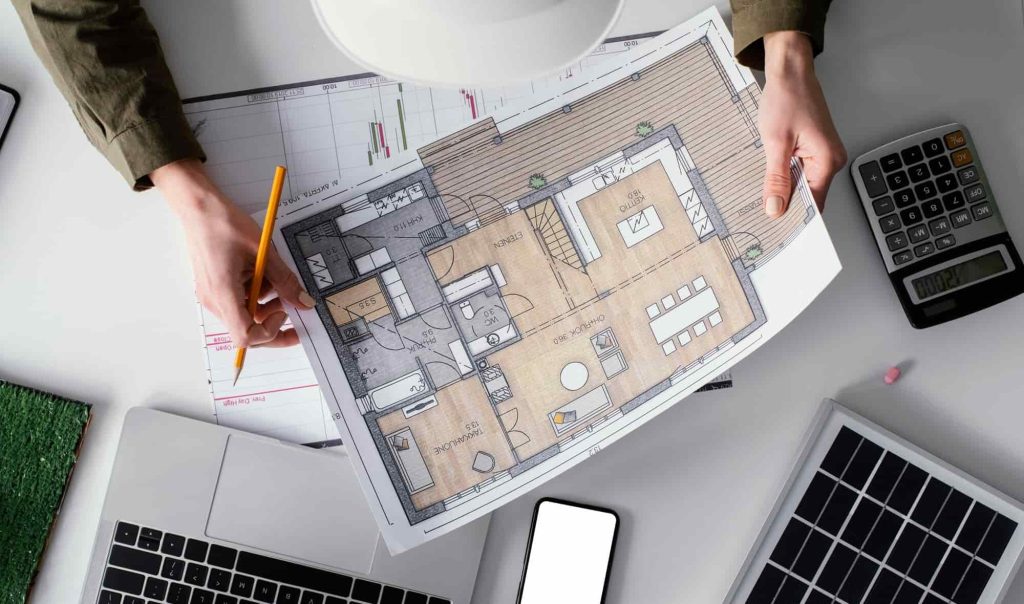
Architect reviewing small apartment renovation plans with accurate measurements and layout optimization.

4. Space Optimization and Layout Planning

Small apartments require creative design approaches to make the most of the available space. Laser scanning provides a detailed understanding of the apartment’s layout, making it easier to identify opportunities for improvement. 

Benefits include

  • Designing built-in storage solutions tailored to the apartment’s dimensions.
  • Reconfiguring wall partitions for better space utilization.
  • Maximizing natural light distribution through optimized layout planning.

Laser scanning ensures that every design decision is backed by accurate data, which is particularly important in limited square footage where every inch matters. 

5. Time and Cost Efficiency

Redesigning a small apartment often involves tight budgets and timelines. Laser scanning contributes to both time and cost savings by: 

  • Minimizing Rework: Accurate measurements reduce the likelihood of errors and the need for corrections during construction.
  • Faster Project Start: The scanning process is fast and provides ready-to-use data for planning.
  • Enhanced Collaboration: Digital As-Built drawings and models can be easily shared among project stakeholders, reducing miscommunication. 

How Laser Scanning Compares to Traditional Measurement Methods

Laser scanning offers significant advantages over traditional measurement techniques, especially when working on small apartment redesigns where precision and efficiency are critical. 

Accuracy:

Laser scanning provides millimeter-level precision, capturing exact measurements of walls, ceilings, floors, and architectural details. In contrast, traditional methods such as tape measures or handheld laser distance meters often lead to slight inaccuracies due to human error, which can result in measurement discrepancies. 

Speed and Efficiency:

The laser scanning process is significantly faster than manual measuring techniques. A full apartment scan can often be completed within a few hours, while manual measurements may take days, especially if the space has complex architectural features. This time-saving aspect helps speed up the design phase and minimizes disruptions. 

Data Detail and Completeness:

Laser scanning captures a complete set of spatial data, recording every corner and structural element in a digital point cloud. Traditional methods, however, rely on selective measurements taken by hand, which can miss intricate features or lead to incomplete datasets. This makes laser scanning particularly useful for spaces with irregular shapes or complex layouts. 

Visualization and Design Compatibility:

With laser scanning, the captured data can be converted into 3D models, point clouds, and detailed technical drawings compatible with popular design software like AutoCAD, Revit, and SketchUp. Traditional measurements, on the other hand, often result in basic 2D sketches that lack the depth and versatility offered by modern digital formats. 

Application Scope:

Laser scanning is ideal for both simple and highly detailed spaces, capturing data suitable for technical analysis and creative design exploration. Traditional methods are generally more suited for basic measurements and may fall short in projects requiring high precision or complex documentation. In summary, laser scanning clearly outperforms traditional measurement techniques in terms of accuracy, efficiency, data richness, and versatility, making it a preferred choice for modern small apartment redesign projects. 

Understanding Point Clouds: The Core of Laser Scanning Data

A point cloud is the raw output generated during a laser scan. It consists of millions of individual data points, each representing a precise location in 3D space. This data can be processed into more user-friendly formats like: 

  • 3D Mesh Models: For digital visualization and design exploration.
  • 2D Floor Plans: Simplified versions for layout planning.
  • CAD Drawings: Usable in architectural design tools for detailed planning.

Point clouds provide the flexibility to work with both visual and technical data, making them ideal for small apartment redesign projects where both aesthetics and precision matter. 

How to Interpret Laser Scanning Results in Apartment Redesign

For designers and architects working on small apartment redesigns, laser scanning results can be interpreted through various formats depending on the project’s needs: 

  • Point Cloud Data: Used for raw spatial analysis and measurements.
  • 3D BIM Models: For detailed building information modeling and design simulations.
  • As-Built Drawings: For simplified construction plans and documentation.

The selection of the format varies based on the project’s complexity and the phase of the redesign process. 

Technical Requirements and Compatibility

Laser scanning data is commonly provided in industry-standard formats such as: 

  • .E57: A universal format for point clouds.
  • .RVT: Autodesk Revit models for BIM workflows.
  • .DWG: AutoCAD file format commonly used for technical drafting.
  • .IFC: Industry Foundation Classes format designed for BIM data sharing and collaboration.

These formats ensure compatibility with most architectural and design tools, making collaboration easier between project teams. 

Professionals reviewing floor plans for laser scanning and small apartment redesign.

Conclusion

Laser scanning offers a transformative approach to small apartment redesigns by delivering precise measurements, As-Built drawings, and 3D models. Its unmatched accuracy and efficiency help optimize layouts, reduce errors, and streamline the entire renovation process. With its ability to capture detailed spatial data and support multiple design tools, laser scanning has become an essential tool for modern apartment redesigns, particularly where space optimization and accuracy are crucial.

Check our activity on:

As-Built Services for Healthcare Facilities

Healthcare facilities, from bustling hospitals to small outpatient clinics, are dynamic environments where accuracy, precision, and compliance with regulations are critical. As these spaces grow, evolve, or undergo renovations, the need for comprehensive and reliable As-Built documentation becomes indispensable. But what exactly are As-Built services, and why are they particularly vital for healthcare? Let’s dive into the details.

What Are As-Built Services?

At its core, As-Built documentation provides an accurate representation of a building or facility as it exists, rather than how it was originally designed or planned. Think of it as a “real-world” snapshot of a structure, capturing every detail of walls, utilities, systems, and fixtures. These documents often include drawings, 3D models, or detailed plans, all reflecting any changes or deviations from the original construction designs.

In healthcare, this level of accuracy isn’t just helpful—it’s essential. Medical facilities operate under strict regulations, with intricate layouts that must cater to both patient care and staff efficiency. Without precise As-Built documentation, managing changes or upgrades to these facilities can quickly become chaotic.

As-Built services for healthcare go beyond standard construction documentation. They are specifically tailored to address the unique challenges and demands of medical facilities, ensuring that every detail is accounted for. This attention to detail helps healthcare administrators and construction teams make informed decisions that ultimately improve patient outcomes and operational efficiency.

Architect reviewing detailed As-Built floor plans on a digital screen, emphasizing accurate documentation for healthcare facility renovations and compliance.

The Unique Demands of Healthcare Facilities

Hospitals, clinics, and medical labs differ significantly from other building types. They house advanced equipment, life-saving technologies, and specific spaces like operating rooms and ICUs, all of which have unique requirements. Because of these complexities, healthcare construction and renovation projects demand a higher level of detail and customization in their As-Built services.

1. Specialized Spaces Require Special Attention

Healthcare facilities include a wide variety of spaces, each with its own set of requirements. For example, operating rooms require precise HVAC systems to maintain air quality, while imaging centers need reinforced walls and floors to support heavy equipment like MRI machines. As-Built services must account for these nuances to ensure that each space functions as intended.

2. Minimizing Disruptions to Patient Care

Another unique challenge in healthcare construction is the need to maintain uninterrupted patient care during renovations or expansions. Contractors rely on As-Built documentation to plan projects that minimize disruptions, such as scheduling work around critical operations or creating temporary spaces to house equipment and staff.

3. Long-Term Planning for Facility Growth

Healthcare facilities often expand over time to accommodate new technologies, growing patient populations, or updated care models. As-Built documentation serves as a foundation for these future projects, providing a clear picture of the existing infrastructure.

Why Are As-Built Services So Important for Healthcare?

Imagine planning a hospital renovation without knowing the exact location of existing plumbing or HVAC systems. It would be like navigating without a map—time-consuming, costly, and prone to errors. This is where As-Built documentation proves invaluable.

Accurate Renovations and Expansions

Healthcare facilities are rarely static. Expansions to accommodate new departments, technology upgrades, or even layout reconfigurations for better workflow are common. Reliable As-Built documentation ensures that construction teams work with a precise understanding of the existing structure, avoiding costly surprises.

For example, when adding a new wing to a hospital, builders need to know exactly where to connect utilities like water, electricity, and ventilation. Without accurate As-Built drawings, these connections can become complicated and lead to delays or additional costs.

Compliance and Safety

Hospitals and clinics must meet stringent safety and accessibility standards. As-Built services help facility managers verify that every space, system, and piece of equipment aligns with these regulations. This is especially critical during audits or when seeking certifications.

In the healthcare industry, compliance isn’t just about passing inspections—it’s about creating safe environments for patients and staff. As-Built documentation ensures that fire exits, ventilation systems, and even door widths meet the necessary codes.

Enhanced Facility Management

Day-to-day operations in healthcare require seamless management of space and infrastructure. With accurate As-Built documentation, facility managers can easily locate systems for maintenance, plan for future upgrades, or troubleshoot issues.

For example, if a hospital’s electrical system requires repairs, As-Built plans can guide maintenance teams to the exact location of breakers, wiring, and other components. This saves time and ensures that repairs are completed without disrupting critical services.

Types of Healthcare Facilities That Benefit from As-Built Services

The need for As-Built services spans a wide range of healthcare environments. Here’s a closer look at where these services are most impactful:

  • Hospitals: With sprawling campuses and intricate systems, hospitals rely on As-Built documentation for everything from routine maintenance to large-scale renovations.
  • Clinics: Smaller in size but equally complex, clinics benefit from detailed plans that account for patient areas, staff workflows, and medical equipment.
  • Outpatient Care Centers: These facilities often undergo rapid changes to meet patient demand, making accurate documentation critical for planning.
  • Medical Laboratories: Labs require precise layouts for equipment placement, ventilation, and safety measures.
  • Specialty Centers: Spaces like imaging centers or dialysis units often need customized As-Built services to account for their unique equipment and operational needs.

Each of these facilities has unique demands, and As-Built documentation plays a key role in meeting them.

Real-World Applications of As-Built Services in Healthcare

The practical applications of As-Built services are vast and varied. Here are a few scenarios where they make a significant impact:

Hospital Renovation Projects

When hospitals undergo renovations—whether to update patient rooms or build a new wing—accurate As-Built plans provide contractors with a clear understanding of the existing layout. This reduces delays and ensures that new construction integrates seamlessly with old structures.

New Clinic Construction

Even during new construction, As-Built services play a role by documenting any changes that occur during the building process. This ensures the final plans reflect the reality of the completed structure.

Compliance and Certification

As-Built documentation is often required during compliance audits to prove that facilities meet regulatory standards. This is especially important in healthcare, where safety and accessibility are non-negotiable.

Equipment Upgrades

Installing advanced medical equipment, such as MRI machines or surgical robots, often requires precise structural and utility modifications. As-Built drawings help planners determine where and how to make these adjustments.

3D As-Built floor plan of a healthcare facility showcasing accurate layouts of medical rooms and equipment for precise documentation and renovation planning.

Benefits of Professional As-Built Services for Healthcare

Now that we’ve covered the what and why, let’s explore the advantages of working with experienced professionals for your As-Built needs.

  • Precision and Accuracy. Advanced technologies like 3D laser scanning ensure that every detail is captured with unparalleled precision. This level of accuracy is especially important in healthcare, where even minor errors can have significant consequences.
  • Expertise in Healthcare Regulations. Professional As-Built service providers understand the specific requirements of medical facilities. They ensure that documentation aligns with all relevant codes and standards.
  • Time and Cost Savings. Accurate documentation minimizes the risk of construction delays or unexpected expenses, making projects more efficient from start to finish.
  • Custom Solutions. Every healthcare facility is unique, and professional As-Built services can be tailored to meet the specific needs of your space.
  • Improved Communication. With detailed and clear As-Built documentation, communication among architects, contractors, and facility managers becomes more effective, reducing misunderstandings and ensuring smooth project execution.

The Future of Healthcare As-Built Services

As technology continues to evolve, so do As-Built services. Emerging tools like Building Information Modeling (BIM) and virtual reality are enhancing the way healthcare facilities plan and execute renovations. These advancements promise even greater accuracy and efficiency, ensuring that medical spaces remain functional, safe, and adaptable for years to come.

For example, BIM allows stakeholders to visualize how changes to a hospital’s layout will impact workflow, helping decision-makers make more informed choices. Virtual reality takes this a step further by allowing teams to “walk through” a proposed design before any construction begins.

Medical professional reviewing a digital 3D model of a healthcare facility layout, emphasizing precise As-Built services for hospital renovation and compliance planning.

Conclusion: A Foundation for Healthcare Success

In the fast-paced world of healthcare, where patient care is the priority, reliable As-Built documentation provides a solid foundation for success. Whether you’re managing a hospital renovation, opening a new clinic, or planning for future growth, investing in professional As-Built services ensures your facility is prepared to meet its challenges with confidence.

By understanding the unique needs of healthcare environments and leveraging advanced technologies, As-Built documentation empowers facilities to operate more efficiently, safely, and effectively. It’s not just about drawings—it’s about creating spaces that support better health outcomes for all.

Check our activity on:

How to Create Accurate As-Built Measurements for Perfect Tile Layouts

Planning a tile installation project can be an exciting yet daunting task. Whether you’re renovating a bathroom, upgrading a kitchen, or designing a striking feature wall, the secret to a flawless tile layout lies in accurate measurements. But how do you ensure your plans align perfectly with the reality of your space? That’s where As-Built measurements come into play.

In this blog, we’ll explore how leveraging advanced tools like laser scanning and 3D modeling can transform the way you approach tile layout and design. By the end, you’ll have a solid understanding of why precise As-Built documentation is essential for achieving impeccable results.

Worker measuring a surface with a tape measure for accurate tile layout planning, alongside As-Built documentation and tools.

Why Accurate Measurements Are Crucial for Tile Layouts

Even the most beautiful tiles lose their charm if the layout is uneven, mismatched, or poorly aligned. Mistakes in measurements can lead to:

  • Wasted materials: Incorrect cuts and extra tiles add to project costs.
  • Time delays: Reworking poorly aligned tiles can push deadlines.
  • Compromised aesthetics: Gaps, uneven grout lines, and misaligned patterns detract from the final look.

Accurate measurements act as the foundation for your project, ensuring every tile is positioned with precision. This is especially critic

What Are As-Built Measurements?

As-Built measurements refer to the precise dimensions and features of a space as it exists, not as it was originally designed. These measurements account for any deviations or changes that may have occurred during construction or over time.

For example, walls may not be perfectly straight, and floors could slope slightly due to settling. Traditional measuring methods like tape measures often fail to capture these nuances, leading to errors in planning.

Using As-Built documentation ensures your tile layout is tailored to the actual dimensions and contours of your space, not just the theoretical plans.

Laser Scanning: A Game-Changer for Tile Layout Planning

Laser scanning technology has revolutionized how professionals capture As-Built measurements. Instead of manually measuring every nook and cranny, laser scanners generate a 3D point cloud—a highly detailed digital representation of your space. Here’s how this technology benefits tile layout planning:

  • Unmatched Accuracy
    Laser scanning captures dimensions down to millimeter precision, accounting for even the smallest irregularities in walls, floors, and corners.
  • Comprehensive Data
    In a single scan, you obtain a full view of the space, including details like window sills, door frames, and existing fixtures. This data is invaluable for planning complex tile patterns.
  • 3D Visualization
    The point cloud can be converted into a 3D model, allowing designers and contractors to visualize the space and experiment with tile layouts before installation begins.
  • Time Efficiency
    Laser scanning significantly reduces the time spent measuring and re-measuring, keeping your project on schedule.

Steps to Create Accurate As-Built Measurements for Tile Projects

1. Assess the Space

Before diving into measurements, evaluate the area to identify potential challenges. Are there uneven surfaces? Architectural quirks? These factors will influence your tile layout.

2. Choose the Right Tools

For ultimate precision, consider professional tools like laser scanners or hire a service that provides 3D scanning for tile installation. For smaller projects, a digital laser measure can also improve accuracy compared to a traditional tape measure.

3. Capture As-Built Data

Using laser scanning, collect detailed measurements of the space. Pay close attention to critical areas, such as:

  • Floor and wall junctions
  • Window and door openings
  • Any sloped or curved surfaces

4. Generate a Point Cloud or 3D Model

The point cloud produced by laser scanning can be processed into a digital 3D model. This model serves as a virtual blueprint for your tile layout, ensuring no detail is overlooked.

5. Plan the Tile Layout

With your As-Built data in hand, map out the tile design. Use specialized software to:

  • Experiment with patterns and alignments.
  • Plan cuts for edges and corners.
  • Identify areas that require special adjustments, such as uneven surfaces.

6. Verify and Adjust

Before finalizing your plan, review it carefully. Cross-check the dimensions with the actual space and adjust for any discrepancies.

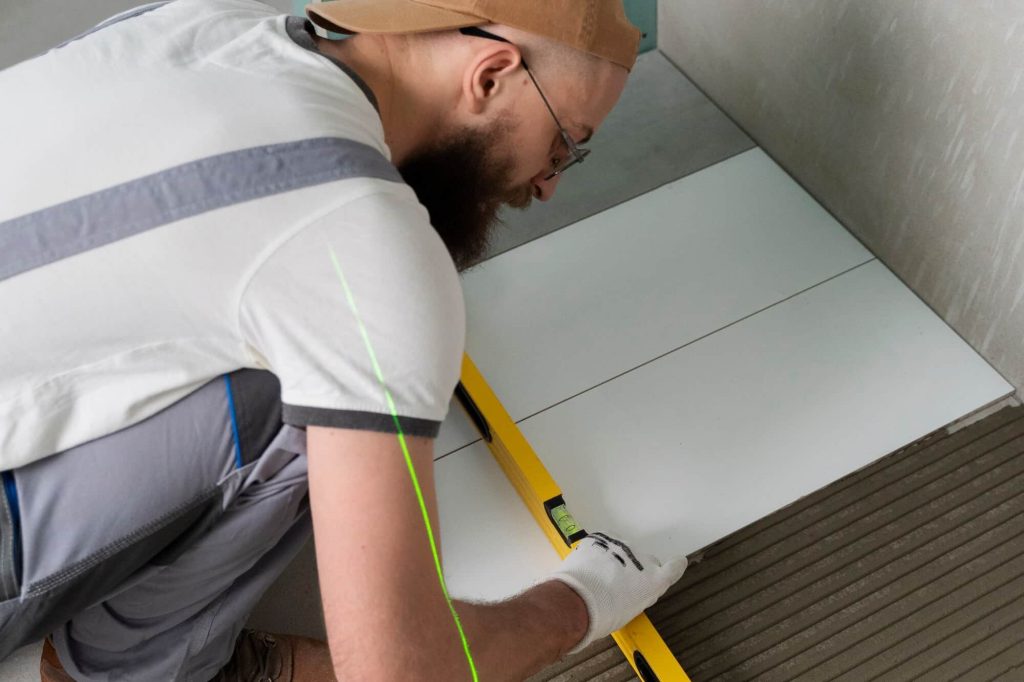
Installer aligning floor tiles using a level for accurate placement and perfect tile layout.

Applications of As-Built Data in Tile Projects

Accurate As-Built measurements are beneficial for a variety of tile projects, including:

  • Floor Tiling: Large floor areas often have subtle slopes or uneven patches. Using As-Built data ensures tiles are laid flat, avoiding future issues with cracking or grout failure.
  • Wall Tiling: From kitchen backsplashes to feature walls, wall tiles demand precise alignment, especially when working with geometric or mosaic patterns. As-Built measurements prevent misalignments caused by uneven walls.
  • Bathroom Renovations: Bathrooms are notorious for irregular surfaces and tight spaces. Laser scanning helps map out the entire room, making it easier to design seamless tile layouts around sinks, bathtubs, and other fixtures.
  • Commercial Spaces: For larger-scale projects, such as tiling in restaurants or office spaces, As-Built documentation streamlines planning and ensures consistent quality across the entire space.

Benefits of As-Built Documentation for Tiling

  1. Enhanced Precision: Laser scanning eliminates guesswork, providing the exact data needed to plan tile layouts with confidence.
  2. Reduced Waste: Accurate measurements minimize material waste, cutting costs and reducing environmental impact.
  3. Faster Installation: With a clear plan based on As-Built data, contractors can work more efficiently, avoiding delays caused by unexpected issues.
  4. Better Aesthetics: A perfectly executed tile layout enhances the visual appeal of the space, adding value to the property.
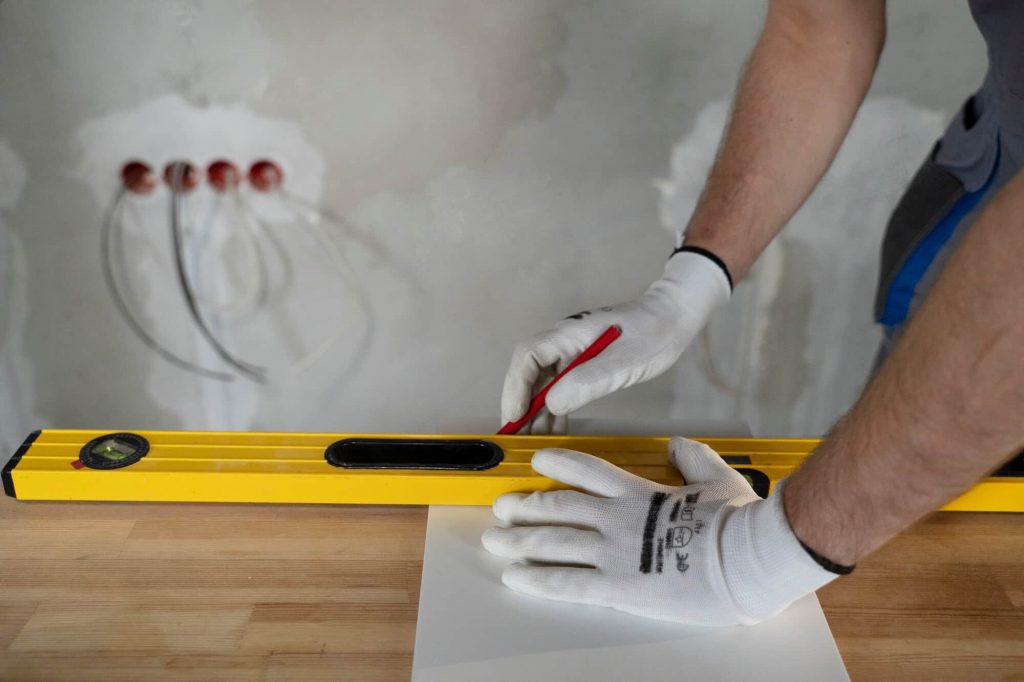
Worker marking tile placement with a level and pencil, ensuring accurate As-Built measurements for precise wall tile layout.

Partnering with Professionals for Accurate Measurements

While DIY tools can help with basic projects, complex or large-scale tile installations often require professional expertise. Companies specializing in laser scanning for tile placement provide high-precision data and expert guidance, ensuring your project is executed flawlessly.

Final Thoughts

Achieving a perfect tile layout starts long before the first tile is set. By prioritizing accurate As-Built measurements, you lay the groundwork for a successful project, free from costly errors and rework. With cutting-edge tools like laser scanning and 3D modeling, it’s easier than ever to bring your vision to life.

So, whether you’re renovating a small bathroom or planning a large commercial installation, remember: precise measurements are the cornerstone of exceptional tiling.

Check our activity on:

How to Create As-Built Documentation for Custom Furniture Manufacturing

In the world of custom furniture manufacturing, precision is paramount. From crafting bespoke pieces that fit perfectly within unique spaces to ensuring seamless integration with existing interiors, the process demands meticulous planning and execution. One critical component of this process is As-Built documentation—an invaluable resource that serves as the foundation for accurate design and manufacturing.

In this article, we’ll explore what As-Built documentation entails, why it’s essential for custom furniture projects, and how it can be efficiently created using modern tools like point cloud technology and CAD systems.

What Is As-Built Documentation?

Measuring components for As-Built CAD drawings in custom furniture manufacturing.

At its core, As-Built documentation captures the precise measurements and physical characteristics of a space as it exists in the real world. This type of documentation differs from initial design plans, which often reflect theoretical dimensions or planned layouts.

Instead, As-Built plans provide an accurate snapshot of the actual conditions on-site, incorporating any changes or discrepancies that occurred during construction.

For custom furniture manufacturing, As-Built documentation acts as the bridge between the creative vision and physical execution. It ensures that every design decision is based on reliable data, minimizing costly errors and maximizing efficiency.

Why Is As-Built Documentation Important for Custom Furniture Manufacturing?

The furniture industry often faces unique challenges, especially when dealing with projects that require a perfect fit into existing spaces. Here’s why As-Built documentation is crucial for these endeavors:

  • Accuracy in Design and Fit: Custom furniture must integrate seamlessly into the architectural context of a space. As-Built plans provide the exact dimensions and spatial relationships, allowing designers to tailor their creations with unparalleled precision. This is particularly important for tight spaces, irregular layouts, or areas with non-standard measurements.
  • Streamlined Collaboration: As-Built documentation facilitates better communication between architects, designers, and manufacturers. By working from a unified set of accurate drawings or point cloud data, all stakeholders can collaborate more effectively, reducing misunderstandings and ensuring alignment throughout the project.
  • Cost and Time Savings: Errors in custom furniture projects can be expensive. Miscalculations in dimensions may lead to delays, wasted materials, or even a need to start over. By using As-Built documentation as a reference point, manufacturers can avoid these pitfalls, saving both time and money.
  • Compliance and Record-Keeping: For projects involving historical buildings or regulated spaces, As-Built documentation may be required to comply with local codes and guidelines. It also serves as a permanent record of the completed work, which can be invaluable for future renovations or modifications.
Craftsman measuring and marking materials for custom furniture manufacturing based on As-Built plans.

Steps to Create As-Built Documentation for Custom Furniture Manufacturing

Creating As-Built documentation is a multi-step process that combines on-site data collection, advanced technology, and careful interpretation. Here’s a closer look at the workflow:

1. On-Site Measurement and Data Collection

The first step in creating As-Built documentation involves gathering precise measurements of the space. Traditionally, this was done manually with measuring tapes and sketches—a time-consuming and error-prone approach. Today, laser scanning technology has revolutionized this process.

  • Laser Scanning and Point Clouds: Using 3D laser scanners, professionals can quickly capture millions of data points to create a detailed representation of the space. These point clouds form the basis for highly accurate As-Built documentation, capturing every curve, angle, and irregularity in the environment.

2. Processing Point Cloud Data

Once the laser scanning is complete, the raw point cloud data must be processed. Specialized software is used to convert this data into a structured format that can be interpreted and utilized for furniture design.

  • Point Cloud to CAD Conversion: The processed point cloud is translated into CAD (Computer-Aided Design) models, which form the foundation of As-Built drawings. These models can include floor plans, elevations, and cross-sections, providing a comprehensive understanding of the space.

3. Creating As-Built CAD Drawings

Using the CAD models derived from point cloud data, professionals create detailed As-Built drawings tailored to the needs of the custom furniture project. These drawings may include:

  • Floor Plans for Interiors: Highlighting spatial relationships, measurements, and furniture placement.
  • Detailed Elevations: Providing a vertical perspective of walls, windows, and other architectural elements.
  • 3D Models: Enabling visualization of how custom furniture will fit within the space.

4. Incorporating Design Elements

With accurate As-Built documentation in place, designers can confidently develop furniture concepts that align with the space’s constraints and aesthetic requirements. This stage involves integrating material choices, structural considerations, and ergonomic factors into the design.

5. Verification and Updates

Before moving into production, it’s essential to verify the accuracy of the As-Built documentation against the physical site. Any discrepancies should be addressed at this stage to avoid complications during manufacturing or installation.

Key Tools and Technologies for As-Built Documentation

Modern As-Built services rely heavily on advanced tools and software. Here are some of the technologies that play a pivotal role in the process:

3D Laser Scanners: Devices like FARO and Leica scanners capture detailed spatial data with incredible precision.

Point Cloud Software: Platforms like Autodesk ReCap and CloudCompare process raw scanning data for use in CAD systems.

CAD and BIM Software: Tools like AutoCAD, Revit, and SketchUp enable the creation of comprehensive As-Built drawings and 3D models.

Applications of As-Built Documentation in the Furniture Industry

As-Built documentation has diverse applications in custom furniture manufacturing, including:

  • Built-In Furniture
    Designing custom cabinetry, shelving, and seating that fits perfectly into unique spaces.
  • Office and Commercial Interiors
    Crafting furniture solutions tailored to dynamic workspaces or retail environments.
  • Historical Restoration
    Creating bespoke furniture for heritage sites while respecting architectural integrity.
  • Space Optimization
    Maximizing functionality in small or irregularly shaped areas.
Installing a custom drawer system with precision hardware for As-Built furniture design.

Challenges and Best Practices for Creating As-Built Documentation

While the benefits of As-Built documentation are clear, the process does come with challenges. Here’s how to address them:

  • Ensuring Data Accuracy
    Always use high-quality scanning equipment and validate measurements with manual checks.
  • Managing Large Data Sets
    Point clouds can be enormous, so invest in powerful processing software and hardware.
  • Collaboration Across Teams
    Foster clear communication between all parties involved, from designers to manufacturers.

Final Thoughts: Why As-Built Documentation Matters

In the competitive world of custom furniture manufacturing, As-Built documentation is not just a technical necessity—it’s a strategic advantage. By providing an accurate and reliable foundation for design and production, it ensures that every project meets the highest standards of quality and precision.

Whether you’re crafting a bespoke dining set for a private residence or designing innovative furniture solutions for a commercial space, As-Built documentation is the key to turning vision into reality. With tools like point cloud technology and CAD systems, the process has never been more efficient or effective.

If you’re ready to embrace the future of custom furniture manufacturing, start by investing in comprehensive As-Built documentation. It’s a decision that will save time, reduce costs, and deliver exceptional results for your clients.

Check our activity on:

How Contractors Use 3D Scanning to Minimize Budget Overruns 

In the world of construction, staying within budget can be a monumental challenge. Unforeseen conditions, miscommunications, and design errors often lead to costly overruns that stress stakeholders and derail projects. Thankfully, advancements in technology, particularly 3D scanning, are revolutionizing the way contractors approach planning, execution, and problem-solving. 

Laser scanning technology has revolutionized the way construction professionals manage project costs. From pre-construction planning to as-built documentation, this laser scanning technology allows contractors to work smarter, reduce risks, and ensure projects stay on track financially. Let’s dive into how 3D scanning is transforming the industry and helping contractors minimize budget overruns. 

What Is 3D Scanning?

At its core, 3D scanning uses laser technology to capture the precise geometry of a physical space or object, creating a digital representation known as a point cloud. These point clouds can be transformed into 3D models, as-built documentation, or incorporated into Building Information Modeling (BIM) systems. 

The accuracy of 3D scanning allows construction professionals to visualize and analyze spaces down to the millimeter, eliminating many of the uncertainties that have traditionally plagued construction projects. 

Why Budget Overruns Happen in Construction

Before exploring how 3D scanning addresses budget overruns, it’s important to understand why they occur. Here are a few common culprits: 

  • Inaccurate Site Data: Traditional surveying methods often leave room for interpretation or miss key details, leading to errors in design and planning.
  • Design Changes: As projects evolve, unexpected changes to the original plan can create additional costs.
  • Rework: Misplaced components or errors in measurements can lead to expensive corrections during the construction process.
  • Poor Communication: Breakdowns in coordination among architects, engineers, and contractors can cause confusion and project delays.
  • Unforeseen Conditions: Especially in renovation or retrofit projects, hidden conditions like structural issues or mismarked utilities can lead to major setbacks.

By addressing these issues head-on, 3D scanning helps contractors mitigate risks and avoid financial pitfalls. 

Applications of 3D Scanning in Construction

1. Pre-Construction Planning

One of the most impactful ways 3D scanning reduces budget overruns is during the pre-construction phase. By providing detailed and accurate site data, 3D scanning enables contractors to:

Efficient pre-construction planning with detailed design discussions.
  • Perform precise site analysis.
  • Pinpoint potential issues, like uneven ground or structural misalignments, prior to starting construction.
  • Collaborate effectively with architects and engineers using a shared, detailed model.

Accurate data reduces the likelihood of design errors and ensures that all stakeholders are on the same page before the first shovel hits the ground. 

2. As-Built Documentation

As-built documentation is essential for capturing the exact state of a project at various stages. 3D scanning creates precise records of existing conditions, ensuring: 

  • Accurate measurement of existing structures for retrofit or renovation projects.
  • Seamless integration of new designs into old spaces.
  • A dependable resource for contractors, minimizing the likelihood of expensive errors during implementation.
Professional As-Built documentation with technical design details.

For instance, in tenant improvement projects, as-built documentation allows contractors to navigate complex, pre-existing conditions with confidence, ensuring renovations stay on schedule and budget. 

3. BIM Integration

Building Information Modeling (BIM) is a fundamental aspect of contemporary construction, and 3D scanning fits effortlessly into this workflow. By combining point cloud data with BIM software, contractors can: 

Engineer working on a 3D model using BIM software in construction.
  • Create highly accurate, data-rich models of construction projects.
  • Model various construction scenarios to detect potential challenges in advance.
  • Streamline processes, from acquiring materials to managing project timelines.

BIM integration not only enhances project efficiency but also provides a clear roadmap, reducing the likelihood of surprises and subsequent budget overruns. 

The Importance of 3D Scanning in Renovation Work

Renovation projects frequently present a distinct array of challenges. From dealing with outdated infrastructure to adapting to hidden conditions, contractors must navigate the unknown. Here, 3D scanning offers unparalleled advantages. 

Tenant Improvement Projects

In commercial and residential renovation projects, as-built documentation is critical for understanding existing layouts. 3D scanning helps contractors: 

  • Capture detailed measurements of walls, ceilings, floors, and utilities.
  • Avoid clashes between new installations and existing structures.
  • Plan renovations that align with the client’s budget and timeline.

By providing an accurate starting point, 3D scanning minimizes the risk of costly surprises mid-project. 

Real-World Impact: How Contractors Are Benefiting 

The adoption of 3D scanning technology is transforming construction workflows by enhancing accuracy, streamlining processes, and reducing unnecessary expenses. Contractors can now rely on precise digital models and comprehensive data to guide every stage of their projects. 

Key benefits include the ability to uncover potential structural issues early, improve coordination between teams, and reduce the likelihood of costly errors. By integrating 3D scanning into pre-construction planning, on-site assessments, and documentation, contractors can achieve more predictable project outcomes while staying within budget and on schedule. 

This technology enables professionals to make well-informed choices and utilize their resources effectively, leading to more streamlined and successful construction projects.

Construction professionals discussing 3D scanning and project workflows.

Advantages of 3D Scanning for Cost Management

  • Enhanced Accuracy: Laser scanning captures every detail, reducing the likelihood of measurement errors and rework.
  • Risk Reduction: By uncovering potential issues early, contractors can address them proactively, avoiding unexpected costs.
  • Time Savings: With faster data collection and more efficient planning, projects can move forward more quickly.
  • Improved Collaboration: Shared, highly detailed models foster better communication among stakeholders.

Looking Forward: The Evolving Future of 3D Scanning in Construction

With laser scanning technology becoming increasingly accessible, its impact on construction is set to grow significantly. Emerging trends include: 

  • Drone-Based Scanning: For large or hard-to-reach sites, drones equipped with 3D scanners are streamlining the data collection process.
  • Real-Time Scanning: Advances in real-time scanning and augmented reality are enabling contractors to visualize changes on-site instantly.
  • AI Integration: Artificial intelligence is now utilized to process 3D scan data, detecting potential problems and offering automated solutions.

These innovations pave the way for enhanced precision, improved efficiency, and greater cost savings for contractors in the future.

Conclusion

3D scanning has emerged as a vital tool for contractors looking to minimize budget overruns and improve project outcomes. Offering exceptional precision and practical insights, this technology is reshaping how construction projects are designed, carried out, and recorded. Whether it’s pre-construction planning, as-built documentation, or BIM integration, 3D scanning offers a clear path to smarter, more efficient construction. For contractors in the U.S., embracing this advanced technology has shifted from being optional to essential in today’s competitive and budget-focused industry.

Check our activity on:

When Should You Upgrade from Manual Measurements to 3D Scanning? 

In construction, design, and renovation, even the smallest details play a crucial role. Accurate measurements are typically the foundational and most essential step for a project’s success. Traditionally, these measurements were taken manually, using tape measures, levels, and rulers. But as technology advances and projects grow in complexity, the limitations of manual methods become more apparent. 

If you’ve ever faced challenges like inconsistent measurements, overlooked details, or the need to revisit a site multiple times, you might wonder if there’s a better way. Enter 3D laser scanning—a game-changing technology that’s transforming the way we capture and work with spatial data. So, when is the ideal moment to transition from manual measurements to 3D scanning? Let’s dive in. 

Understanding the Increasing Complexity of Modern Projects

Modern construction and renovation projects often require a level of precision that manual measurements struggle to deliver. Picture this: a building with intricate architectural details, a factory with a maze of pipes and equipment, or a historic landmark with irregular shapes and angles. Manually recording these details is not only labor-intensive but also susceptible to mistakes. 

This is where 3D scanning technology becomes indispensable. Using advanced lasers, scanners can quickly capture millions of data points, creating a highly accurate digital model of the space. This data can then be used for everything from designing renovations to solving complex engineering challenges. 

But why not stick with the old ways? After all, they’ve worked for decades, right? Let’s delve deeper. 

Traditional measurement tools in use, emphasizing the evolution toward 3D laser scanning.

Why Manual Measurements Fall Short

Manual measurement techniques rely heavily on human effort and judgment. While experienced professionals can achieve reasonable accuracy, even the best teams can’t avoid occasional mistakes. A small misstep in measuring a doorway, ceiling height, or wall angle can lead to big problems later—delays, rework, and added costs. 

Moreover, traditional methods often require multiple site visits. Imagine realizing halfway through a project that a key measurement was missed. You’d need to pause everything, send someone back to the site, and hope the new data integrates smoothly with your existing plans. 

3D laser scanning, on the other hand, captures a complete snapshot of the space in one go. This means you have all the data you need from the start, including details you might not think to measure manually. Once you’ve worked with this level of precision, it’s hard to go back. 

How 3D Scanning Works

For those unfamiliar, 3D laser scanning involves using a device that emits laser beams to map the dimensions and features of a space. As the laser hits surfaces, it collects millions of data points, creating what’s known as a “point cloud.” The point cloud can be transformed into a digital 3D model or seamlessly integrated into design tools such as AutoCAD or Revit.

The process is fast, precise, and incredibly detailed. In just a few hours, you can scan an entire building, capturing everything from structural elements to minute imperfections. This digital record can then be referenced throughout the project, ensuring everyone involved has access to the same accurate information. 

When Should You Make the Switch?

The decision to adopt 3D scanning technology depends on your specific needs, but here are some signs that it might be time: 

  • Your Projects Are Getting More Complex: If you’re working on buildings with unique shapes, tight tolerances, or dense equipment layouts, manual measurements might not be up to the task. 
  • You’re Experiencing Frequent Errors: Do mistakes in measurements lead to costly delays or rework? Upgrading to 3D scanning can help eliminate these frustrations. 
  • Your Clients Expect More: As client demands for accuracy and transparency increase, being able to offer detailed 3D documentation can set you apart. 
  • You’re Adopting Digital Tools: Many industries are moving toward digital workflows like BIM (Building Information Modeling). 3D scans provide the precise input needed for these systems. 

While these points offer guidance, the most compelling reason to switch often comes down to one thing: efficiency. In a competitive industry, saving time without compromising quality can make all the difference. 

The Human Side of 3D Scanning

One of the most underrated benefits of 3D laser scanning is the sense of confidence it provides. Knowing that you have a complete, accurate digital record of your project removes much of the guesswork from design and planning. It allows you to focus on creative solutions instead of worrying about whether your measurements will hold up. 

Clients, too, appreciate this level of precision. When you can share a detailed 3D model with them, it builds trust and opens up new opportunities for collaboration. Whether it’s a property owner seeing their renovation plans in stunning detail or a developer visualizing how new elements will fit into an existing structure, the impact is tangible. 

Overcoming Common Concerns

For some, the idea of adopting a new technology like 3D scanning can be intimidating. What if the equipment is too expensive? What if the learning curve slows down your team? While these concerns are valid, they can be effectively addressed. 

For those hesitant to invest in their own scanner, partnering with a professional 3D scanning service can be a great way to get started. This allows you to test the technology without a significant upfront cost. Moreover, numerous providers offer training and support to help teams adapt to the new workflows with ease. 

Once you experience the benefits firsthand, the decision to fully embrace 3D scanning often feels like a no-brainer. 

Looking Ahead

The future of construction and renovation is undeniably digital. With the ongoing evolution of tools like 3D laser scanning, they are set to become an integral part of how we design, construct, and manage our spaces. Those who have embraced this technology early are already enjoying its benefits, including accelerated project timelines, reduced errors, and enhanced client satisfaction. 

So, is now the right moment for you to make the upgrade? If you’re ready to leave the frustrations of manual measurements behind and embrace a more efficient, accurate way of working, 3D scanning technology is waiting for you. It’s more than just a tool—it’s a smarter and more efficient approach to work.

Check our activity on:

What is LiDAR Scanning and How Does It Work? 

LiDAR scanning, a cutting-edge technology used for precise measurements and mapping, has become an integral tool across various industries in the United States. From construction projects to geospatial surveys, the adoption of LiDAR technology continues to rise due to its accuracy, efficiency, and versatility. 

In this article, we’ll break down LiDAR scanning, explain how it works, explore its main types, and discuss its applications across different industries.Whether you’re an entrepreneur, a technical professional, or simply curious about the technology, this guide offers valuable insights into LiDAR and its significance. 

What is LiDAR Scanning? 

LiDAR, which stands for Light Detection and Ranging, is a technology that uses laser light to measure distances with high precision. It is a remote sensing technique that employs laser pulses to accurately measure distances and generate precise 3D models of objects and surroundings. These 3D models are built using point cloud data—millions of spatial coordinates captured by a LiDAR sensor. 

Unlike traditional measuring techniques, LiDAR offers unmatched speed and precision, making it ideal for complex projects like 3D laser scanning of buildings, factories, and infrastructure. 

Why is LiDAR Technology Relevant Today?

Modern industries increasingly rely on detailed spatial data for decision-making, analysis, and design. Whether it’s urban planning, historical preservation, or plant facility upgrades, LiDAR delivers accurate documentation, saving time and reducing costly errors. 

In the U.S., LiDAR applications are expanding into fields such as environmental monitoring, construction planning, and drone-based mapping. Its ability to produce high-accuracy point cloud data even in challenging conditions makes it indispensable for professionals. 

How Does LiDAR Scanning Work?

The working principle of LiDAR is straightforward but highly advanced. 

  1. Laser Emission: A LiDAR scanner emits rapid pulses of laser light toward a target surface.
  2. Measuring Distances: The laser pulse reflects off the target and returns to the sensor. The time taken for the pulse to return is measured and calculated to determine the exact distance with precision.
  3. Creating Point Clouds: Millions of laser measurements are collected per second, generating a dense point cloud dataset that represents the scanned object or environment.
  4. 3D Model Creation: Point cloud data is processed and refined to produce accurate 3D models or detailed maps for in-depth analysis. 

Types of LiDAR Scanners

There are several types of LiDAR scanners, each suited for specific applications: 

  • Airborne: Mounted on drones, helicopters, or planes, airborne LiDAR captures large-scale terrain and landscapes. This type of LiDAR mapping is commonly used for environmental surveys, forestry analysis, and flood risk assessments. 
  • Terrestrial: Stationary or tripod-mounted terrestrial scanners are ideal for ground-based projects like 3D laser scanning of buildings, factories, and infrastructure. This method is widely used in construction, historical preservation, and plant redesign projects. 
  • Mobile: Mounted on vehicles, mobile scanners are excellent for road surveys, railway mapping, and urban planning. Their mobility allows for rapid data collection over large areas. 
  • Handheld: Portable and flexible, handheld scanners are ideal for small-scale projects and indoor scans. They provide flexibility when capturing details in tight or hard-to-reach spaces. 
A digital map, highlighting LiDAR technology for 3D mapping and surveys.

Applications of LiDAR Technology

LiDAR scanning is transforming industries with its diverse applications. Key Applications of LiDAR Technology:

  • LiDAR for Mapping and Cartography: LiDAR is a revolutionary tool for creating highly accurate topographical maps. From urban landscapes to rugged terrains, airborne and mobile LiDAR systems generate precise elevation data used in city planning, disaster response, and environmental studies. 
  • Construction and 3D Laser Scanning: In construction, LiDAR technology simplifies project planning, monitoring, and execution. By producing detailed 3D laser scans of existing structures, engineers and architects can create accurate as-built models, detect deviations, and streamline renovations. 
  • Geodetic LiDAR Surveys: For land surveying, LiDAR offers unparalleled precision and efficiency. Compared to traditional geodetic methods, LiDAR delivers faster results while capturing vast landscapes with high accuracy. This is particularly beneficial for large-scale infrastructure developments and real estate project planning. 
  • Architectural and Industrial Applications: LiDAR helps architects and industrial engineers assess complex environments, from historical buildings to manufacturing plants. By scanning facilities and creating detailed point cloud data, teams can optimize layouts, improve designs, and reduce risks during renovations. 

Advantages of LiDAR Technology

The growing adoption of LiDAR scanning stems from its numerous advantages: 

  • High Accuracy and Detail: LiDAR provides precision down to millimeters, ensuring exact measurements even in complex environments. This is crucial for projects requiring utmost precision, such as structural assessments and industrial design.
  • Rapid Data Acquisition: LiDAR systems collect millions of data points per second, significantly cutting down survey time compared to traditional methods. This allows businesses to accelerate project timelines and reduce costs. 
  • Capability to Work in Challenging Conditions: Whether it’s nighttime, dense vegetation, or hard-to-reach terrains, LiDAR sensors can collect reliable data. This flexibility makes it ideal for environmental studies, road construction, and utility management. 

The Importance and Future of LiDAR Scanning

As industries undergo digital transformation, LiDAR technology plays a key role in fostering innovation and improving operational efficiency. In construction and engineering, for instance, LiDAR enables accurate as-built documentation, which is crucial for reconstruction and renovation projects. 

For businesses involved in facility upgrades, accurate scans provide the foundation for streamlined workflows and safer environments. By adopting LiDAR scanning, organizations can enhance their operations, improve planning, and minimize project risks. 

Looking to the future, advancements in LiDAR sensors and integration with drones, AI, and cloud-based platforms will further expand its applications. From smart cities to environmental sustainability, the possibilities for LiDAR technology are limitless. 

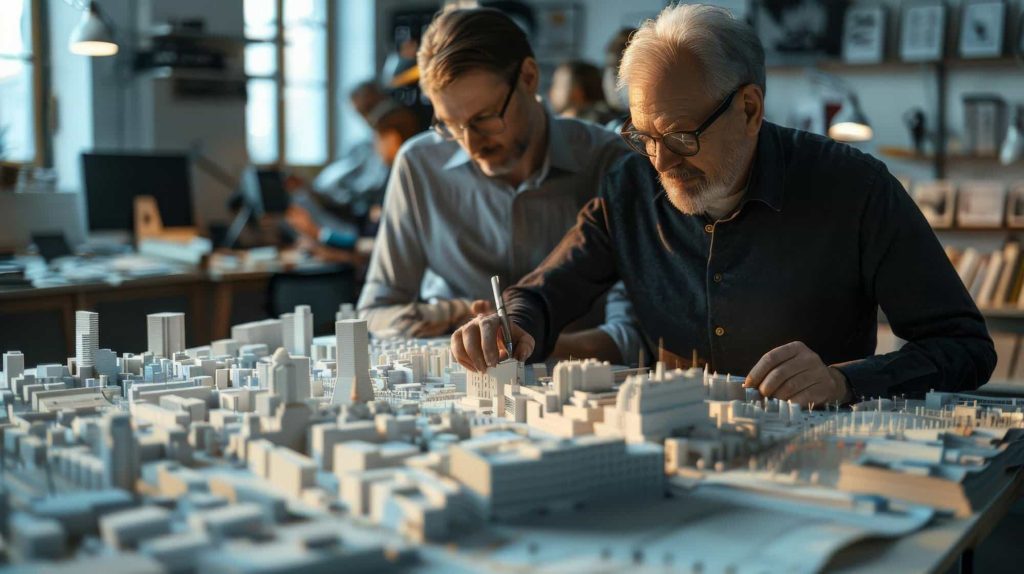
Two professionals work on a city model, showcasing LiDAR mapping and 3D laser scanning for precise planning and point cloud data.

Conclusion

LiDAR scanning has redefined the way we map, measure, and design the world around us. By providing unparalleled accuracy, speed, and versatility, it has become a critical tool across industries like construction, surveying, and mapping. 

Companies like ScanM2.com leverage professional-grade LiDAR scanners such as FARO, Leica, and Trimble to deliver highly detailed 3D laser scans and reliable point cloud data. These solutions empower businesses to make strategic decisions while achieving unparalleled accuracy in their projects. 

As the demand for innovative measurement technologies grows, LiDAR applications will continue to shape industries and drive progress. If you’re looking to harness the power of LiDAR for your next project, investing in this technology is a step toward smarter, more efficient solutions.

Check our activity on:

The Role of As-Built Drawings in Tenant Improvement Projects

Tenant improvement projects play a crucial role in the commercial real estate market, especially in a dynamic economy like the United States. Whether it’s transforming a retail space for a new boutique, updating an office for a fresh lease, or reconfiguring a warehouse to meet operational needs, tenant improvement projects ensure that leased spaces are tailored to the specific needs of their occupants. However, a critical element that often determines the success of these projects is the availability of accurate As-Built drawings.

In this article, we’ll explore the significance of As-Built services for lease spaces, how they form the foundation for effective planning and execution, and their role in creating custom tenant improvement plans.

What Are Tenant Improvement Projects?

Tenant improvement (TI) projects refer to modifications made to leased spaces to meet the requirements of a new or existing tenant. These renovations range from minor updates, like repainting and new flooring, to major overhauls, such as reconfiguring layouts, installing HVAC systems, or updating plumbing and electrical infrastructure.

For landlords and tenants alike, these projects are essential. For landlords, a well-executed tenant improvement project enhances property value and marketability. For tenants, it ensures that the leased space aligns with their operational, aesthetic, and functional needs.

Engineer with blueprints at construction site.

Why Accurate As-Built Drawings Are Essential for Tenant Improvement Projects

Accurate As-Built drawings are vital for tenant improvement projects because they provide a detailed representation of the current state of the space. These drawings show the existing layout, structural elements, mechanical systems, and other critical details. Without them, it’s impossible to plan improvements effectively or address potential challenges.

Here’s why they matter:

  • Understanding Existing Conditions: As-Built drawings capture the current configuration of a space, including dimensions, materials, and systems. This information is crucial for assessing feasibility and creating realistic improvement plans.
  • Avoiding Surprises: With detailed documentation, contractors can anticipate challenges, such as irregular dimensions, outdated systems, or hidden structural issues, before construction begins.
  • Enhancing Collaboration: Accurate As-Built drawings enable seamless communication between architects, designers, contractors, and tenants, ensuring that everyone works from the same baseline.

The Connection Between Tenant Improvement Projects and As-Built Drawings

Every tenant improvement project begins with a thorough understanding of the existing space. This is where As-Built drawings come in. These detailed plans are not just blueprints of the current state; they’re the foundation for customizing the space to meet tenant requirements.

How As-Built Drawings Support Tenant Improvement Plans

  • Foundation for Design: Architects and designers rely on As-Built documentation to develop accurate design plans that reflect the existing structure and layout.
  • Informed Budgeting and Scheduling: Precise measurements and documentation allow for accurate cost estimation and realistic project timelines.
  • Compliance and Permits: As-Built drawings often serve as a reference for ensuring that tenant improvement projects comply with building codes, zoning regulations, and lease agreements.

As-Built Drawings: The Key to Successful Renovation

Why Accuracy Matters in As-Built Services for Lease Spaces

The quality of As-Built services can make or break a tenant improvement project. Even small inaccuracies in measurements or details can lead to costly delays, design errors, or construction issues.

Key benefits of accurate As-Built services include:

  • Precise Measurements for Effective Planning: High-quality As-Built drawings ensure that every inch of the space is accounted for, which is especially important in tight retail spaces or complex office layouts.
  • Risk Reduction: By identifying potential obstacles early, these drawings minimize costly surprises during construction.
  • Improved Efficiency: Contractors can work more effectively with detailed documentation, reducing downtime and ensuring a smoother workflow.

At ScanM2, we use professional laser scanning technologies from Faro, Leica, and Trimble to produce As-Built drawings with unmatched precision. This ensures that every detail, from wall thicknesses to utility placements, is captured with accuracy.

Modern renovated interior with decorative lighting.

Custom Tenant Improvement Plans: Adapting Spaces to Tenant Needs

Tenant improvement projects are never one-size-fits-all. Each project is unique, requiring a tailored approach to meet the specific goals of the tenant and the functional demands of the space.

How As-Built Drawings Support Customization

As-Built drawings serve as the starting point for creating custom tenant improvement plans. They provide:

  • A Clear Baseline: Accurate documentation of the existing space allows architects and designers to adapt layouts and integrate tenant-specific requirements seamlessly.
  • Design Integration: As-Built services enable smooth collaboration between design and engineering teams, ensuring that aesthetic and functional changes are achievable.
  • Adaptation for Tenant Goals: Whether it’s reconfiguring a retail space for better customer flow or updating an office for collaborative work, As-Built drawings guide the transformation process.

Retail Space Improvements: From Vision to Reality

Retail spaces require special attention during tenant improvement projects. The layout, flow, and aesthetics of a store can significantly impact customer experience and, ultimately, sales.

Optimizing Retail Spaces with As-Built Services

  • Efficient Use of Space: Detailed As-Built drawings help optimize layouts, ensuring that every square foot is used effectively.
  • Customer Flow: Proper documentation allows designers to create layouts that enhance the customer journey, from entry to checkout.
  • Compliance with Lease Terms: Many retail leases include specific requirements for modifications. As-Built services ensure compliance, avoiding potential disputes.

Commercial Lease Space Documentation: The Importance of Accuracy

Accurate documentation benefits all stakeholders in a commercial lease agreement: tenants, landlords, and contractors. It eliminates guesswork, reduces disputes, and ensures that projects are executed smoothly.

Key Benefits of High-Quality As-Built Documentation

  • Transparency and Trust: Clear and precise documentation fosters confidence between tenants and landlords.
  • Dispute Avoidance: By providing a definitive record of the space’s condition, As-Built services help prevent disagreements during or after renovations.
  • Enhanced Longevity: High-quality As-Built drawings can be referenced for future projects, saving time and resources in subsequent improvements.

The Essential Role of As-Built Drawings in Tenant Improvement Projects

Tenant improvement projects are pivotal for transforming leased spaces to meet the specific needs of tenants while maximizing the value of commercial properties. At the heart of every successful project lies accurate, detailed As-Built documentation.

From planning and design to execution and compliance, As-Built drawings form the foundation for smooth and efficient tenant improvement projects. They ensure precise planning, minimize risks, and facilitate collaboration among all stakeholders.

If you’re planning a tenant improvement project, consider the importance of professional As-Built services to ensure the success of your renovation. Companies like ScanM2, with expertise in laser scanning and high-precision documentation, can provide the insights you need to bring your vision to life.

Invest in accuracy, and watch your tenant improvement projects thrive.

Check our activity on:

Common Measurement Challenges in Interior Design and How 3D Scanning Provides Accurate Solutions

Precise measurements are the foundation of every successful interior design project. Whether you’re remodeling a home, furnishing a commercial space, or redesigning a retail store, precision plays a critical role. However, traditional measurement methods often fall short, leading to costly mistakes, delays, and unsatisfied clients. From human error to the challenges of measuring complex spaces, interior designers face numerous hurdles.

In this article, we will explore the common measurement challenges in interior design, highlight how they impact projects, and provide a modern solution: 3D laser scanning. Using advanced 3D scanning technology, designers can create accurate floor plans, eliminate measurement issues, and deliver exceptional results.

Common Measurement Challenges in Interior Design

Measuring Complex Spaces

Interior spaces are rarely uniform. High ceilings, curved walls, archways, and irregular layouts can make manual measurement a daunting task. Designers often struggle to measure such spaces accurately, resulting in:

  • Inconsistent dimensions that disrupt design plans.
  • Misaligned furniture, fixtures, and structural elements.
  • Increased project delays due to remeasurement.

For example, trying to measure a room with decorative molding or curved surfaces manually can take hours and still lead to inaccuracies.

Irregular Angles and Geometric Errors

Perfectly square rooms are rare. Many interior spaces have irregular angles and deviations from standard dimensions. Manual tools like tape measures and lasers may not identify these discrepancies, which can cause:

  • Mismatched cabinetry, furniture, or built-ins.
  • Miscalculations during flooring installation or wall paneling.
  • Structural problems during renovations or remodeling.

Such issues are especially common in older buildings, where wear and tear over time lead to uneven walls and floors.

Common Measurement Challenges in Interior Design and How 3D Scanning Provides Accurate Solutions

Human Error

Manual measurements rely heavily on the individual performing them. Fatigue, distraction, or a small oversight can result in critical errors. The consequences of human error include:

  • Incorrect floor plans.
  • Ordering materials in wrong sizes.
  • Costly delays to fix mistakes during construction or installation.

For example, missing just one inch on a measurement can prevent a custom cabinet from fitting, wasting both time and resources.

The Solution: 3D Laser Scanning for Interior Design

What is 3D Laser Scanning?

3D laser scanning is a groundbreaking technology that employs lasers to capture highly detailed and accurate measurements of any space. It produces a point cloud, a precise 3D digital representation of the scanned environment with exceptional accuracy. These point clouds serve as the foundation for creating detailed floor plans, 3D models, and accurate as-built documentation.

Unlike manual measurement tools, 3D laser scanners quickly capture every corner, angle, and irregularity of a space, ensuring no detail is missed.

Solving Common Measurement Challenges

Here’s how 3D laser scanning addresses the key challenges:

  • Eliminating Human Error: Since the process is automated, it removes the risk of oversight or inconsistency caused by manual measurements.
  • Accurate Measurements of Complex Spaces: 3D scanning easily handles irregular layouts, curved walls, and intricate designs. It creates precise floor plans and models, eliminating guesswork.
  • Capturing Irregular Angles: The scanner records every angle and deviation with millimeter-level accuracy, ensuring perfect alignment for furniture, cabinetry, and structural elements.

With 3D laser scanning, interior designers gain confidence that their measurements are 100% reliable, streamlining the entire design process.

How 3D Scanning Works in Interior Design

  1. On-Site Scanning: A technician scans the interior space using specialized 3D laser scanning equipment.
  2. Generating Point Cloud Data: The scanner creates a digital replica of the space, capturing every dimension and surface.
  3. Creating Floor Plans and Models: The point cloud data is processed into detailed floor plans, 3D models, and BIM files for precise design work.
  4. Implementation: Designers and contractors use these plans to develop and execute projects with unmatched accuracy.

Benefits of 3D Scanning for Interior Designers

Saves Time and Money

3D scanning reduces the time spent on manual measurements and eliminates costly mistakes caused by human error. It allows designers to:

  • Avoid remeasurement and project delays.
  • Optimize material usage by ensuring precise dimensions.
  • Streamline workflows for faster project completion.

High Accuracy and Precision

Unlike traditional tools, 3D scanners capture every detail of a space with precision. This is especially valuable for:

  • Renovations in historic buildings with irregular structures.
  • Large-scale commercial interiors.
  • Custom furniture installations.

Improved Collaboration

3D scanning provides digital data that can be shared with architects, contractors, and other stakeholders. Everyone works from the same accurate plans, reducing miscommunication and errors.

Versatility

3D laser scanning is suitable for various interior projects, including:

  • Home renovations and remodels.
  • Commercial office spaces.
  • Retail store redesigns.
  • Restaurant and hotel interiors.
Common Measurement Challenges in Interior Design and How 3D Scanning Provides Accurate Solutions

Case Study: Solving Measurement Issues in a Complex Interior Project

A client hired SCANM2 to assist with remodeling a historic commercial property. The challenges included:

  • Irregular walls and non-standard angles.
  • High ceilings with decorative molding.
  • Significant human error in previous measurements.

Using 3D laser scanning, our team created a highly detailed point cloud of the space, which was transformed into precise floor plans and 3D models. The result?

  • Accurate dimensions that eliminated guesswork.
  • Optimized material ordering and installation.
  • Timely project completion with zero remeasurement required.

The client saved both time and money while achieving a flawless design.

Why Choose SCANM2 for 3D Laser Scanning?

SCANM2 provides advanced 3D laser scanning services across the United States, delivering accurate measurements and digital models for interior design projects. Here’s why clients trust us:

  • State-of-the-Art Technology: We use the latest laser scanners for millimeter-level precision.
  • Fast Turnaround: Projects are completed quickly without compromising quality.
  • Experienced Team: Our specialists ensure every scan meets industry standards.
  • Nationwide Coverage: We serve designers, architects, and contractors across the U.S.

Conclusion

Measurement challenges, such as complex spaces, irregular angles, and human error, can derail interior design projects and cause unnecessary delays. By adopting 3D laser scanning technology, designers can overcome these hurdles, create accurate floor plans, and deliver exceptional results to their clients.

If you’re ready to take your interior design projects to the next level with accurate measurements and 3D models, contact SCANM2 today. Our expert team is here to help you streamline your workflow and achieve flawless designs.

Get in touch with SCANM2 now to learn more about our 3D scanning services!

Check our activity on:

The Importance of As-Built Services for Historical Preservation

Preserving historical buildings is more than a matter of aesthetics or nostalgia; it is a commitment to maintaining the cultural, architectural, and historical legacy of our communities. In the United States, a country with a rich and diverse heritage, safeguarding these iconic structures is a vital task. However, historical preservation comes with unique challenges that require precision, expertise, and advanced technology. This is where As-Built documentation for historic buildings plays an essential role.

Why Historical Preservation Matters

Historic buildings are physical markers of our past, telling stories of the eras and cultures that shaped our society. From iconic landmarks like Monticello and the Alamo to smaller but equally significant structures in local communities, each building reflects a unique story. Preserving these architectural gems allows us to honor our history, connect with our roots, and ensure that future generations can experience these cultural touchstones.

However, time and environmental factors take their toll on historic buildings. Natural aging, structural damage, and environmental changes often leave these buildings vulnerable. Preserving them requires delicate work to maintain their authenticity while meeting modern safety and usability standards. This is where precise and reliable As-Built services make all the difference.

**Alt Text:**  
Facade of a historic building with carvings and statues — showcasing the importance of as-built services for preserving heritage.

Challenges in Preserving Historic Buildings

Restoring and preserving historic buildings is fraught with challenges. Many older structures lack detailed records or updated documentation, leaving architects, engineers, and preservationists to work with incomplete or outdated information. The following challenges are common:

  • Unknown or Altered Layouts: Over decades or centuries, many buildings undergo renovations or changes that are undocumented. Understanding the current state of these buildings is crucial for effective preservation.
  • Fragility of Materials: Historic materials like wood, stone, and brick may have deteriorated over time, requiring careful analysis to avoid further damage.
  • Meeting Modern Standards: Preservation work often involves integrating modern systems (like HVAC or electrical) into the building without compromising its historical integrity.
  • Accuracy of Existing Records: Incomplete or inaccurate documentation can lead to costly errors, delays, or even irreversible damage during restoration efforts.

For these reasons, As-Built documentation for historic buildings has become indispensable in the field of historical preservation.

What is As-Built Documentation?

As-Built documentation refers to the precise recording of a building’s existing condition, including its dimensions, structures, and systems. Unlike original architectural plans, which represent how a building was intended to be constructed, As-Built drawings and models capture the structure as it stands today, including any modifications made since its construction.

Modern As-Built services use advanced technologies like laser scanning and Building Information Modeling (BIM) to create highly detailed and accurate representations of a building. These technologies ensure that every aspect of the structure—down to its smallest details—is documented, providing a reliable foundation for any preservation project.

The Role of As-Built Services in Historic Preservation

When it comes to preserving historic buildings, As-Built services are an invaluable tool. They provide the data and insights necessary to make informed decisions, minimize risks, and maintain the authenticity of the structure.

Hand holding a tablet with data, highlighting as-built services for historical preservation

1. Capturing Detailed and Accurate Representations

Using cutting-edge technology such as laser scanners from Faro, Leica, and Trimble, As-Built services can capture millions of data points to create a detailed 3D model or point cloud of the building.

This level of precision ensures that no feature is overlooked, from ornate moldings to intricate carvings.

These detailed models allow preservationists to:

  • Analyze the current condition of the building in depth.
  • Identify structural weaknesses or areas of deterioration.
  • Document unique architectural features to ensure their accurate restoration.

2. Preserving Authenticity Through Accurate Documentation

Authenticity is paramount in historical preservation. As-Built documentation for historic buildings ensures that every restoration decision is guided by accurate data, allowing teams to:

  • Maintain the original design and structural integrity.
  • Understand changes made over the years and incorporate them into the preservation plan.
  • Respect the building’s historical and architectural significance.
Modern glass building beside historic cathedral, highlighting as-built services for preservation and modernization.

3. Supporting Modernization Without Compromising Integrity

Preservation efforts often require modern upgrades—such as improving accessibility, installing modern utilities, or reinforcing structural elements—while maintaining the building’s historical character.

As-Built services provide the precise data needed to design and implement these updates seamlessly. For example:

  • Engineers can use As-Built models to integrate modern HVAC or electrical systems without disrupting the building’s original features.
  • Architects can design restorations that adhere to modern building codes while preserving historical aesthetics.

4. Reducing Risks and Minimizing Errors

One of the greatest risks in historical preservation is the potential for mistakes—whether it’s damaging fragile materials, miscalculating structural changes, or misrepresenting historical features. Accurate As-Built documentation minimizes these risks by:

  • Providing a clear and comprehensive understanding of the building’s condition.
  • Eliminating guesswork during planning and restoration.
  • Allowing teams to test restoration plans in a virtual environment before executing them in real life.

How As-Built Services Work

Creating As-Built documentation involves several key steps and technologies, all designed to capture the building’s current state with the highest degree of accuracy.

  1. Laser Scanning: Using professional-grade laser scanners, such as those from Faro, Leica, and Trimble, teams capture millions of data points in a process known as 3D laser scanning. This technology provides a complete and accurate digital representation of the building’s interior and exterior.
  2. Creating 3D Models and Point Clouds: The data collected through laser scanning is then processed to create a point cloud—a detailed 3D representation of the building. From this point cloud, experts can generate precise 3D models or 2D drawings that serve as the foundation for restoration planning.
  3. BIM Integration: For complex projects, As-Built documentation often includes Building Information Modeling (BIM), which allows teams to overlay the building’s historical features with modern updates in a virtual environment. This approach streamlines collaboration and ensures every stakeholder has access to the same accurate data.

Benefits of As-Built Services for Historical Preservation

By combining advanced technology with expert craftsmanship, As-Built services offer a wide range of benefits for historic preservation projects:

  • Accurate Representation of Current Conditions: As-Built services provide a reliable snapshot of the building’s current state, enabling better decision-making.
  • Efficient Restoration Planning: Detailed documentation reduces delays, errors, and costs by ensuring every aspect of the project is planned with precision.
  • Preservation of Authentic Features: With exact measurements and models, teams can ensure the authenticity of the building’s architectural features is maintained.
  • Compliance with Modern Standards: As-Built data allows teams to integrate modern systems while respecting historical integrity.
  • Future-Proof Documentation: The digital models and point clouds created during the As-Built process serve as a valuable resource for future restoration efforts, ensuring the building’s preservation for generations to come.

Preserving historic buildings is a delicate and complex task that requires a balance of tradition and innovation. As-Built documentation for historic buildings provides the precision and reliability needed to ensure these architectural treasures are restored and maintained with care. By capturing every detail of a building’s current condition, As-Built services empower preservationists to make informed decisions, minimize risks, and uphold the authenticity of our shared heritage.

Whether it’s a centuries-old cathedral, a historic factory, or a beloved community landmark, As-Built services are the cornerstone of successful restoration efforts. As technology continues to advance, these services will remain an essential part of preserving the architectural legacy of the past while meeting the needs of the future.

Check our activity on: