
Revit 3D Modeling Services for Design, Coordination, and Renovation
In modern design and construction workflows, accurate 3D building models are no longer optional. They support coordination, design development, documentation, renovation planning, and communication between project teams. When geometry must be structured inside a BIM environment, Revit 3D modeling services provide the framework for creating dependable digital building models for architectural, structural, and technical use.
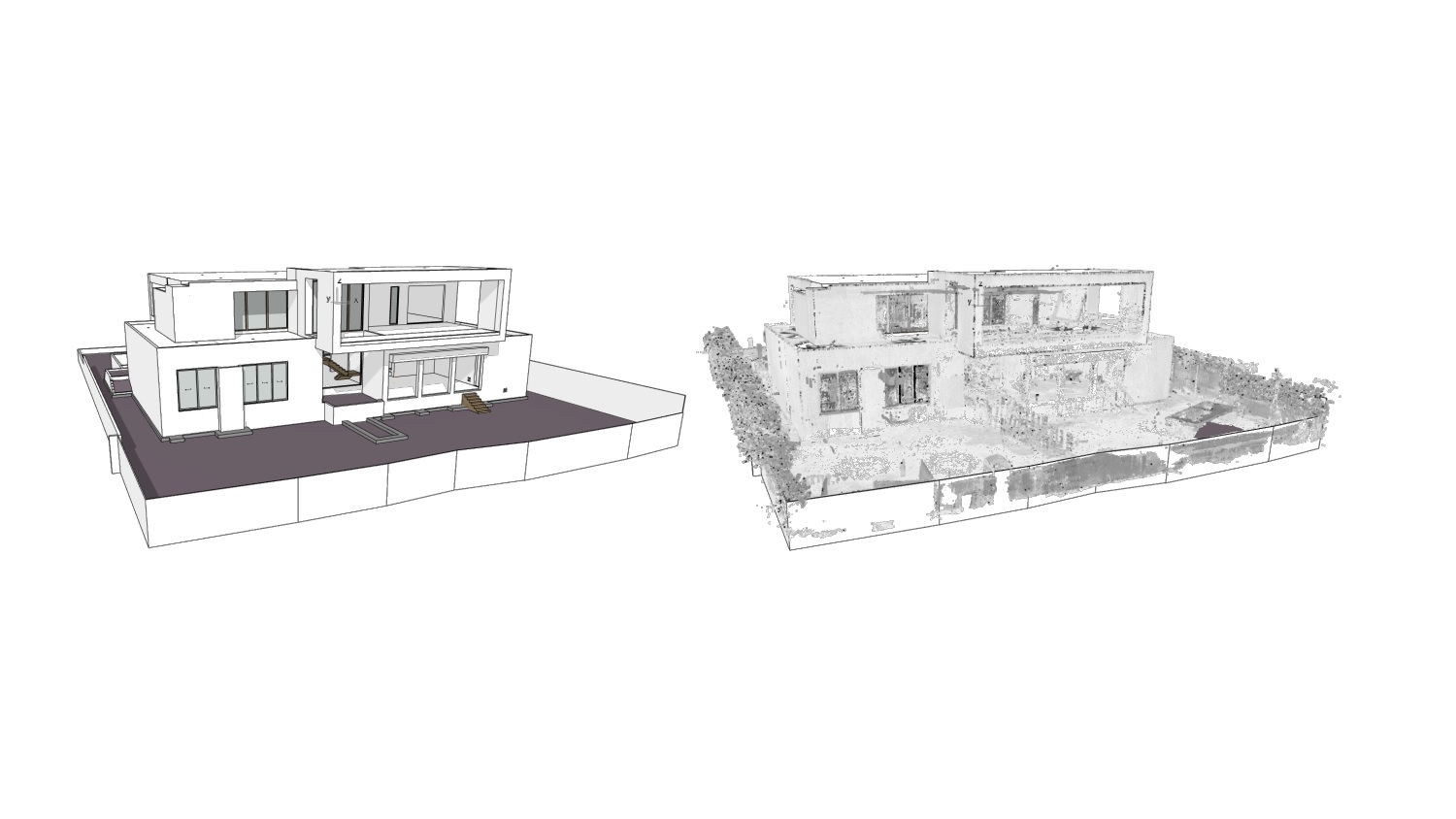
These services are used in both new and existing building projects. In some cases, the model is created from design drawings and reference files. In others, it is developed from measured site data, legacy CAD documentation, or point cloud inputs. The goal is the same: to build a usable Revit model that supports real project work rather than serving as a purely visual representation.
Contact Us Now for a Free Consultation!
What Revit 3D Modeling Services Include
Revit 3D modeling services involve the creation of structured 3D models in Autodesk Revit based on project requirements, available source data, and intended use. Depending on the task, the model may focus on architecture, structure, interiors, or selected technical systems.
A typical Revit model may include:
- walls, floors, roofs, ceilings, doors, and windows
- columns, beams, slabs, and structural framing
- stairs, shafts, openings, and railings
- reflected ceiling elements and interior geometry
- selected MEP components, depending on scope
- coordinated building geometry for documentation and further development
The exact level of detail depends on project goals. Some clients need a clean design-development model, while others require a more technical model for coordination, documentation, renovation, or downstream BIM workflows.
When Revit 3D Modeling Is Needed
Revit 3D modeling is needed when project teams require accurate digital geometry inside a BIM-based environment. This often applies to architecture, engineering, renovation, reconstruction, fit-out, and documentation workflows.
It is especially useful when:
- a project must move from 2D drawings to a structured 3D BIM model
- multiple disciplines need to coordinate within one model environment
- design decisions depend on clear and measurable building geometry
- existing documentation is incomplete, outdated, or inconsistent
- the client needs a model for further design, documentation, or planning
In these situations, a Revit model becomes a practical tool for reducing ambiguity and improving coordination across the project lifecycle.
Typical Applications of Revit 3D Modeling Services
| Project situation | Why Revit 3D modeling is used | Typical result |
|---|---|---|
| Architectural design development | The team needs a structured building model for planning and review | Coordinated Revit model for design work |
| Renovation and reconstruction | Existing geometry must be translated into a usable BIM model | Digital base for redesign and coordination |
| Interior fit-out | The layout and geometry must be modeled accurately before design development | Revit model for interiors and planning |
| Technical documentation | The model must support drawings, sections, and sheet production | Revit-based documentation workflow |
| Existing building projects | Legacy files or scan data must be turned into a structured model | Accurate Revit model of real conditions |
Revit 3D Modeling for Existing Buildings

One of the most important use cases for Revit 3D modeling is work with existing buildings. In renovation and retrofit projects, archived drawings often fail to match actual site conditions. Previous modifications may not be documented, dimensions may be unreliable, and 2D files may no longer reflect the building as it exists today.
In these cases, Revit modeling helps create a dependable digital base for further work. When the process begins from measured site data, it may connect directly with Scan to Revit workflows. This is especially valuable in renovation, modernization, fit-out, and as-built documentation projects where dimensional accuracy has a direct impact on design quality and coordination.
AutoCAD to Revit 3D Modeling
Many projects still begin with legacy CAD files. Floor plans, elevations, sections, and technical drawings may exist in AutoCAD format, but not yet in a BIM-ready model environment. In such cases, AutoCAD to Revit 3D modeling helps convert 2D documentation into a structured Revit model.
This process is especially useful when:
- a project has usable DWG or CAD reference drawings
- the team needs to move from 2D documentation into a BIM workflow
- geometry must be organized for coordination and model-based development
- the client wants a more scalable and usable digital building model
The result is not just a converted file, but a model that can support design, coordination, and further documentation in Revit.
Benefits of Revit 3D Modeling Services
The main advantage of Revit 3D modeling services is that they create order from fragmented building information. Instead of relying only on scattered drawings or isolated files, project teams work from a structured model environment.
Key benefits include:
- clearer geometry for design development
- improved coordination between disciplines
- better support for documentation and drawing production
- more efficient workflows for renovation and reconstruction
- stronger BIM foundations for future project stages
- easier communication of design intent and building conditions
In projects with multiple stakeholders, changing conditions, or technical complexity, this level of structure can significantly reduce downstream issues.
Revit 3D Modeling and Related Services
Revit 3D modeling services often form part of a broader digital building workflow. In some projects, the model begins with Scan to Revit, where measured site conditions are converted into a Revit environment. In others, the project continues into Revit BIM Modeling Services when the model must be developed further for coordination, design progression, or discipline-specific use.
Where the final output must include plans, sections, elevations, and sheet-based deliverables, the workflow may also connect with Revit Drawing Services. This is why Revit 3D modeling is not just about building a model. It is often the foundation for broader BIM, documentation, and renovation workflows.
Why Revit 3D Modeling Matters
A well-structured Revit model improves the reliability of project information. It gives teams a common reference point and helps align geometry, layout, and building logic before more detailed work begins. This is especially important in projects where coordination errors, missing information, or inconsistent drawings can lead to delays and rework.
For architecture, renovation, fit-out, and existing building workflows, Revit 3D modeling creates a stronger digital starting point for the entire project team.

