
Why Old Building Drawings Fail During Renovation Projects
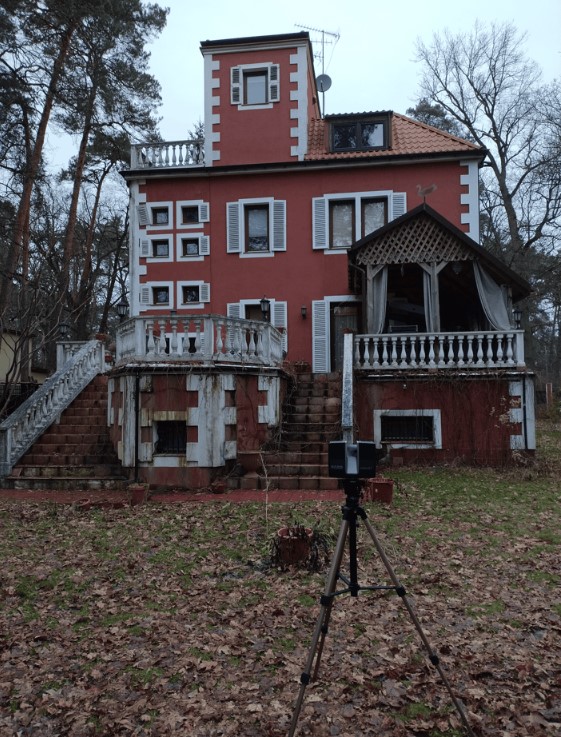

Many renovation and reconstruction projects begin with existing building drawings that were created years — or sometimes decades — ago. These documents are often treated as reliable reference materials for architects, engineers, contractors, and project managers.
In reality, old building drawings frequently no longer match the actual conditions of the building.
Over time, buildings undergo multiple undocumented modifications:
- walls are relocated;
- ceilings are lowered;
- MEP systems are rerouted;
- rooms are reconfigured;
- structural elements are altered;
- equipment is replaced.
As a result, renovation teams often begin working with inaccurate information before the project even starts.
This is one of the main reasons why modern renovation workflows increasingly rely on 3D scanning services for existing buildings and updated existing conditions documentation instead of outdated drawings alone.
Why Old Drawings Are Often Unreliable
Original building drawings are usually created during the initial construction phase. However, many changes made during the life cycle of the building are never properly documented.
Common reasons include:
- undocumented renovations;
- manual modifications during construction;
- missing revisions;
- outdated PDF or CAD files;
- multiple contractors working over time;
- incomplete as-built documentation;
- lost project archives.
In older commercial, industrial, and residential buildings, it is very common to find major discrepancies between archived drawings and actual site conditions.
Even relatively small deviations may create serious problems during renovation.
Common Problems Caused by Outdated Building Drawings
When renovation teams rely on inaccurate documentation, design and construction conflicts become much more likely.
Typical issues include:
- incorrect wall positions;
- outdated floor plans;
- missing openings;
- inaccurate ceiling heights;
- undocumented structural modifications;
- hidden engineering systems;
- outdated MEP routes;
- inaccurate equipment locations.
These problems often appear only after demolition or construction begins, when corrections become significantly more expensive.
For complex renovation projects, especially in existing commercial or industrial buildings, outdated documentation may affect:
- project scheduling;
- engineering coordination;
- installation accuracy;
- procurement;
- budgeting;
- construction sequencing.
How Drawing Errors Affect Renovation Projects
Inaccurate building documentation usually creates a chain reaction of problems throughout the project.
| Documentation Problem | Project Impact |
|---|---|
| Wrong wall geometry | Design revisions |
| Missing MEP systems | Coordination conflicts |
| Incorrect levels | Installation errors |
| Outdated floor plans | Rework on site |
| Missing structural data | Engineering delays |
| Undocumented changes | Budget overruns |
In many cases, contractors discover discrepancies only during construction. This leads to:
- change orders;
- redesign;
- field clarifications;
- delays;
- additional site visits;
- increased labor costs.
For architects and engineers, working from inaccurate information often means spending valuable time solving avoidable problems instead of focusing on design quality.
Why Manual Verification Is Not Always Enough
Traditional site measurements can help verify basic dimensions, but manual workflows often become inefficient for larger or more complex buildings.
This is especially true for:
- industrial facilities;
- hospitals;
- office buildings;
- hotels;
- infrastructure projects;
- historical buildings;
- facilities with dense MEP systems.
Manual verification may not fully capture:
- ceiling geometry;
- pipe routing;
- structural deviations;
- hidden systems;
- façade irregularities;
- equipment layouts.
As renovation projects become more technically complex, many teams now use laser scanning to create complete digital records of existing conditions.
How Laser Scanning Solves the Documentation Problem
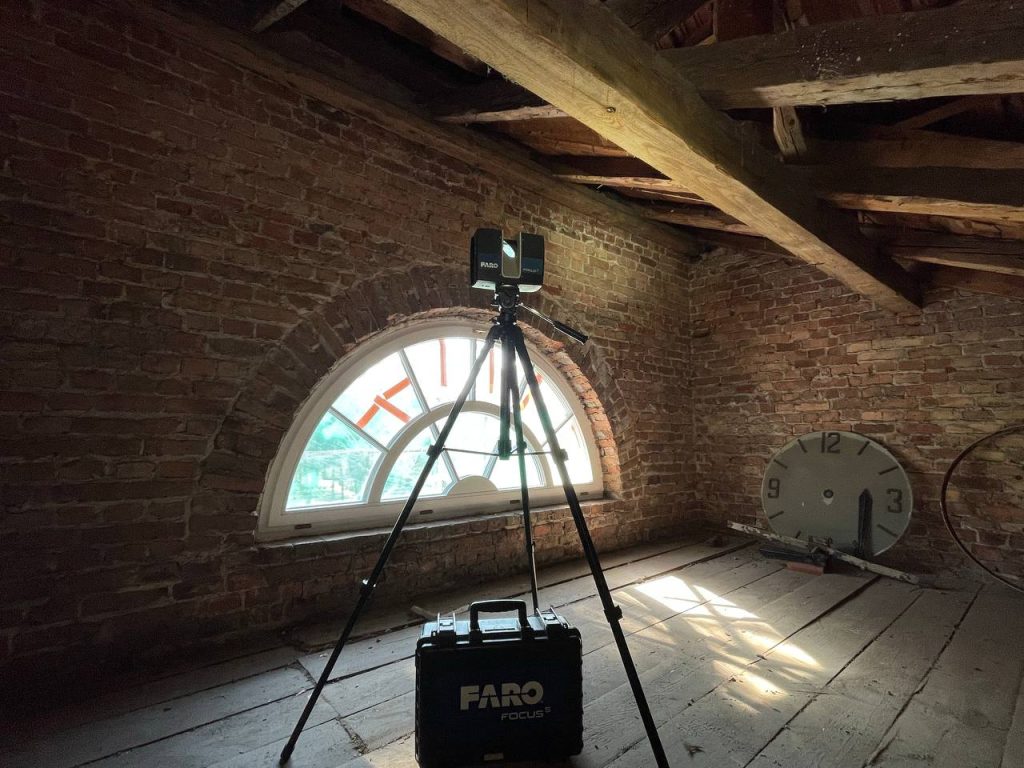
3D laser scanning captures millions of measurement points across the building and creates a highly accurate point cloud representing real-world conditions.
Unlike outdated drawings, scan data reflects the actual geometry of:
- walls;
- floors;
- ceilings;
- structural systems;
- MEP infrastructure;
- façades;
- technical spaces.
This process significantly reduces assumptions during design and coordination.
Modern point cloud to CAD services allow project teams to convert scan data into accurate technical documentation for renovation and reconstruction workflows.
Laser scanning is now widely used for:
- renovation planning;
- adaptive reuse;
- reconstruction;
- building surveys;
- existing conditions documentation;
- engineering verification;
- facility modernization.
From Scan Data to As-Built Drawings

After scanning is completed, specialists process the point cloud and prepare updated documentation based on actual site conditions.
Deliverables may include:
- floor plans;
- sections;
- elevations;
- reflected ceiling plans;
- façade drawings;
- MEP documentation;
- site measurements.
This workflow is commonly used in as-built drawings services for architecture, engineering, and construction projects.
Compared with old archived drawings, scan-based documentation provides:
- higher accuracy;
- better coordination;
- reduced field conflicts;
- more reliable renovation planning.
For many renovation projects, updated as-built documentation becomes the foundation for all future design work.
When BIM Is Better Than 2D Drawings

Some renovation projects require more than traditional CAD documentation.
In projects involving:
- complex MEP coordination;
- phased reconstruction;
- facility management;
- infrastructure modernization;
- multidisciplinary collaboration;
a BIM workflow often provides greater long-term value.
Using BIM modeling services for existing buildings, point cloud data can be transformed into coordinated BIM environments that contain:
- architectural geometry;
- structural systems;
- engineering infrastructure;
- equipment information;
- spatial relationships between building elements.
This allows teams to perform:
- clash detection;
- engineering coordination;
- renovation planning;
- quantity extraction;
- future maintenance workflows.
For large-scale reconstruction projects, BIM models often become a central source of project information.
Best Practice Before Starting Renovation
Before beginning renovation or reconstruction work, it is important to verify whether existing documentation still reflects actual building conditions.
A modern renovation workflow usually includes:
- Reviewing available drawings;
- Identifying critical areas;
- Performing laser scanning;
- Creating updated documentation;
- Deciding between CAD or BIM deliverables;
- Coordinating architecture, structure, and MEP systems.
This approach significantly reduces project uncertainty and improves decision-making during both design and construction phases.
Conclusion
Old building drawings may provide useful historical information, but they should not be treated as a fully reliable source for modern renovation projects.
Over time, undocumented modifications, engineering changes, and incomplete revisions often make archived drawings inaccurate.
For this reason, many architects, engineers, contractors, and developers now rely on laser scanning and updated existing conditions documentation before renovation begins.
Technologies such as:
- 3D laser scanning;
- point cloud documentation;
- as-built drawings;
- point cloud to CAD;
- BIM modeling;
help create more accurate, coordinated, and reliable renovation workflows while reducing costly construction conflicts and project delays.
Ready to Update Your Existing Building Documentation?
ScanM2 provides high-precision laser scanning, existing conditions surveys, as-built drawings, point cloud to CAD conversion, and BIM modeling services for renovation and reconstruction projects.
We help architects, engineers, contractors, and developers create accurate digital documentation for existing buildings and complex renovation workflows.
Contact ScanM2 to discuss your renovation documentation or existing conditions project.
FAQ
Why are old building drawings often inaccurate?
What problems can outdated drawings cause during renovation?
How does laser scanning improve renovation projects?
What are as-built drawings?
When should renovation projects use BIM instead of CAD?

Creating Accurate As-Built Drawings for Residential Renovations
14.08.2025
Modern home renovations require a solid foundation in the form of precise documentation of existing conditions. Without it, design errors, delays, and unnecessary costs are ...

Why Smart Homeowners Request As-Built Plans Before Selling
14.02.2025
Savvy homeowners request As-Built Plans before selling their property. Learn how 3D laser scanning ensures accuracy, speeds up sales, and prevents legal issues. ScanM2 provides ...

Precision in Building Inspections with As-Built Drawings
17.01.2025
Discover how as-built precision and accurate building inspections enhance construction outcomes with advanced laser scanning and 3D documentation.

The Role of As-Built Drawings in Tenant Improvement Projects
17.12.2024
Discover how As-Built drawings enhance tenant improvement projects, ensuring accurate planning, compliance, and customization of lease spaces.

