

Ground Penetrating Radar (GPR) Scanning Services in the USA
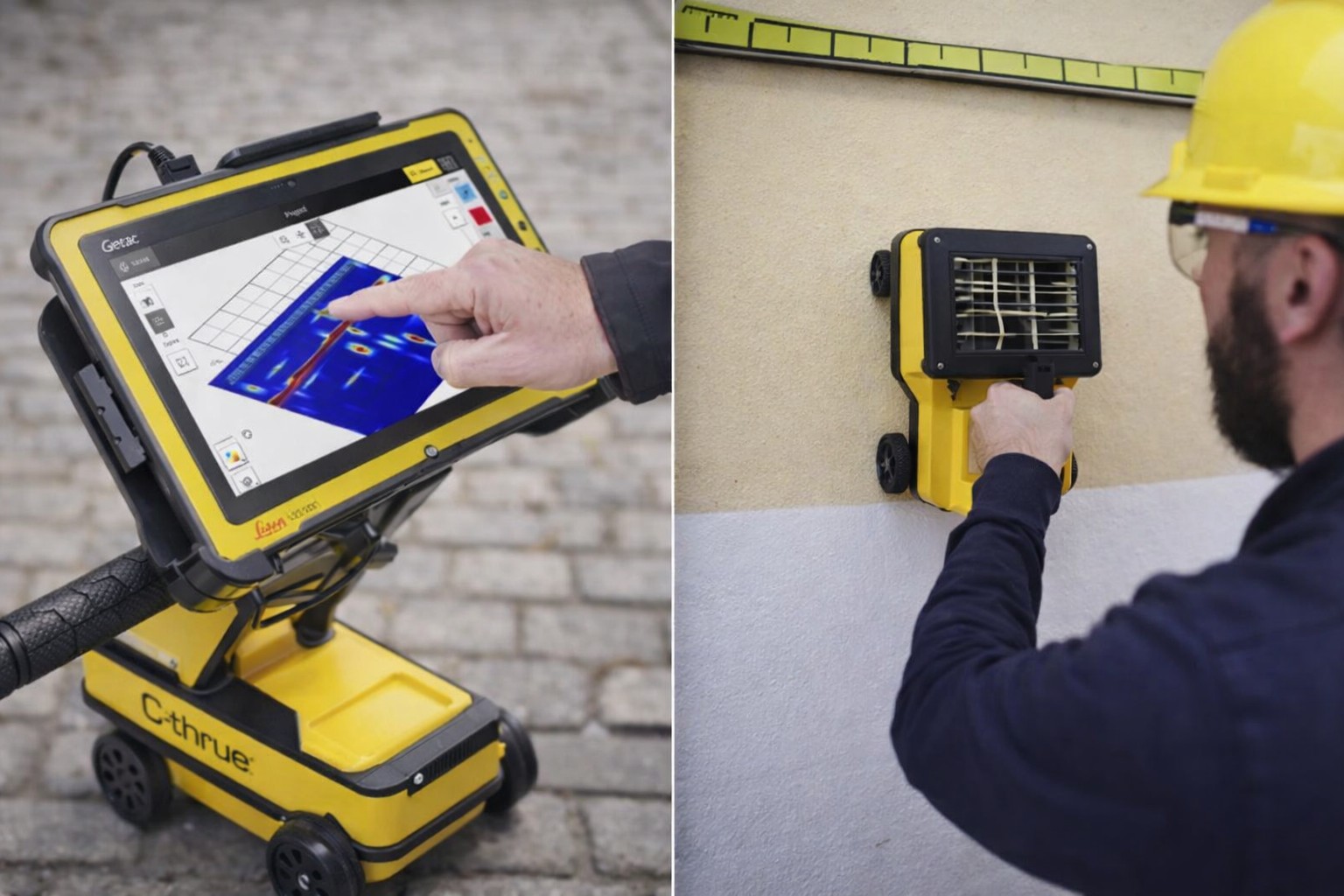
GPR scanning services in the USA are widely used as a safe and non-destructive method to locate underground utilities, reinforcing steel, post-tension cables, voids, and embedded objects before drilling, excavation, or construction activities begin.
In the U.S. construction industry, inaccurate subsurface information is one of the main causes of delays, damage, and safety incidents. Ground penetrating radar scanning allows contractors, engineers, and facility owners to reduce these risks by identifying hidden elements before any intrusive work is performed.
Contact Us Now for a Free Consultation!
Our GPR scanning and concrete scanning services support construction, renovation, infrastructure, and industrial projects across the United States.
What Is GPR Scanning
Ground penetrating radar (GPR) is a geophysical technology that uses high-frequency electromagnetic waves to detect changes in material properties below the surface. When radar signals encounter objects such as metal reinforcement, pipes, conduits, or voids, part of the signal is reflected back to the receiver and analyzed.
Unlike destructive investigation methods, GPR scanning:
- does not damage concrete, asphalt, or soil
- can be performed on active construction sites
- provides real-time subsurface data
- supports safer planning before drilling or excavation
Because of these advantages, ground penetrating radar scanning has become a standard solution for modern construction projects throughout the USA.
GPR Scanning Services We Provide in the USA
Our services are focused on the most common and high-risk construction scenarios where accurate subsurface data is critical.
Concrete Scanning Before Drilling and Coring
Concrete scanning services are one of the most requested GPR applications in the United States. They are typically required before:
- drilling anchor holes
- concrete coring
- slab cutting or saw cutting
- structural modifications
Using GPR concrete scanning, we can accurately locate:
- reinforcing steel (rebar)
- post-tension (PT) cables
- slab thickness variations
- embedded conduits and objects
These services are covered in more detail within our dedicated Concrete Scanning Services, which focus specifically on scanning concrete structures before drilling or cutting operations.
Underground Utility Detection Using GPR

Underground utility detection is another critical application of GPR scanning services in the USA. Many construction sites contain undocumented or partially documented utilities, creating significant safety and liability risks.
With GPR utility locating, we help identify:
- electrical and communication lines
- water and sewer pipelines
- gas lines
- abandoned or unknown utilities
Accurate utility detection supports safer excavation and is commonly combined with specialized Utility Locating Services for infrastructure and site development projects.
Ground and Subsurface Scanning
In addition to concrete and utilities, ground scanning services are used for broader subsurface investigations, including:
- site assessments
- renovation and retrofit projects
- roadway and pavement studies
- detection of buried structures or anomalies
Subsurface scanning helps project teams identify potential issues early and reduce unexpected construction costs.
GPR Scanning vs Concrete X-Ray Scanning
Concrete X-ray scanning has traditionally been used to locate embedded elements within concrete. However, in many U.S. construction scenarios, GPR vs concrete X-ray comparison clearly favors GPR as a safer and more flexible solution.
GPR Scanning vs Concrete X-Ray
| Criteria | GPR Scanning | Concrete X-Ray |
|---|---|---|
| Safety | No radiation, safe for occupied sites | Uses radiation |
| Permits | No special permits required | Radiation permits often required |
| Site Access | Allowed in active buildings | Restricted access zones |
| Speed | Fast on-site scanning | Slower setup |
| Typical Use | Concrete scanning, utility locating | Limited use cases |
| Industry Trend | Widely adopted in the USA | Decreasing use |
Because of these advantages, ground penetrating radar scanning is often selected as a safer alternative to concrete X-ray in the USA.
When GPR Scanning Is Required or Recommended
GPR scanning services are commonly required or strongly recommended when:
- performing concrete scanning before drilling or coring
- working near underground utilities
- modifying existing slabs or foundations
- renovating older buildings with limited documentation
- reducing liability and safety risks on construction sites
For many contractors, GPR scanning is a standard risk-mitigation step before intrusive work begins.
Accuracy and Limitations of GPR Scanning
GPR scanning accuracy depends on several factors, including:
- material type (concrete, soil, asphalt)
- moisture content
- depth of detected objects
- site conditions and accessibility
While ground penetrating radar provides highly reliable results, understanding its limitations is essential for correct interpretation. Best results are achieved when scanning is performed by experienced specialists using professional-grade equipment.
Industries We Serve in the USA
Our GPR scanning and concrete scanning services are used across multiple industries, including:
- commercial and residential construction
- infrastructure and transportation
- industrial and manufacturing facilities
- energy and utility projects
- renovation and retrofit works
Each industry has unique requirements, making GPR scanning services in the USA a flexible and widely applicable solution.
GPR Scanning Cost in the USA
GPR scanning cost in the USA depends on several project-specific factors:
- size of the scanning area
- type of material being scanned
- required depth and resolution
- complexity of detected elements
- site accessibility
Detailed pricing logic and examples are covered in our dedicated GPR Scanning Cost resources. Accurate estimates always require project details and site conditions.
FAQ — GPR Scanning Services in the USA
How accurate is GPR scanning?
How deep can GPR scan?
Is GPR scanning safe?
Is GPR better than concrete X-ray?
When should GPR scanning be performed?
Request GPR Scanning Services in the USA
If you need professional GPR scanning, concrete scanning services, or underground utility detection in the USA, our team is ready to support your project.
We work with contractors, engineers, and facility owners to deliver accurate subsurface data before construction begins.
Contact us to discuss your project requirements and schedule a GPR scanning survey.

