

BIM Modeling for Manufacturing Facilities
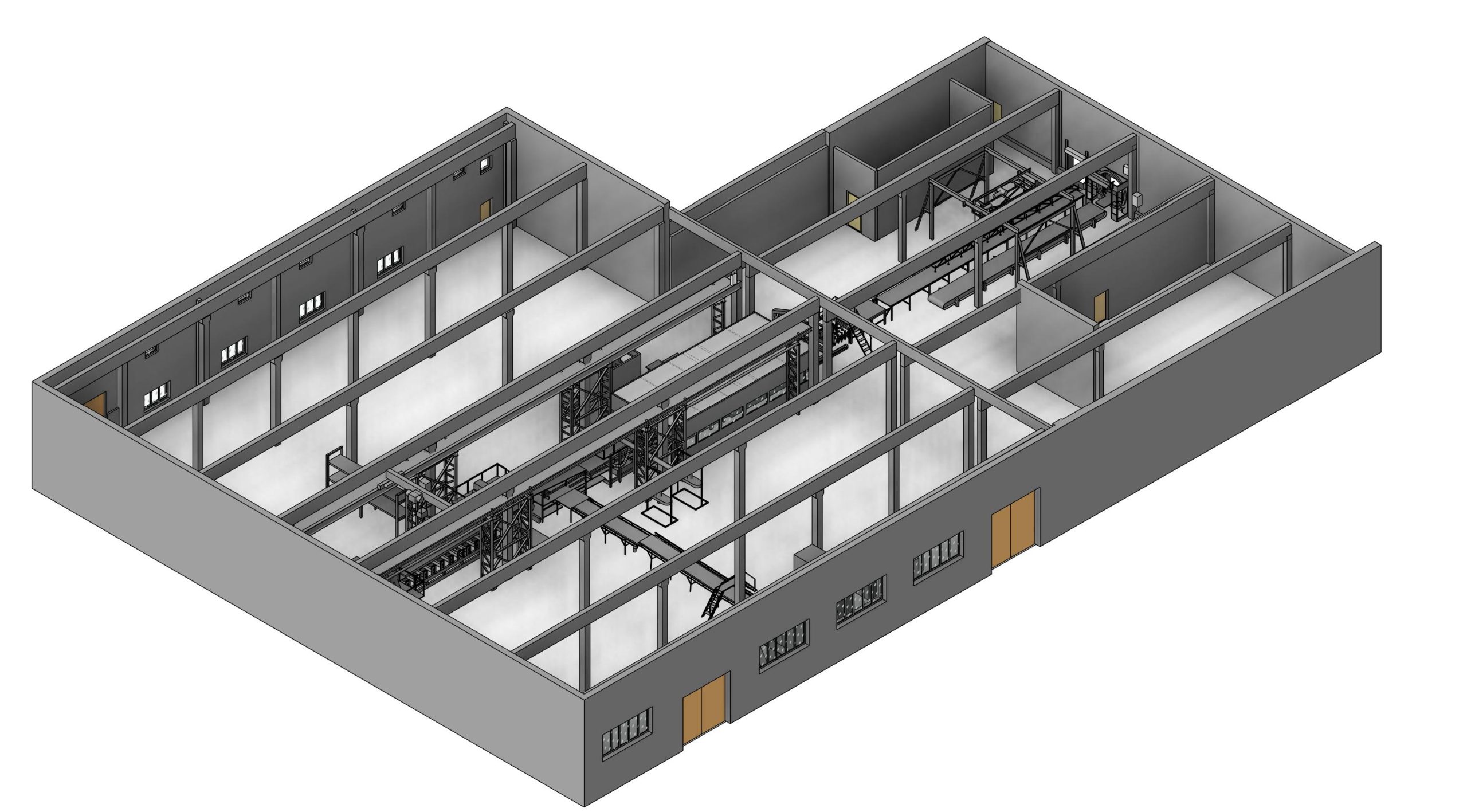
BIM modeling for manufacturing facilities focuses on the precise digital representation of production environments, where equipment layout, utility routing, and operational constraints must be accurately coordinated. Unlike generic building modeling, factory BIM modeling integrates production workflows, machinery interfaces, and technical infrastructure into a unified digital model.
Manufacturing environments require high tolerance alignment between structural elements, process equipment, and engineering systems. BIM modeling enables multidisciplinary coordination, reducing conflicts during installation and ensuring that production systems operate as designed.
Contact Us Now for a Free Consultation!
Industrial BIM modeling services for manufacturing facilities are widely used by engineering companies, industrial operators, and contractors to coordinate complex production environments, improve layout accuracy, and reduce risks during equipment installation and plant upgrades.
This approach supports new construction, plant upgrades, retrofits, and long-term digital transformation initiatives across production facilities.
Industry-Specific Requirements
Manufacturing facilities differ from commercial or residential buildings due to the density and complexity of equipment and engineering systems. BIM modeling for factories must address:
- Equipment anchoring and vibration isolation systems
- Overhead crane systems and load paths
- High-capacity utility networks (compressed air, process water, steam, gas)
- Production line alignment and tolerances
- Maintenance access zones and safety clearances
Production equipment BIM modeling requires exact positioning relative to conveyors, robotic systems, and control units. Even minor deviations can affect throughput, automation performance, and operational stability.
BIM Modeling Scope for Manufacturing Plants
BIM Models of Manufacturing Facilities


1. Factory Layout BIM Model
The factory layout BIM model defines spatial organization of production lines, storage zones, and logistics paths. It integrates:
- Material flow paths
- Equipment placement
- Operator access zones
- Safety corridors
This model is critical for optimizing workflow efficiency and minimizing bottlenecks.
2. Production Equipment Integration
Manufacturing plant BIM modeling includes detailed representation of:
- CNC machines
- Conveyor systems
- Robotic cells
- Assembly lines
Each component is modeled with connection points, operational envelopes, and maintenance requirements.
3. Industrial Infrastructure Modeling
Factory infrastructure BIM modeling includes:
- Electrical distribution systems
- Process piping (compressed air, cooling water, steam)
- Ventilation and extraction systems
- Cable trays and control networks
These systems must be coordinated with equipment layouts to ensure accessibility and avoid clashes.
4. Structural and Load-Bearing Systems
Industrial BIM modeling services account for:
- Heavy equipment loads
- Dynamic forces from machinery
- Crane runway beams
- Mezzanine and support structures
Structural elements are modeled in coordination with production requirements and equipment constraints.
5. BIM Coordination for Industrial Facilities
Industrial facility BIM coordination ensures alignment between:
- Mechanical systems
- Electrical systems
- Structural components
- Process engineering systems
Clash detection is essential in manufacturing environments where space is limited and systems are densely integrated.
Integration with Existing Facility Data
For existing manufacturing facilities, BIM models can be developed based on point cloud data obtained through 3D laser scanning and scan-to-BIM workflows. This allows engineers to work with accurate representations of current conditions instead of outdated documentation.
Key Technical Elements in Manufacturing BIM
1. Process Piping Systems
Manufacturing facilities include specialized piping systems such as:
- Compressed air networks
- Cooling systems
- Industrial gases and process fluids
These systems require accurate routing and coordination within the BIM environment.
2. Equipment Clearance Envelopes
Each machine requires defined operational and maintenance zones. BIM modeling ensures that clearance requirements are met without conflicts with:
- Adjacent equipment
- Structural elements
- Utility systems
3. Conveyor and Automation Alignment
Production systems rely on precise alignment between conveyors and automated equipment. BIM models ensure:
- Correct elevations
- Alignment tolerances
- Integration with production flow
Benefits of BIM Modeling for Manufacturing Facilities
Scan to BIM provides measurable advantages for manufacturing facilities, engineering companies, and industrial operators working with complex production environments.
Accurate Representation of Existing Conditions
BIM models reflect real facility layouts, including equipment, structures, and engineering systems.
Reduced Risk During Modernization and Equipment Installation
Accurate models minimize clashes, misalignment, and installation errors.
Improved Coordination Between Engineering Teams
Mechanical, structural, and MEP engineers work within a unified model.
Enhanced Decision-Making Through Digital Visualization
Engineers can simulate changes and evaluate scenarios before implementation.
Optimized Production Workflows and Space Utilization
BIM helps improve material flow and reduce inefficiencies.
Reduced Downtime During Reconstruction and Upgrades
Accurate planning reduces unexpected issues during project execution.
These benefits make BIM modeling a critical tool for industrial companies seeking to improve operational efficiency and reduce project risks.
BIM Modeling Workflow for Manufacturing Facilities
- Site data collection and analysis
- Model development of structure, equipment, and systems
- Coordination and clash detection
- Validation against project requirements
- Delivery in required formats (Revit, IFC, Navisworks, etc.)
Use Cases
- Factory expansion projects
- Production line reconfiguration
- Equipment replacement planning
- Retrofit of aging infrastructure
- Safety and compliance analysis
BIM for New vs Existing Facilities
New Manufacturing Plants
BIM modeling supports early-stage design coordination and integration of production requirements.
Existing Facilities
Models are typically based on scan data, allowing accurate reconstruction of real conditions without disrupting operations.
Conclusion
BIM modeling for manufacturing facilities provides a structured and accurate approach to managing complex production environments. By integrating equipment, infrastructure, and structural systems into a coordinated model, it supports efficient planning, reduces risks during construction or upgrades, and improves long-term operational performance.

