

3D Laser Scanning for Ore processing Plants
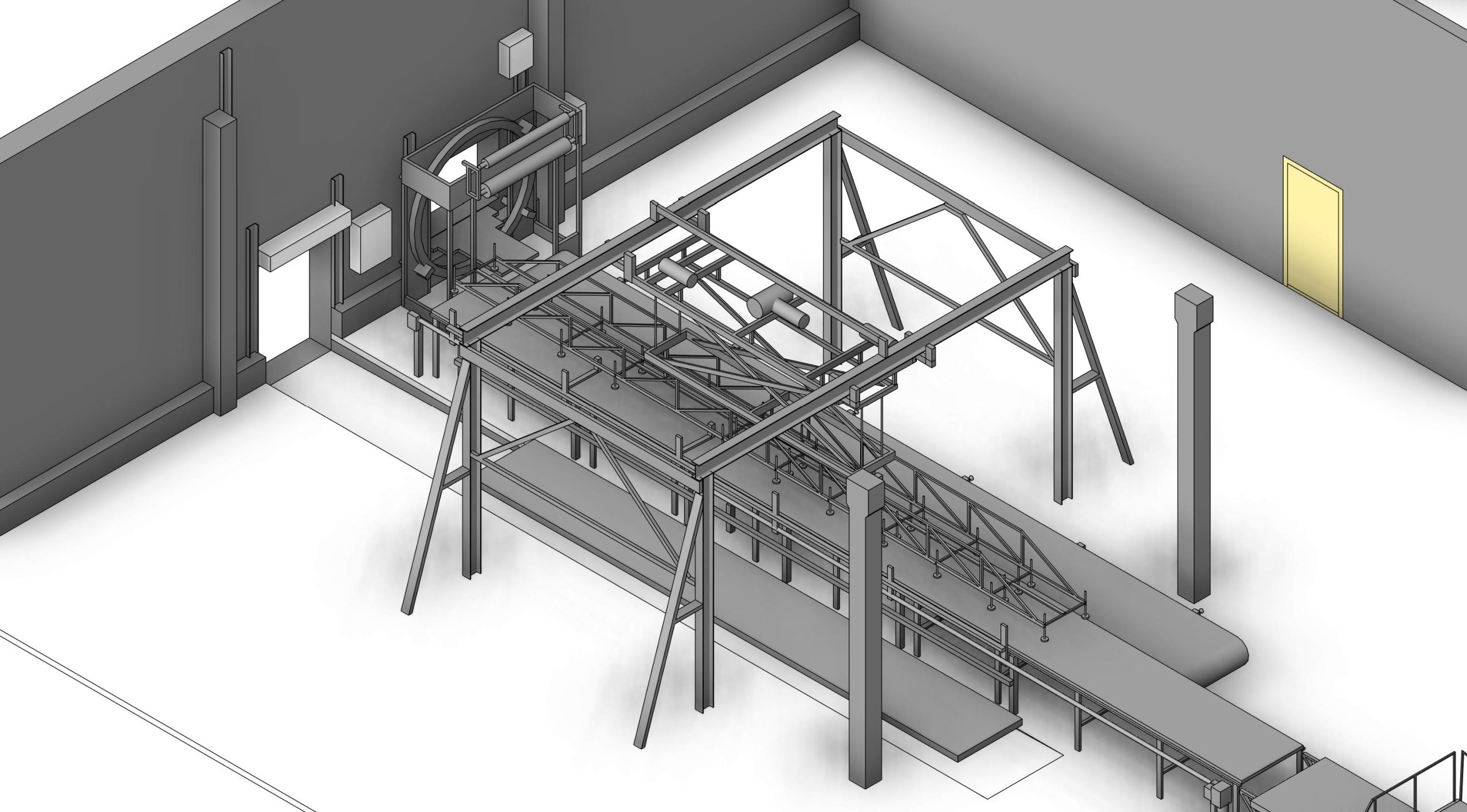
3D laser scanning for ore processing plants is a key technology used in industrial laser scanning services for mining and processing facilities. It enables accurate data capture of complex industrial environments, including crushers, grinding mills, conveyor systems, and multi-level structures.
Mining and processing plants are characterized by dense equipment layouts and interconnected systems, where precise spatial data is critical for engineering, maintenance, and modernization.
Contact Us Now for a Free Consultation!
Traditional measurement methods are not suitable for such facilities due to safety constraints, limited access, and operational complexity. Laser scanning technology provides fast, non-intrusive data capture, generating high-density point cloud datasets that accurately reflect real-world conditions.
Application of 3D Laser Scanning in Ore Processing Plants
Ore processing plants involve multiple stages of material transformation, requiring accurate spatial documentation for efficient operation and planning.
Typical applications include:
- laser scanning of crusher plants and primary processing units
- 3D scanning of grinding areas (ball mills, SAG mills)
- documentation of conveyor systems and transfer points
- capture of flotation systems and separation tanks
- mapping of piping networks and slurry transport lines
- recording structural platforms and maintenance access areas
Even small deviations in equipment positioning can affect material flow, making industrial laser scanning essential for reliable plant operation.
What Can Be Captured with Laser Scanning
3D laser scanning allows full digital capture of both structural and mechanical components in mining facilities.
Captured elements include:
- industrial equipment (crushers, mills, conveyors)
- structural systems (columns, beams, platforms)
- process piping and utilities
- cable trays and electrical routing
- access systems (stairs, walkways, platforms)
The result is a highly detailed spatial dataset suitable for engineering analysis, design, and documentation.
Scanning Process for Industrial Facilities
Laser scanning of ore processing plants is performed using terrestrial LiDAR systems capable of capturing millions of measurement points per second.
Typical workflow:
- Site inspection and scan planning
- Data acquisition from multiple scan positions
- Registration and alignment of scans
- Creation of a unified point cloud dataset
- Quality control and validation
For structured datasets, scan data can be processed using point cloud processing.
For advanced engineering workflows, data can be integrated via scan to BIM modeling services.
Comparison: Traditional Measurement vs Laser Scanning
| Method | Accuracy | Speed | Safety |
|---|---|---|---|
| Traditional measurement | Low | Slow | Risky |
| 3D laser scanning | High | Fast | Safe |
Industrial Challenges in Ore Processing Plants
Laser scanning in mining environments must account for several operational challenges:
Dust and Particles
Airborne dust may impact visibility and data clarity.
Reflective Surfaces
Metal structures can create reflections requiring filtering during processing.
Limited Access Areas
Certain zones are restricted due to safety or operational conditions.
Continuous Production
Scanning must often be performed without stopping plant operations.
Modern LiDAR scanning technologies are designed to handle these conditions while maintaining high accuracy.
Benefits for Engineering and Operations
High Accuracy
Millimeter-level precision enables reliable engineering calculations and layout validation.
No Production Downtime
Scanning can be performed while the plant is operational.
Improved Planning
Engineers work with accurate, up-to-date data instead of outdated drawings.
Reduced Risk
Accurate measurements minimize installation errors and rework.
Use of Scan Data in Engineering Workflows
The collected data serves as a foundation for multiple engineering processes.
- Data structuring and cleaning via point cloud processing
- Conversion into structured models using scan to BIM workflows
- Integration into design environments through BIM modeling services
This enables efficient planning, coordination, and execution of industrial projects.
3D Laser Scanning Services for Ore Processing Plants
Our company provides professional 3D laser scanning services tailored for mining and industrial facilities.
We deliver:
- industrial laser scanning of ore processing plants
- 3D scanning of equipment and infrastructure
- LiDAR scanning of conveyor and transport systems
- spatial documentation of industrial layouts
- high-accuracy measurement for engineering projects
Our services are used by:
- engineering companies
- EPC contractors
- plant operators
- industrial project managers

