

Revit Mechanical Design Services

Modern building systems require more than isolated engineering drawings. Mechanical design must fit within real building geometry, coordinate with architecture, structure, and other MEP disciplines, and support clear documentation before construction begins. Revit mechanical design services help project teams develop structured digital models for HVAC and mechanical systems inside a BIM environment, improving coordination, reducing clashes, and supporting more reliable project delivery.
Contact Us Now for a Free Consultation!
At ScanM2, mechanical modeling in Revit is approached as part of a practical building workflow. The goal is not just to represent systems visually, but to create a usable model environment that supports design development, engineering coordination, technical review, and documentation.
What Revit Mechanical Design Includes
Revit mechanical design typically covers the modeling and coordination of HVAC and other mechanical building systems within Autodesk Revit. Depending on project scope, this may include:
- ductwork layouts and routing
- air handling and ventilation systems
- diffusers, grilles, and terminal units
- mechanical equipment placement
- plant room and ceiling-zone coordination
- system connections within architectural and structural constraints
- mechanical layouts prepared for BIM-based review and development
The exact level of detail depends on the project stage, intended use, and required outputs. In some projects, the model is developed for concept and coordination. In others, it supports a more technical workflow tied to engineering documentation and downstream BIM processes. In broader multi-discipline projects, this may also connect with Revit BIM Modeling Services.
HVAC Design in Revit for Building Systems
One of the main use cases for HVAC design in Revit is the coordination of air distribution and mechanical systems inside buildings with limited technical space. Ductwork, equipment, ceiling voids, shafts, and service areas must all function within real physical constraints. Revit helps teams organize these systems in relation to the actual building environment rather than treating them as separate 2D layers.
This is especially important in projects where HVAC systems intersect with structure, lighting, plumbing, fire protection, and access requirements. A model-based environment gives teams a clearer understanding of routing logic, equipment placement, and service relationships before installation begins.
When Revit Mechanical Design Is Needed
Revit for mechanical design is most valuable when projects require accurate coordination between systems and dependable digital geometry for engineering workflows. It is widely used in:
- commercial and office buildings
- residential developments
- hotels and hospitality facilities
- healthcare and public buildings
- industrial and technical spaces
- renovation and retrofit projects
- existing buildings requiring HVAC upgrades
- BIM-based technical documentation workflows
It becomes especially important where mechanical systems must fit into tight ceiling zones, technical rooms, or shared MEP spaces. In these conditions, 2D drafting alone often does not provide enough control over space, routing, access, and potential conflicts.
Typical Applications of Revit Mechanical Design
| Project situation | Why Revit mechanical design is used | Typical result |
|---|---|---|
| New building design | HVAC and mechanical systems must be integrated into a BIM workflow | Coordinated Revit mechanical model |
| MEP coordination | Ductwork and equipment must fit around structure and other services | Reduced clashes and improved system planning |
| Existing building upgrades | New mechanical systems must fit real site conditions | Better design control in retrofit environments |
| Technical documentation | The project requires clear model-based drawings and views | Revit-based mechanical documentation |
| Complex service zones | Limited space requires accurate routing and coordination | More efficient mechanical layout development |
Revit MEP Mechanical for Coordination
Mechanical systems rarely exist in isolation. Ductwork, equipment, shafts, suspended ceilings, service corridors, and access zones must all be coordinated with the wider project environment. This is where Revit MEP mechanical workflows become especially valuable.
Within Revit, mechanical systems can be developed alongside structural and architectural geometry as well as other engineering disciplines. This improves visibility during design development and allows teams to identify system conflicts much earlier. In multi-discipline engineering projects, mechanical systems are often coordinated alongside Revit Plumbing Design Services and other MEP workflows.
Revit Mechanical Design for Existing Buildings
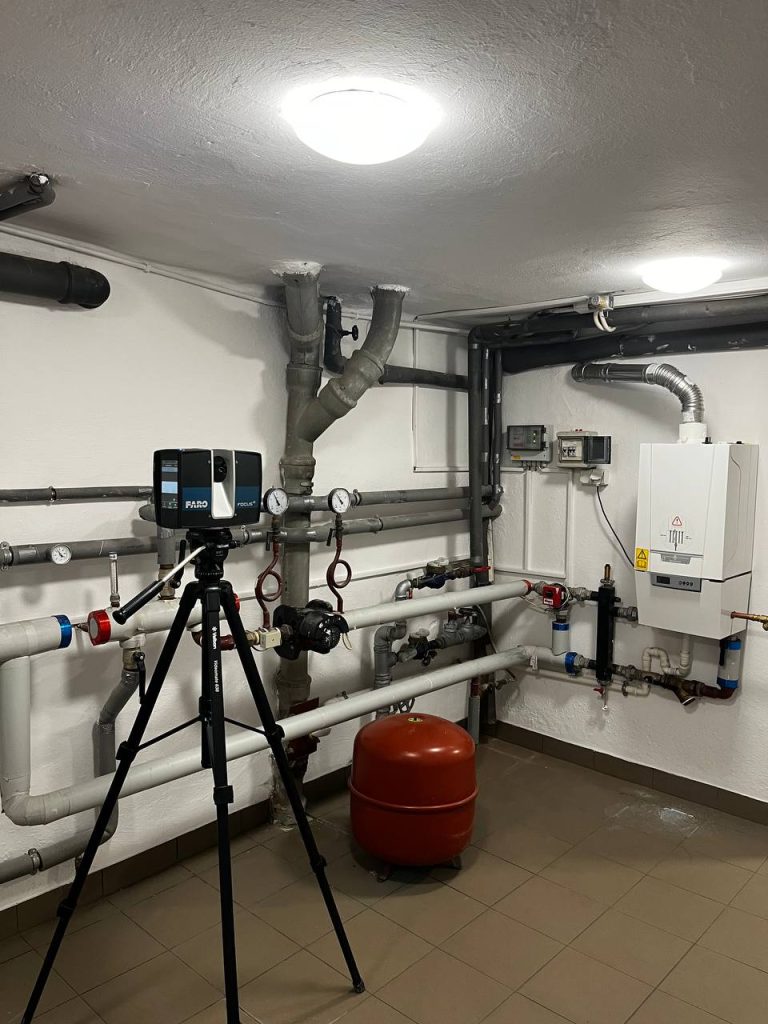
Mechanical design in existing buildings presents different challenges from new construction. Archived documentation may not reflect actual ceiling conditions, service zones may be more limited than expected, and previous upgrades may have changed available routing paths.
In these situations, accurate design depends on dependable base information. Where real site geometry must be captured before HVAC and mechanical systems are modeled, the workflow may connect with Scan to Revit. This allows new systems to be developed in relation to measured building conditions rather than assumptions alone.
For renovation, modernization, and retrofit projects, this can significantly improve the quality of coordination and reduce rework during installation.
Mechanical Modeling and Fabrication-Oriented Workflows
Some projects require a more detailed level of model development, especially where installation logic, layout precision, and system organization must support advanced engineering workflows. In these cases, revit mechanical modeling services may extend beyond coordination-level modeling into more fabrication-aware development.
While not every project requires fabrication-ready outputs, Revit can still play an important role in preparing system geometry, organizing layouts, and supporting more detailed downstream workflows where a higher level of precision is needed.
Benefits of Revit Mechanical Modeling Services
A well-developed mechanical model improves more than drawing quality. It helps organize system logic, equipment relationships, access zones, routing constraints, and coordination across the project.
Key benefits include:
- improved coordination with architecture, structure, and MEP systems
- reduced clashes before installation
- more reliable routing in limited technical spaces
- clearer documentation and system views
- better support for retrofit and renovation planning
- stronger BIM workflows for engineering teams and contractors
In technically dense projects, this level of coordination often has a direct impact on project efficiency, installation quality, and documentation reliability.
Documentation and Deliverables
Depending on project scope, Revit mechanical design services may support a range of outputs, including:
- coordinated HVAC and mechanical models
- ductwork routing layouts
- equipment placement and system organization
- ceiling-zone and plant room coordination
- model-based engineering review
- plans, sections, and technical views
- support for documentation and project planning
Where the model must support drawing production and structured technical outputs, the workflow may continue into Revit Drawing Services.
Why Revit Mechanical Design Matters
Mechanical systems influence how a building performs, how space is used, and how easily design intent can be translated into installation. When those systems are developed inside a coordinated BIM environment, teams gain better control over routing, layout, clearances, and interaction with other disciplines.
For projects involving HVAC, retrofit, technical service spaces, and multi-discipline coordination, Revit mechanical design services provide a more scalable and dependable workflow than disconnected drafting alone.

