

3D Scanning for Reverse Engineering in San Diego, CA
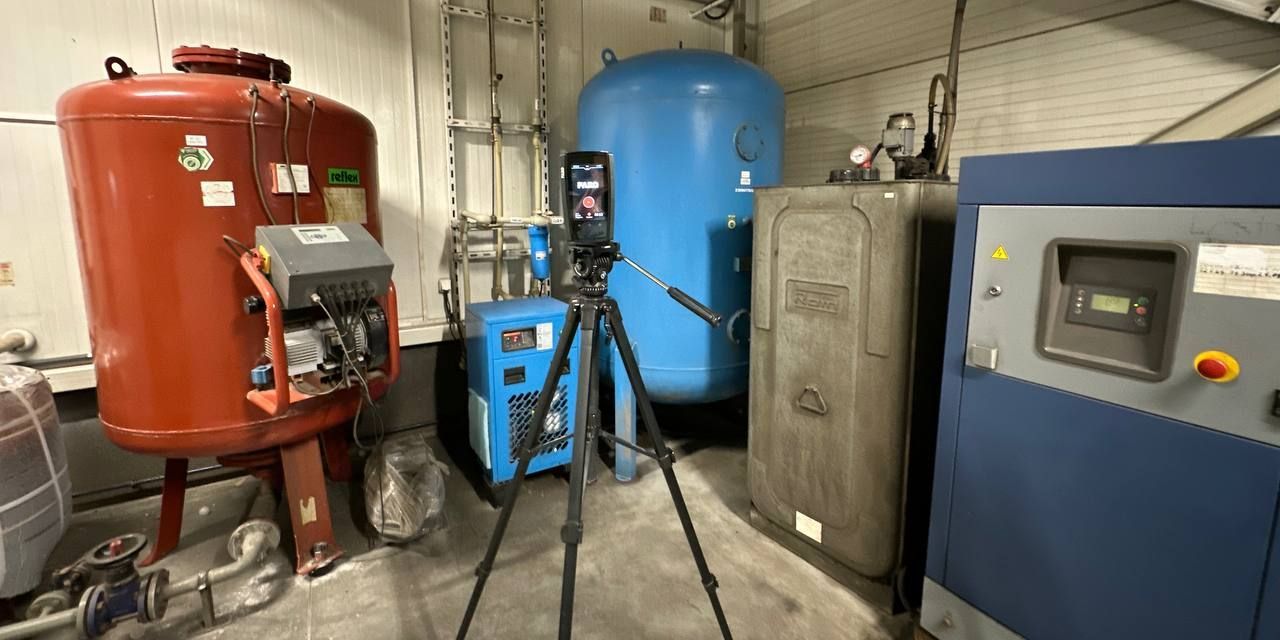
ScanM2 provides 3D scanning for reverse engineering in San Diego, CA for manufacturers, maintenance teams, ship repair contractors and product engineers. We scan worn, broken or undocumented parts and the equipment around them, then rebuild the geometry as a mesh, a surface model or an editable solid CAD model with 2D drawings.
Contact Us Now for a Free Consultation!
We have no office in San Diego. Our crew travels to plants, labs and waterfront sites across San Diego County and the rest of the US, scanning large equipment where it stands. Smaller parts can be shipped to us instead. If you already have scan data, we can model from it.
Where Reverse Engineering Comes Up in San Diego
The region’s economy leans on industries that keep old equipment running for a long time and rarely have every drawing on hand.
| Sector | Official context | Typical objects we scan | What to ask for |
|---|---|---|---|
| Shipbuilding and ship repair | The Port lists six shipyards on its Working Waterfront that build, repair and maintain commercial and U.S. Navy vessels | Valve bodies, pump casings, flanges, brackets, hatch and deck hardware, foundations for replacement equipment | Solid model of the part plus its mating faces; for equipment swaps, a scan of the compartment or skid |
| Aerospace and unmanned systems | The San Diego Regional EDC calls the region a North American aerospace hub | Fixtures, jigs, ducting, fairings, brackets, test stands, ground support equipment | Parametric model with clear datums, or surfaces for freeform skins |
| Life sciences and medical devices | The EDC names biotech, genomics and medical devices among the region’s core fields | Enclosures, instrument housings, custom fixtures, frames and guards on production or lab equipment | Editable solid for redesign, or a mesh when the part will only be printed |
| General manufacturing | Shipbuilding, defense, aerospace and medical devices lead the EDC’s manufacturing list | Castings, molded parts, machine guards, conveyor parts, legacy spares | Model plus a 2D drawing for the machine shop |
We do not claim projects for any of these companies or sites. The table shows where the method fits, not a client list.
Scanning on the Waterfront and on Board
Ship repair work has its own rules. Marine hardware is often painted, corroded or wet, and the part that matters may sit in a tight machinery space.
- Access: shipyards and vessels set their own badge, escort and safety rules. Tell us what the yard requires before we schedule, and who will meet the crew.
- Surfaces: bare machined faces and wet metal reflect the laser. We dry and, where allowed, lightly treat these surfaces, or note them as low-confidence areas.
- Corrosion and coatings: a scan records the current surface, including pitting and paint build-up. We model the intended shape, so tell us which faces are original and which are damaged.
- Removed parts: if the part can be pulled and brought to a shop table, small-feature detail is usually better than scanning it in place. Scan the space it came from too, so the new part still fits.
- Equipment replacement: to fit a new pump or skid into an existing space, we scan the space, the foundation and the pipe connections, and deliver a model of what is there now. Scale of that work is building-level, with typical accuracy of ±2–3 mm.
Cleanrooms, Labs and Medical Device Lines
In life sciences facilities, the limits come from the room rather than the part.
- Confirm gowning rules and whether a tripod, laptop and scanner can enter the controlled area.
- Scanning spray used on shiny or clear parts may not be allowed. In that case we scan the part outside the room, or accept gaps on reflective faces.
- Mark any screens, labels or samples that must not appear in photos or scan data.
- Equipment that cannot be powered down should be listed in advance. Moving parts and vibration blur the scan.
Matching the Model to the Object
San Diego jobs range from a palm-sized fixture to a pump skid in a ship’s machinery space. The object itself usually decides how we scan it and which kind of model is worth building.
| Object | How we scan it | Model we usually build | What you get from it |
|---|---|---|---|
| Machined bracket, flange or fixture | Portable high-resolution scanner, on a bench | Parametric solid with a feature tree, plus a 2D drawing | Holes, bores and planes as true features a machine shop can dimension |
| Cast valve body or pump casing | Bench scan if removed; in place if not | Solid of the finished casting, worn zones rebuilt | A model for a new pattern or for machining a replacement |
| Duct, fairing or composite skin | Portable scanner, several passes, targets on large panels | Surface model (STEP or IGES) | Freeform shape that does not reduce to simple features |
| Instrument enclosure or molded cover | Bench scan, spray only if the part may be treated | Solid for redesign, or a clean mesh (STL) for printing | Editable housing, or a quick fit-check copy |
| Compartment, skid or equipment bay | Terrestrial laser scanner (FARO) on a tripod | Point cloud (E57, RCP) and a simplified layout model | Clearances to steel, piping and walls for a new unit |
For most mechanical parts we model the design intent: holes are round, faces are flat and patterns are even, even if the worn sample is not. If you want the part exactly as it is today, say so.
Accuracy, and What Stays With Your Engineer
For parts, accuracy depends on the scanner and the size of the object. A small bracket scanned on a bench and a large casing scanned in a confined space give different results, so we name the method for your part when we quote. For rooms, compartments and equipment layouts, typical accuracy is ±2–3 mm.
Wear limits the model more than the scanner does: a worn face no longer shows the original size, so we work from the least damaged areas, the mating part or an old drawing. Some information is simply not in the geometry. Material grade, heat treatment and hardness, thread pitch and class, internal passages, and the intended fit between a shaft and a bore all come from your engineering team, a spec sheet or the original supplier. We mark on the drawing every value we assumed.
Export-Controlled and Proprietary Parts
Many San Diego suppliers work with defense programs. If a part, drawing or data set is export-controlled, tell us before we quote so we can decide together whether and how the work can be done. For commercial parts, reverse engineering is usually used when you own the part, need it for your own equipment, or the original supplier no longer sells it. Patents, design rights and contracts can still apply, and your legal team confirms the intended use.
Sample Scope You Can Adapt
- Object: cast bronze pump casing from a vessel’s cooling system, removed and sent to us, plus a scan of its mounting position on site
- Output: parametric solid in STEP and SolidWorks, 2D drawing with main dimensions, mesh of the worn sample for reference
- Model: nominal shape; flanges flat, bolt circle even, worn zones rebuilt from undamaged areas
- Excluded: material selection, pressure rating, tolerances (supplied by the client’s engineer)
This is an example scope, not one of our projects.
FAQ
What does 3D scanning for reverse engineering in San Diego include?
Do you scan on site, or do I ship the part?
Can you scan parts aboard a ship or inside a shipyard?
How accurate is the scan of a part?
Will the model show the worn part or the original shape?
Which file formats do you deliver?
Can you work in a cleanroom or a medical device plant?
Can you reverse engineer export-controlled defense parts?
What to Send Us
- Photos of the part from several sides, with a ruler or tape in frame
- Approximate size and weight, material, and whether it can be removed
- Mating parts, old drawings or a manufacturer’s spec sheet, if any
- The task: print, machine, redesign, check fit or replace equipment
- Your CAD software and file formats
- Site access rules, if we scan on location
We deliver solid models in STEP, IGES or native SolidWorks, meshes in STL or OBJ, drawings in DWG, DXF and PDF, and point clouds in E57 or RCP. For other Southern California sites, see reverse engineering in Los Angeles. For building and site scanning in the city, see 3D scanning in San Diego, and for the full service, our reverse engineering services page.
Send us photos and a short description of the part. We will suggest a scanning method and the output that fits your next step.

