

3D Scanning for Reverse Engineering in Sacramento, CA
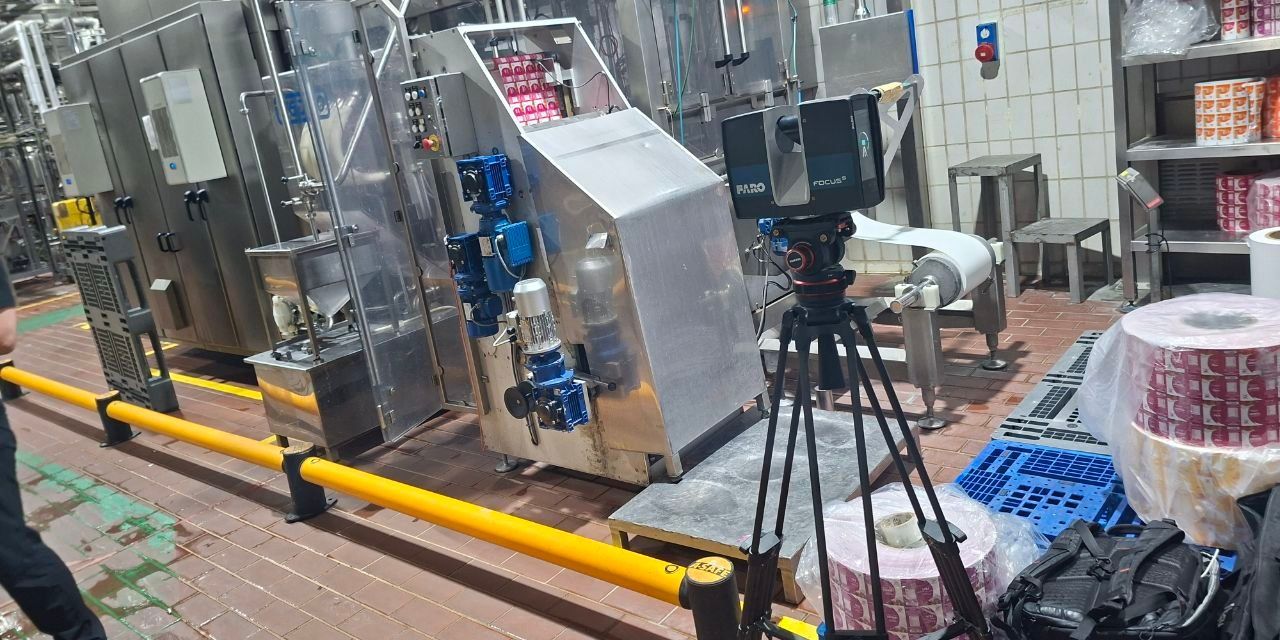
ScanM2 provides 3D scanning for reverse engineering in Sacramento, CA and the surrounding region. We capture worn, obsolete or undocumented parts with laser scanners and rebuild them as editable CAD models, meshes and 2D drawings for machining, casting, fabrication or 3D printing.
Contact Us Now for a Free Consultation!
There is no ScanM2 office in Sacramento. Our crew travels to plants and shops across the Sacramento Valley, Placer County and the rest of the US. Parts that can be removed may also be shipped to us. If you already have scan data, we can model from it remotely.
Sacramento Region Industries and the Parts Behind Them
The Greater Sacramento Economic Council lists several manufacturing groups on its advanced manufacturing page. Each one creates its own kind of reverse engineering work:
- Rail vehicles. Siemens builds light rail vehicles, locomotives and streetcars at its railcar plant in Sacramento. Its separate McClellan Park service site handles refurbishment, bogie service and accident repair. Refurbishment work of this kind needs brackets, covers, ducts and interior parts that may no longer be stocked.
- Food processing. The Council’s CEO has written that the region is home to more than 200 food processing businesses. Conveyor guides, star wheels, hoppers, change parts and guards wear out and are often custom.
- Machine tools. The Council notes that DMG MORI’s U.S. manufacturing plant is in Greater Sacramento. Machine shops in the region often need fixtures, soft jaws and replacement covers modeled from samples.
- Unmanned systems, semiconductors, biomanufacturing. The same page names unmanned aerial systems, a silicon carbide chip fab and GMP biomanufacturing space. Tooling, enclosures and equipment frames in these plants are typical scan subjects.
The companies above are named as industry context from the Council’s page. They are not our clients, and we do not claim projects for them.
Two Scales of Work: Part on the Bench, Equipment in the Plant
Reverse engineering in Sacramento often mixes both scales: a part is copied, and it has to fit back into a machine or line that is also undocumented.
| Part scale | Line or plant scale | |
|---|---|---|
| Typical objects | Gears, sprockets, castings, brackets, covers, molded parts | Conveyors, frames, platforms, skids, equipment footprints, pipe connections |
| Scanner | Portable high-resolution scanner, shop or on site | Terrestrial laser scanner (FARO) on a tripod |
| Accuracy | Depends on the scanner and the size of the part | Typically ±2–3 mm |
| Main output | Solid CAD model and 2D drawing | Point cloud and a layout model for fit and clearance |
| Use | Make a new part | Place new equipment, check that a new part or skid fits |
For plant-wide layout work, see 3D laser scanning for manufacturing plants.
Food Plants: Working Around Sanitation and Washdown
Food lines are scanned during planned downtime, and the plant’s hygiene rules come first.
- Timing. We schedule around a sanitation shift or a changeover. The line must be stopped and locked out; moving belts and vibration blur the scan.
- Stainless steel. Polished, wet stainless reflects the laser. Surfaces should be dry. Scanning spray is not used on food-contact parts unless your QA team approves it; instead we scan the part removed, or mark low-confidence areas.
- Hygiene rules. Tell us about hairnets, footwear, allergen zones and any equipment cleaning required before entry.
- Change parts. If a line runs several formats, scan one complete set of change parts and list which dimensions differ between formats.
Rail and Heavy Equipment: Worn Parts and Design Intent
Parts from refurbished vehicles and heavy machines arrive worn, bent or repaired. A scan records that condition exactly, which is not what you want to manufacture.
- Nominal shape. We rebuild flat faces, true bores and even hole patterns from the least damaged areas, and note where a dimension was estimated.
- Left and right parts. Mirror-image pairs are scanned and modeled as a pair, so one model does not drift from the other.
- Mating geometry. If a bracket bolts to a frame, scan the frame mounting too, or send its drawing. Holes are positioned from the mating part, not only from the worn sample.
- Repairs. Weld build-up and patches are visible in the scan. Tell us whether they belong in the new part.
Choose the Output by How the Part Will Be Made
| Manufacturing route | What we deliver | Notes |
|---|---|---|
| CNC machining | Parametric solid (STEP, SolidWorks) and a 2D drawing | Holes, bores and planes as true features |
| Casting or pattern making | Solid model of the finished part; machining stock added only if you specify it | The foundry adds draft and shrinkage unless agreed otherwise |
| Laser, plasma or waterjet cut plate | DXF flat profile plus a solid for bent parts | Bend radius and material thickness confirmed with the fabricator |
| 3D printing a replacement or a prototype | Clean mesh (STL) or a solid | A mesh is enough if no changes are planned |
| Fit check of a new skid or machine | Point cloud (E57, RCP) and a simplified layout model | Shows clearances to steel, piping and walls |
Information That Changes the Model
A scan gives geometry. These inputs decide how that geometry becomes a usable design, so please send them if you have them:
- Fits: which shafts, bearings and pins go where, and what clearance or press fit is needed
- Datums: which faces locate the part in the assembly
- Material and process: cast, machined, molded or welded, so features are modeled the way they will be produced
- Old drawings or catalog sheets: even partial ones help to confirm nominal sizes
- Quantity: a one-off spare and a batch of fifty may be modeled differently
Example Brief: Change Parts for a Food Line
A brief like this one gives us everything needed to quote and model without a second round of questions:
- Objects: one set of UHMW star wheels and guide rails from a container line, plus the mounting plate on the machine
- Where: star wheels and rails removed during a sanitation shift and shipped; mounting plate scanned on site with the line locked out
- Output: parametric solids in STEP and SolidWorks, DXF profiles for the plastic cutter, 2D drawing of the hub bore and keyway
- Model rules: pockets evenly spaced, worn pocket edges rebuilt from the least worn pocket, hub bore to the size stated by the plant
- Variants: a second container size listed with the dimensions that change
- Excluded: material approval for food contact (plant QA)
This is an illustration of a brief, not one of our projects.
Limits of a 3D Scan
A laser scan does not show material grade, hardness, heat treatment or coatings. It cannot see internal passages, threads inside blind holes or faces hidden in an assembly that cannot be opened. Tolerances are not measured from a single worn part; they come from function and from your engineer. Black, clear and mirror-like surfaces may leave gaps. We list every assumption on the drawing.
Ownership and Intended Use
Reverse engineering is generally used for parts you own, for maintaining your own equipment, or when a part is no longer available. Patents, design rights, service contracts and supplier agreements can still restrict copying, and your company confirms that the intended use is allowed. If the data is export-controlled, tell us before we quote.
FAQ
What does 3D scanning for reverse engineering in Sacramento include?
Do you come to our plant, or should we ship the part?
Can you scan food processing equipment?
How accurate is a part scan?
Our part is worn. Will the new model copy the wear?
Can you prepare files for a foundry or a plate cutter?
Which file formats do you deliver?
Is it legal to reverse engineer a replacement part?
What to Send Us
- Photos from several sides with a ruler in frame, plus the part’s approximate size and weight
- Where the part is: removable and shippable, or installed in a machine or line
- What will be made from the model and by which process
- Mating parts, drawings, catalog pages and your CAD format
- Plant rules: safety training, lockout, hygiene, permitted hours
We deliver STEP, IGES and native SolidWorks solids, STL meshes, DWG, DXF and PDF drawings, and E57 or RCP point clouds. For building scanning in the city, see 3D scanning in Sacramento. For Southern California, see reverse engineering in Los Angeles. Our reverse engineering services page covers the service in general.
Send us photos of the part and a few words about how it will be made. We will suggest how to scan it and what to model.

