

Digital Twins & Marketing: The Key to Speed, Precision, and Profit
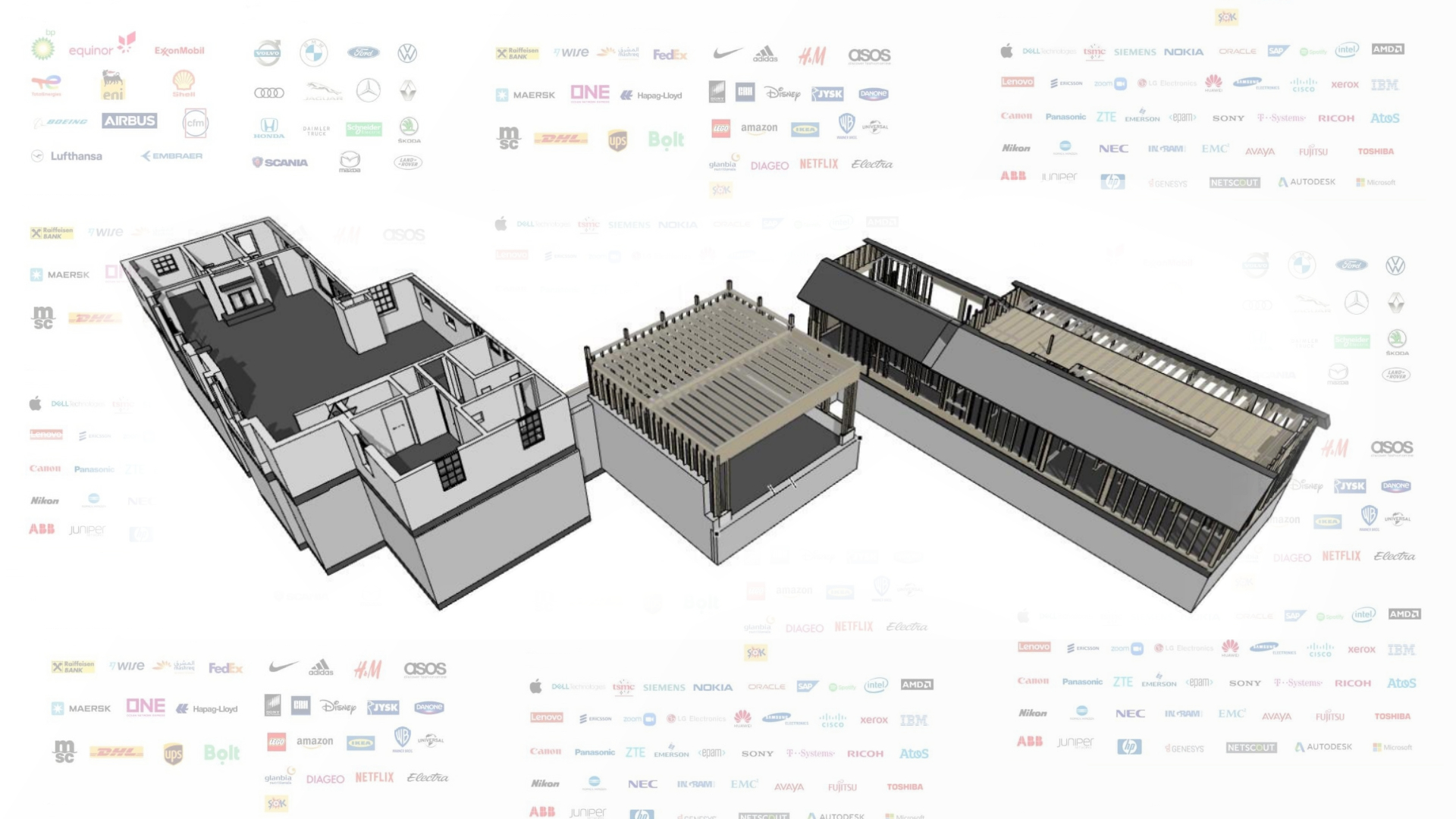

In an era of rapidly shifting consumer behavior and fierce market competition, it’s not the biggest players who win–but the fastest to adapt. That’s why market leaders–ranging from fast food chains and supermarkets to banks and telecoms–are increasingly turning to digital twins as a next-generation marketing tool.
Looking for professional Digital Twin Scanning Services?
Learn more about our Digital Twin Services and see how we can support your project.
What Is a Digital Twin?
A digital twin is an interactive, three-dimensional platform that accurately replicates physical spaces–whether it’s a retail store, restaurant, bank branch, or self-service zone. Unlike traditional visualizations, a digital twin offers a customer’s-eye view of the space, enabling full analysis, design, and implementation of solutions in a virtual environment.
What Can a Digital Twin Do?
- Plan and test POS placement, product displays, or menu layouts before real-world implementation
- Design marketing campaigns without time-consuming site visits
- Respond to seasonal changes and market trends in real time
- Remotely approve visual concepts with headquarters or partners
- Enforce brand identity standards across all locations
This is much more than a virtual walk-through – it’s a real, operational marketing tool. It shortens workflows, reduces errors, and significantly boosts the efficiency of marketing, operations, and design teams.
Depending on the complexity, a digital twin can range from simple 3D visualizations of individual locations to fully integrated data environments that combine customer behavior analytics, merchandising tests, and data-driven strategic planning. That makes this technology just as useful for small businesses as it is for global chains.
Why 3D Laser Scanning Is a Breakthrough for Marketing-Grade Digital Twins
The backbone of an effective digital twin in retail, food service, or banking is fast and accurate spatial data collection. This is where 3D laser scanning becomes a game changer–it enables rapid creation of a highly precise digital copy of any physical location.
What Does 3D Laser Scanning Deliver?
- A point cloud – a detailed, 3D digital replica of real space composed of millions of data points
- Fast digitization – scanning a typical site takes only a few hours
- High measurement accuracy – deviations of just 3–5 mm support both operational use and detailed design
- Model flexibility – from lightweight marketing visualizations to advanced BIM models
- Scalability – suitable for networks with dozens or hundreds of locations
- 3D virtual tours – create engaging presentations for promotions or investor relations
Thanks to this technology, teams in:
- Retail marketing can design campaigns based on actual spatial data
- QSR and hospitality can standardize layouts and decor
- Banking and services can document local variations and implement visual standards efficiently
3D scanning isn’t just a technical step–it’s the beginning of a data-driven marketing process that cuts time, eliminates guesswork, and grounds decisions in reality.
Tailored to Every Scale and Need
There’s no one-size-fits-all digital twin. Each project can be scaled and customized based on organizational needs:
- Small businesses can use digital twins for investment presentations, seasonal campaign planning, or consistent visual branding
- Mid-sized networks gain centralized control over signage and product display across locations
- Large brands benefit from integrated environments for layout testing, customer path analysis, and campaign rollouts
The tool’s scalability supports affordable pilot programs and gradual feature expansion based on budget and demand. Moreover, digital twins streamline consistent marketing efforts in architecturally diverse locations, allowing for customized layouts, signage, and displays.

Integrating a Marketing Campaign into a Site’s Architectural Code
As global companies expand into diverse regions—from the U.S. and Europe to the Middle East and Asia—they encounter one consistent challenge: every location has its own architectural code. Facades, interior layouts, color palettes, and public space designs differ widely. At the same time, marketing campaigns are typically developed centrally to ensure brand consistency.
This creates a key question:
How can marketing elements be integrated into each site’s unique architectural environment—without compromising either aesthetics or brand identity?
Common Challenges:
- Where to place banners or digital screens without disrupting the space
- Which interactive displays will be visible and engaging to customers
- How to arrange printed materials or POS points so they are effective but not overcrowded
The Solution: Digital Twins
A Digital Twin offers a powerful answer to this design and branding dilemma:
- Virtually test all advertising placements before producing physical materials
- Model multiple layouts and analyze visibility and customer flow
- Match campaign visuals to each site’s unique scale and style while staying true to the brand
- Ensure that every regional site looks local, yet remains aligned with global standards
Case Study: Fast Food Chain with Multiple Locations
By using digital twins, a fast food brand can:
- Compare campaign performance across sites
- Identify the most effective promotional layouts
- Roll out visual changes simultaneously across all branches
- Present new design concepts to investors and partners
Example: Scanning a food court in a shopping center.


Who Can Benefit?
Digital twins already bring measurable benefits to organizations managing retail, service, or office spaces. They support:
- Marketing teams in campaign planning and execution
- Visual identity managers maintaining brand standards
- Retail designers and merchandisers testing concepts in 3D
- Operations and investment teams managing implementations without site visits
This technology is especially effective for:
- Banking and finance – for testing customer-centric layouts and offers
- Shopping malls – for path analysis, promotional zone planning, and leasing presentations
- Food service and QSR – for layout optimization, signage, and menu testing
- Beauty and wellness – for showcasing interiors and visual moodboards, and designing new service locations
Regardless of scale, digital twins help marketing teams make faster, smarter, and more aligned decisions.
The Future: From Reaction to Prediction
Digital twins are more than reactive tools–they enable proactive planning. Integrated with data analytics, they can automate marketing decisions related to POS placement, signage, and messaging. Based on real-time customer movement and hotspot data, brands can dynamically adapt layouts and campaigns.
This is a leap from static presentations to a cohesive ecosystem where design, testing, and execution happen in a single environment.

FAQ
Is a digital twin just a “virtual walk-through”?
No. While virtual tours are a feature, a digital twin is a fully interactive, operational platform for planning campaigns, testing spatial layouts, enforcing branding, and analyzing customer behavior.
Do I need a new building to use a digital twin?
No. Most use cases involve existing buildings. With 3D scanning, a digital copy can be created for any physical location–store, bank branch, or service outlet.
Are digital twins GDPR compliant?
Yes–when data processing and anonymization guidelines are followed. Scanning doesn’t capture personal data, and access to the twin can be password-protected or user-restricted.
Can I start with just one location?
Absolutely. It’s an ideal pilot approach.
Is this solution only for large enterprises?
Not at all. Small chains and premium locations can benefit as well.
Can the digital twin be connected to IoT or cameras later?
Yes–this is just the start of a full digital twin environment, integrating sensors, BMS, video analytics, and even augmented reality.
Ready to Launch?
ScanM2 operates over 30 scanning units worldwide – including the U.S. (Texas, California, New York, Illinois, Florida, New Jersey), Poland, Germany, France, the UAE, as well as in other states and countries. We work with fast-growing international networks, including major financial institutions.
Thanks to our global reach, rapid-response scanning units, high-precision equipment, and experienced team, we can support a large number of locations across the world–quickly, efficiently, and at scale. If you’re looking for a fast, accurate partner to help digitize and optimize your physical spaces, we’re ready.
Digital twins aren’t just a visual tool–they’re a smarter way to market, manage, and grow.

