
Scan to BIM Services in Denver
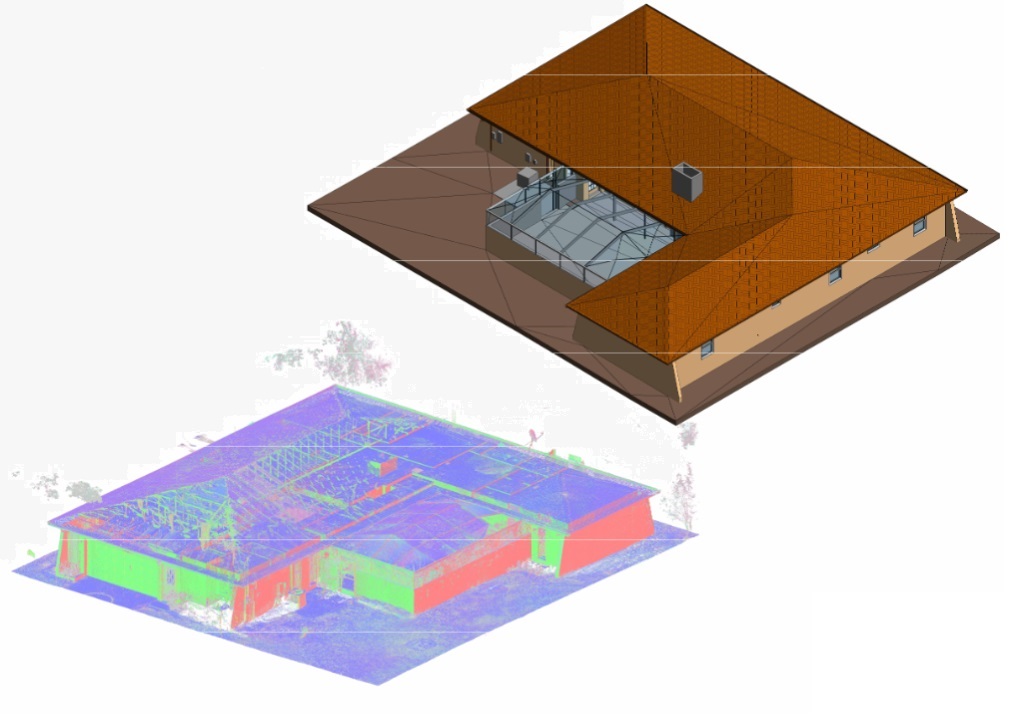
ScanM2 provides professional Scan to BIM services in Denver for architecture, construction, renovation, engineering, and development projects. We focus on converting raw physical data from site surveys into organized, parametric digital models that integrate smoothly into modern building design and construction workflows.
Contact Us Now for a Free Consultation!
Local Focus: Denver’s Built Environment
Denver’s commercial real estate and construction sectors are defined by widespread adaptive reuse of historic masonry structures alongside rapid development of new transit-oriented commercial zones. Construction projects across Lower Downtown (LoDo), the River North Art District (RiNo), the Central Business District, and expanding industrial parks near DIA often face specific structural challenges. These range from modernizing early-twentieth-century brick warehouses into creative brick-and-timber workspaces and retail hubs to retrofitting institutional campus buildings and expansive industrial logistics properties. Our team delivers spatial documentation that accounts for these regional property types, helping local firms manage structural modifications while respecting Colorado building footprints and regional development codes.
Where Scan to BIM Is Used in Denver
Having an accurate structural baseline is essential for managing risk in several prominent regional sectors:
- Historic Renovations & Adaptive Reuse: Converting older industrial brick properties, legacy commercial structures, and low-rise rail-yard buildings in RiNo and LoDo into modern mixed-use assets.
- Commercial Office Modernization & Office Upgrades: Mapping out existing structural components and complex spatial layouts in urban corporate buildings and mid-century high-rises to plan layout reconfigurations.
- Warehouses & Industrial Facilities: Documenting large-scale manufacturing plants and expansive distribution centers along the I-70 corridor to plan facility upgrades or equipment installations.
When a project demands comprehensive field documentation before any modeling can begin, our 3D Laser Scanning Services capture the entire site layout to establish a clear baseline for design teams.
Who This Service Is For
Our localized modeling workflows provide reliable data for B2B professionals looking to reduce manual site documentation tasks:
- Architects & Engineers: Design new renovations using verified geometry of existing conditions rather than relying on outdated construction blueprints.
- General Contractors: Coordinate sub-contractors and identify physical design conflicts early in the pre-construction phase.
- Developers & Real Estate Teams: Verify exact square footage and structural layouts to inform investment, leasing, and feasibility studies.
- Facility Managers: Maintain reliable records of structural layouts and utility paths for long-term building operations.
What Clients Receive
We deliver structured files built to match your team’s technical standards and software requirements:
- BIM-Ready Models Based on Scan Data: As-built Revit files incorporating architectural, structural, or MEP (mechanical, electrical, plumbing) systems based on project scope.
- Structured Digital Building Information: Parametric building components organized according to standard industry classification systems.
- Coordinated Models for Workflows: Integrated design files ready for immediate spatial coordination and clash detection.
- Model Data Prepared from Measured Existing Conditions: Digital representations that reflect the true physical state of the building, including structural deviations and unaligned walls.
For projects where standard two-dimensional documentation is preferred over or alongside a 3D model, we provide detailed As-Built Drawings suitable for municipal permitting, design planning, and property records.
Why Scan to BIM Matters
Operating within a highly active and growing metropolitan market like Denver means project timelines and budgets are critical. Relying on unverified manual measurements or partial records frequently results in unexpected field discoveries, uncoordinated designs, and subsequent construction delays.
Implementing a professional Scan to BIM process addresses these challenges directly:
- Supports Renovation and Retrofit Planning: Clarifies how complex modern mechanical systems and new structural supports will fit within an existing layout.
- Reduces Conflicts Caused by Incomplete Information: Allows design teams to identify and resolve physical clashes digitally before breaking ground.
- Saves Time During Planning: Streamlines the initial site survey phase, replacing repetitive site visits with a single, comprehensive data collection process.
This workflow relies entirely on clean data preparation. Our Point Cloud Services convert raw, unorganized scan data into structured datasets that serve as a reliable foundation for all subsequent modeling work. Bringing physical dimensions into a coordinated environment allows stakeholders to review spatial relationships, plan construction phases, and maintain consistent documentation across project teams.
Our professional BIM modelling workflows bridge the gap between physical site conditions and digital project execution, ensuring that design, engineering, and construction teams remain aligned from the early stages of planning.
FAQ
How long does it take to complete a Scan to BIM project for a property in Denver?
Can you model specific disciplines like MEP alongside architectural elements?
Why is Scan to BIM preferred over traditional hand-measuring for renovations?
Get a Quote for Scan to BIM in Denver
If your project requires structured models from scan data, coordinated digital workflows, or a reliable basis for renovation, fit-out, and development planning, ScanM2 can support your team with professional Scan to BIM Services in Denver. Contact us to discuss your project scope and request a quote.

