

3D Laser Scanning for Chemical Manufacturing Facilities
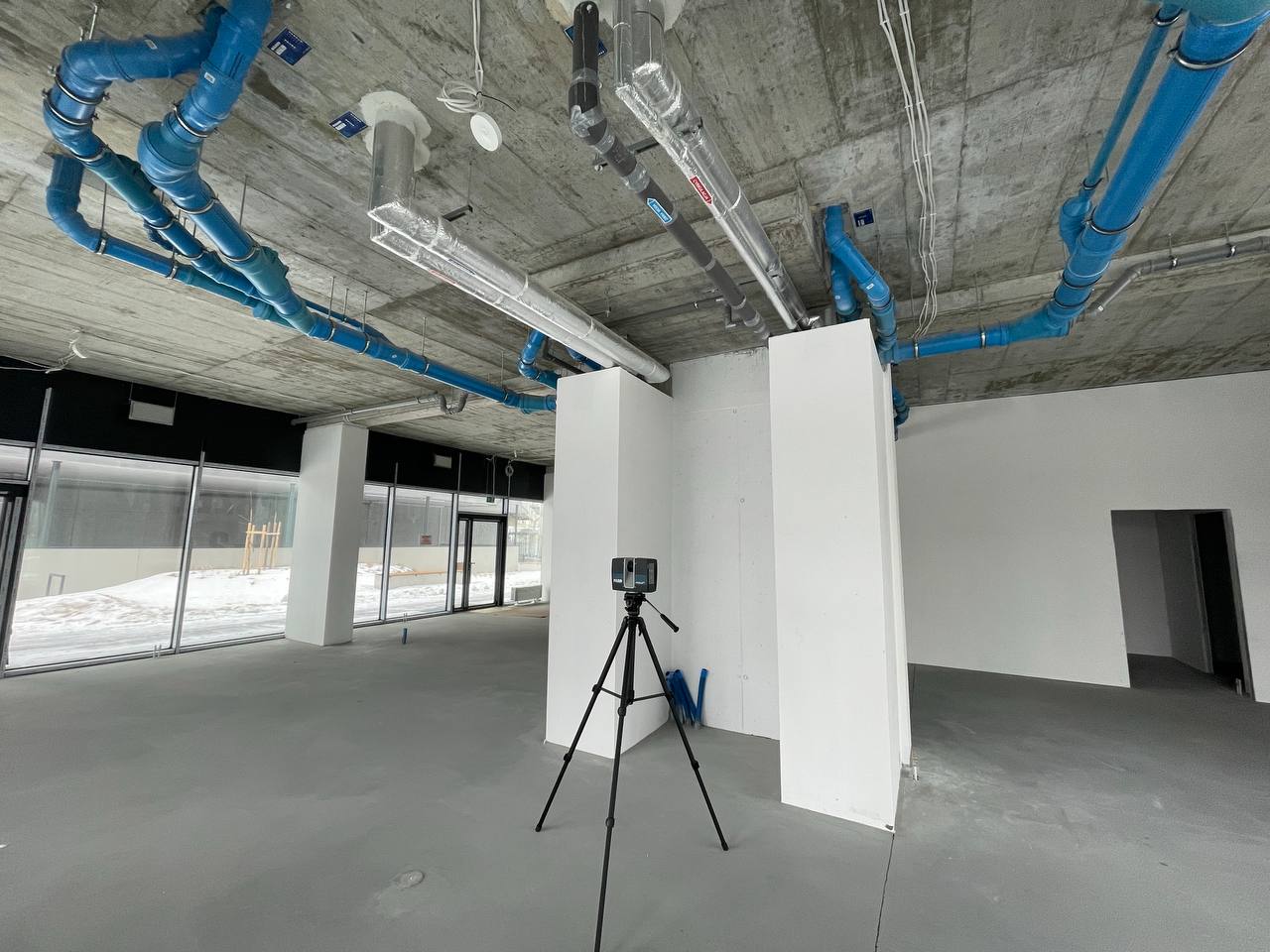
Chemical manufacturing facilities operate with tightly integrated systems of reactors, pipelines, storage vessels, and process control infrastructure. Maintaining accurate spatial data within such environments is critical for plant modernization, safety upgrades, and process optimization. 3D laser scanning for chemical plants provides a highly accurate method of capturing existing plant conditions and translating them into reliable digital models used for engineering, maintenance, and retrofit planning.
Unlike traditional manual measurements, industrial laser scanning for chemical facilities captures millions of spatial points within minutes, creating a precise digital representation of production units, utility systems, and structural frameworks. This data supports engineering teams in minimizing shutdown durations, reducing field measurement errors, and improving coordination across multidisciplinary projects.
Contact Us Now for a Free Consultation!
Modern laser scanning for chemical manufacturing facilities is widely used for revamp projects, debottlenecking initiatives, safety audits, and documentation of legacy installations where original drawings may no longer reflect current conditions.
Why Chemical Plants Require High-Precision Laser Scanning
Chemical production facilities rely on tightly controlled process conditions and densely installed equipment layouts. Even small deviations in equipment placement or piping routing can lead to engineering conflicts during plant upgrades.
Chemical plant laser scanning enables engineers to work with accurate spatial information, ensuring that new equipment, piping systems, and structural supports can be integrated into existing process units without costly modifications during installation.
In chemical facilities, laser scanning is particularly valuable for:
- modernization of aging production units
- installation of additional process equipment
- piping rerouting during process optimization
- safety compliance and hazard analysis
- expansion of storage or loading systems
A precise digital representation of the plant enables engineers to perform clash detection, develop reliable as-built documentation, and design modifications based on real-world geometry rather than outdated drawings.
Additionally, many facilities rely on terrestrial laser scanning for chemical plants when preparing digital twins or integrating spatial data into plant asset management systems.

Engineering Challenges in Scanning Chemical Processing Facilities
Chemical plants present a range of technical challenges that require specialized scanning strategies and experienced field teams. Unlike simpler industrial environments, chemical facilities often include complex process areas with multiple overlapping systems.
Dense Piping Systems
Process units typically contain extensive pipe networks carrying various chemicals, gases, and intermediates. Pipes are frequently installed in multi-level racks with minimal spacing between lines. Laser scanning for piping systems enables the capture of pipe routing, flange locations, valve assemblies, and instrumentation connections with millimeter-level accuracy.
This data becomes critical when engineers need to design tie-ins or modify piping systems during process upgrades.
Elevated Platforms
Many process units include elevated walkways, maintenance platforms, and access structures. Scanning these areas requires careful positioning of scanning stations to avoid occlusions and capture both structural and mechanical elements.
Accurate spatial data helps engineers plan equipment maintenance access and ensure compliance with industrial safety standards.
Tanks and Reactors
Chemical production frequently relies on pressure vessels, reactors, distillation columns, and storage tanks. These components are often surrounded by insulation systems, instrumentation tubing, and support structures.
3D scanning of chemical plant equipment allows engineers to document the exact geometry of vessels and surrounding infrastructure, which is essential when integrating new equipment or modifying process units.
Hazardous Environments
Chemical processing plants may contain hazardous zones with flammable vapors, corrosive materials, or high-temperature processes. Field data collection must follow strict safety protocols and equipment certification requirements.
For this reason, laser scanning survey for chemical plants is typically performed by specialized teams familiar with industrial safety procedures and plant operating conditions.
Our Laser Scanning Workflow for Chemical Plants
A structured workflow is essential for delivering reliable scanning results within active production environments. Our laser scanning services for chemical facilities follow a systematic process designed to minimize operational disruption while ensuring data accuracy.
1. Pre-Scanning Assessment
Before field deployment, engineers review plant documentation, P&IDs, and layout drawings to identify scanning zones and potential accessibility constraints. This stage includes coordination with plant safety teams and scheduling scanning operations during maintenance windows when required.
2. On-Site Data Acquisition
Using high-resolution terrestrial laser scanners, technicians capture spatial data across the facility. Strategic placement of scanning stations ensures full coverage of equipment, piping systems, and structural elements.
During industrial plant scanning, overlapping scans are collected to eliminate blind spots and ensure complete geometric capture of complex installations.
3. Point Cloud Processing
After fieldwork, raw scan data is registered into a unified point cloud dataset. Advanced software tools are used to clean noise, align scans, and verify spatial accuracy.
At this stage, the dataset becomes a highly detailed digital representation of the plant environment.
4. Model Development and Data Delivery
Depending on project requirements, the point cloud may be converted into engineering models, including:
- 3D piping models
- structural steel frameworks
- equipment geometry
- layout drawings
The resulting dataset can be integrated into engineering platforms used for plant design and asset management.
In many projects, the resulting point cloud is used for BIM modeling of chemical plants to support plant modernization and engineering coordination.
What Is Captured During Chemical Plant Scanning
A comprehensive scan survey for chemical facilities captures a wide range of physical components across production and utility areas. The resulting point cloud provides engineers with a highly detailed digital environment for analysis and planning.
Process Piping
Pipe routing, flanges, valves, instrumentation lines, and supports are captured with high accuracy. This information allows engineers to evaluate available space for new installations and verify existing piping configurations.
Tanks and Vessels
Storage tanks, reactors, separators, and pressure vessels are scanned to capture their geometry, surrounding structures, and access platforms. Accurate documentation is essential when designing equipment replacements or expansions.
Pumps and Compressors
Rotating equipment such as pumps, compressors, and mixers are recorded within their operational context, including foundations, motor alignments, and maintenance access zones.
This information supports maintenance planning and replacement projects.
Steel Structures
Pipe racks, equipment supports, stairways, and structural frameworks are documented to provide reliable reference geometry for engineering modifications.
High-resolution industrial laser scanning for chemical facilities ensures structural details are captured with sufficient precision for structural analysis and retrofitting.
Applications of 3D Laser Scanning in Chemical Manufacturing
The adoption of 3D scanning for chemical processing plants continues to expand as facilities modernize their infrastructure and adopt digital engineering workflows.
Plant Revamps and Modernization
Many chemical plants operate equipment that has been modified repeatedly over decades. Chemical plant laser scanning services allow engineers to obtain accurate as-built data before designing modernization projects, eliminating uncertainties caused by outdated drawings.
Process Unit Expansion
When adding new reactors, separators, or storage vessels, engineers must ensure that new equipment fits within existing layouts. 3D laser scanning contractor for chemical plants provides detailed spatial information needed to design installations with minimal disruption to ongoing operations.
Safety and Compliance Projects
Chemical plants must meet strict regulatory requirements related to equipment spacing, access routes, and emergency systems. Laser scanning supports safety audits by providing accurate documentation of plant conditions.
Equipment Replacement and Retrofit
Replacing pumps, compressors, or heat exchangers requires accurate alignment with existing piping and foundations. Industrial laser scanning company for chemical plants delivers the precise spatial data necessary to design retrofit components without unexpected field adjustments.
Digital Plant Documentation
Many chemical facilities are transitioning toward digital plant models for long-term asset management. Point cloud datasets created through laser scanning for chemical manufacturing facilities provide the foundation for developing digital twins used in maintenance planning and operational optimization.
FAQ
What is 3D laser scanning for chemical plants?
3D laser scanning for chemical plants is a technology used to capture precise spatial data of industrial facilities using high-resolution terrestrial laser scanners. The scanning process creates a dense point cloud that accurately represents piping systems, reactors, storage tanks, and structural components within the plant. This digital data is used for engineering design, retrofit planning, and as-built documentation.
Why is laser scanning important for chemical manufacturing facilities?
Chemical manufacturing facilities contain dense piping networks, complex process equipment, and safety-critical infrastructure. Laser scanning provides highly accurate spatial data that helps engineers plan upgrades, detect clashes, and integrate new equipment into existing production units without relying on outdated drawings.
What equipment can be captured during chemical plant laser scanning?
A typical chemical plant laser scanning survey captures a wide range of infrastructure including:
- process piping and pipe racks
- reactors and pressure vessels
- storage tanks and columns
- pumps, compressors, and mixers
- structural steel and access platforms
- instrumentation and support systems
This data allows engineers to work with a reliable digital representation of the facility.
How accurate is industrial laser scanning for chemical facilities?
Industrial laser scanning for chemical facilities typically achieves accuracy within a few millimeters depending on scanning distance and equipment used. The resulting point cloud provides highly detailed spatial data suitable for engineering design, plant revamp projects, and equipment installation planning.
When do chemical plants typically use laser scanning services?
Chemical plants usually require laser scanning services during facility upgrades, equipment replacement projects, plant expansions, safety audits, and digital documentation initiatives. Scanning is also widely used before designing new piping systems or installing additional reactors or process equipment.

