

Scan to BIM for Chemical Manufacturing Facilities
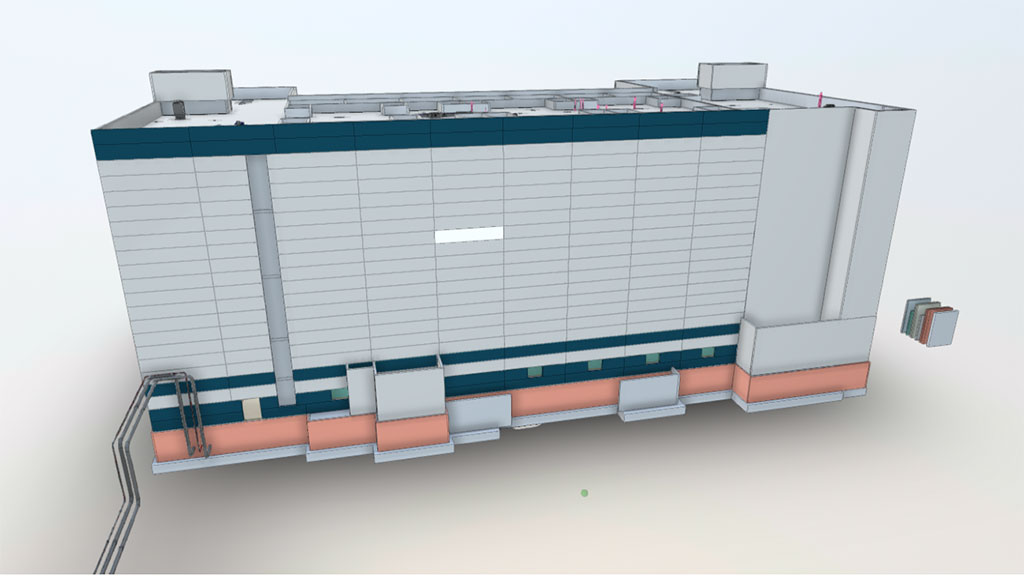
Modern chemical manufacturing facilities operate with dense equipment layouts, extensive piping systems, and complex process infrastructure. Maintaining accurate digital documentation of these assets is critical for safe operations, plant upgrades, and engineering planning. Scan to BIM for chemical plants provides a reliable way to transform reality capture data into precise digital models that reflect the current state of the facility.
By combining high-resolution 3D Laser Scanning with advanced BIM Modeling , chemical manufacturers can obtain detailed digital representations of reactors, pipe racks, distillation units, and structural platforms. These models support engineering teams during plant modernization, maintenance planning, and process modifications.
Our scan to bim services for chemical plants convert Point Cloud Processing into structured BIM models suitable for engineering analysis, facility management, and process optimization. The resulting models deliver reliable geometric information for critical plant components while maintaining compatibility with common BIM and plant design platforms.
Contact Us Now for a Free Consultation!
Organizations planning plant retrofits, safety improvements, or digitalization initiatives increasingly rely on point cloud to bim chemical plants workflows to ensure engineering decisions are based on accurate as-built data.
Why Scan-to-BIM Is Important for Chemical Plants
Chemical production environments contain tightly packed process systems where minor deviations can affect both operational performance and safety. Traditional drawings and legacy CAD files rarely represent the current condition of facilities that have undergone years of modifications and equipment replacements.
A chemical plant scan to bim process begins with precise laser scanning of the facility, capturing millions of spatial measurements in the form of a point cloud. This data is then converted into BIM models that accurately represent the plant’s physical configuration.
The benefits of this approach are particularly relevant for chemical manufacturing:
Reliable documentation of process infrastructure
Chemical plants include interconnected systems such as distillation columns, heat exchangers, and reaction vessels. Accurate BIM models ensure engineers understand spatial relationships between equipment, piping, and supporting structures before implementing design changes.
Improved planning for plant upgrades
During modernization projects, engineering teams must evaluate available space for new equipment or piping modifications. Industrial scan to bim for process plants provides reliable geometry for evaluating installation feasibility.
Safer maintenance and turnaround planning
Maintenance shutdowns require careful coordination of multiple systems. BIM models derived from scans allow planners to visualize equipment access, clearance zones, and maintenance routes.
Support for digital transformation initiatives
Many chemical manufacturers are integrating BIM models with asset management platforms and digital twins. BIM from laser scanning chemical plants enables accurate digital representations of existing facilities, supporting predictive maintenance and operational analytics.
For organizations seeking precise facility documentation, integrating 3D Laser Scanning services with BIM modeling ensures that engineering decisions rely on real conditions rather than outdated drawings.
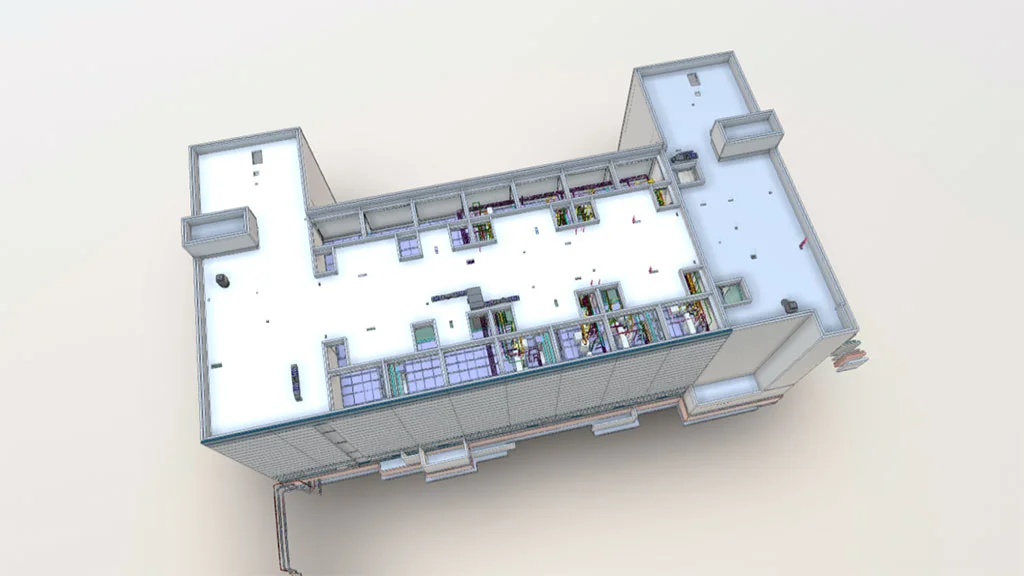
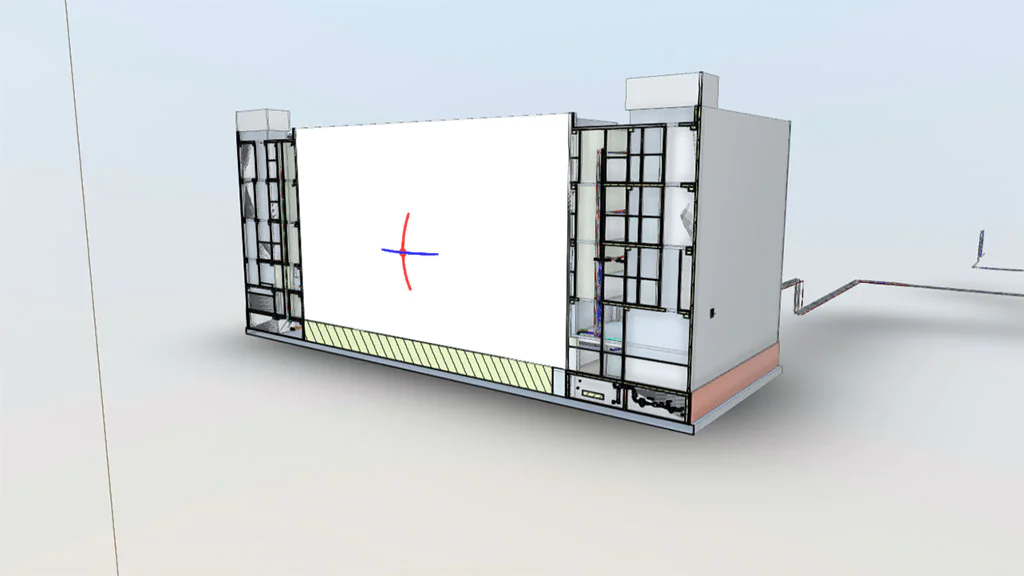
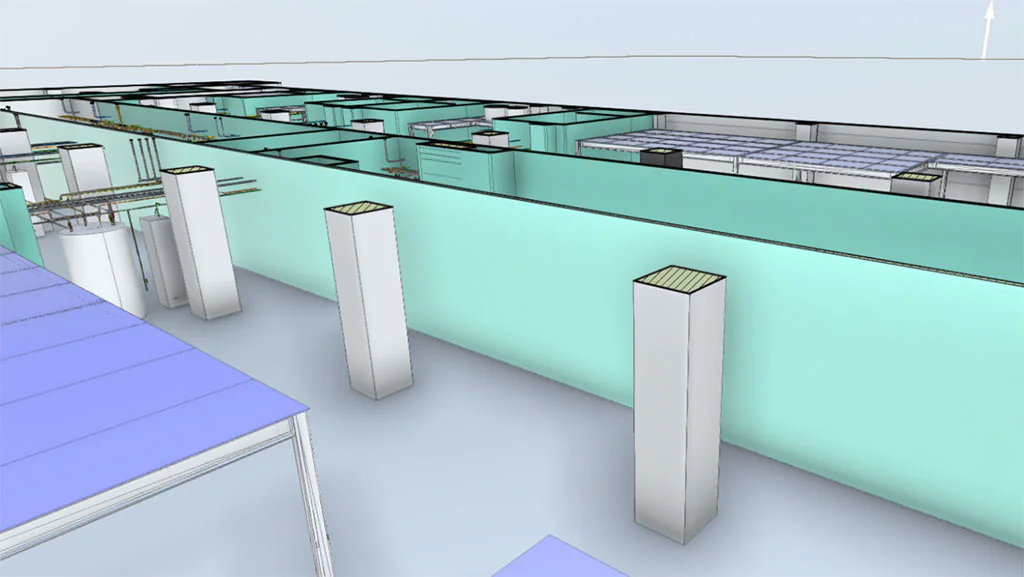
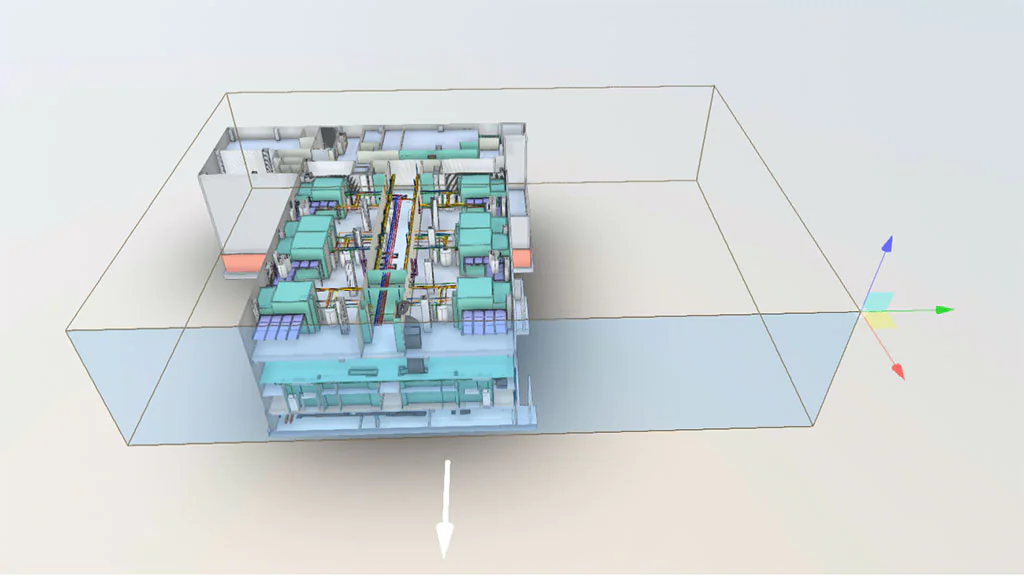
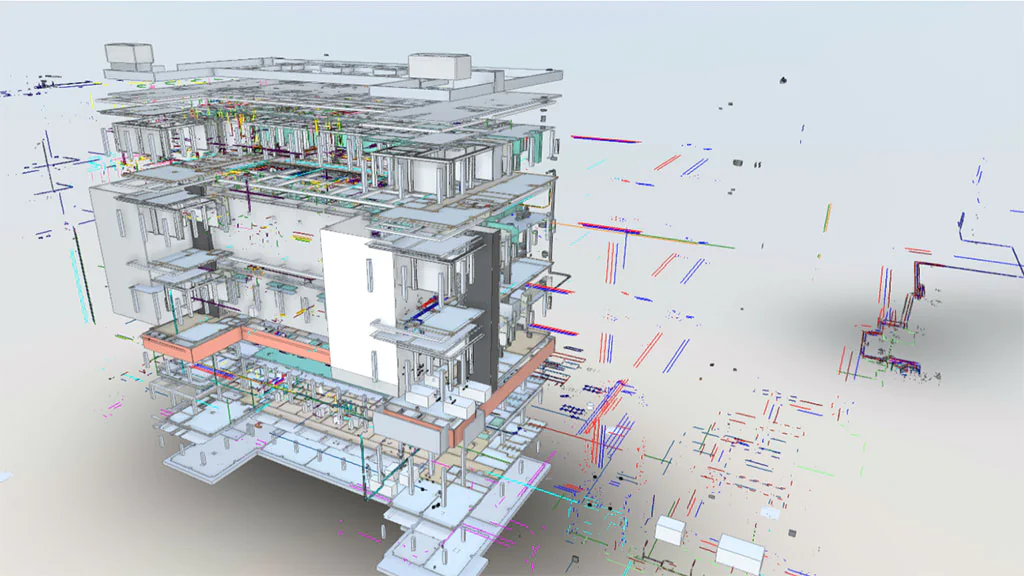
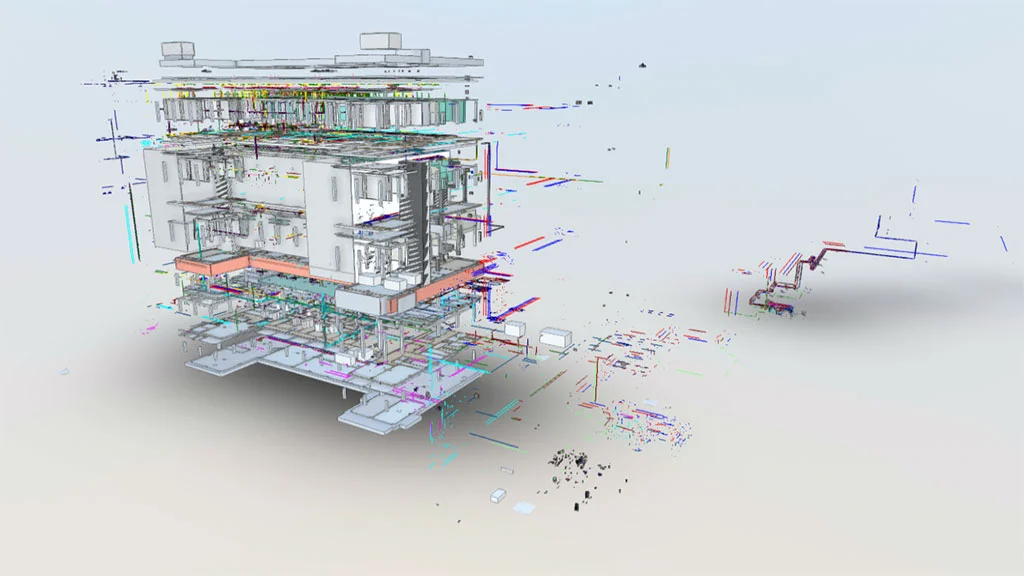
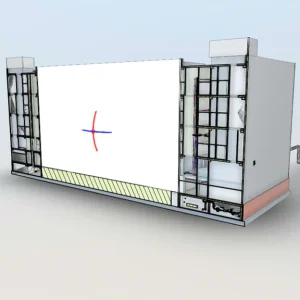
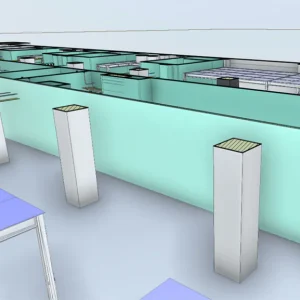
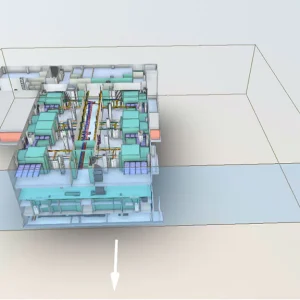
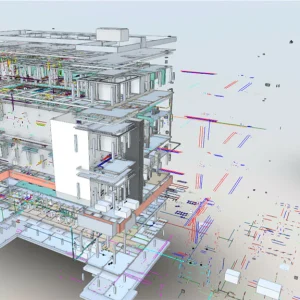
Scan to BIM Modeling Examples for Chemical Plants


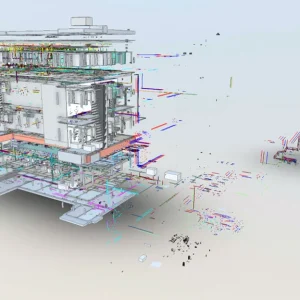
Challenges of Converting Chemical Plant Scans into BIM Models
Transforming raw scan data into structured BIM models requires deep understanding of process plant engineering. Chemical facilities contain unique technical elements that require careful modeling approaches.
Complex piping systems
Chemical plants rely on extensive piping networks transporting raw materials, intermediates, and final products across the facility. These piping systems often include hundreds or thousands of interconnected lines running through pipe racks and process areas.
Accurate scan to bim piping modeling requires identification of pipe diameters, routing paths, valves, flanges, and supports. Modeling teams must interpret point cloud data carefully to ensure pipe alignments and slopes match actual installation conditions.
Reactors and vessels
Reaction vessels, storage tanks, and distillation columns are central components in chemical production. These assets often feature insulation layers, platforms, ladders, and auxiliary piping.
During scan to bim process plant modeling, these structures must be represented with correct geometry while maintaining compatibility with engineering software used in plant design and process simulation.
Structural platforms and pipe racks
Chemical plants frequently include elevated platforms, steel support structures, and multi-level pipe racks supporting heavy process lines. These structures must be modeled accurately to evaluate load paths and identify possible interference between equipment and structural members.
Additionally, many chemical facilities operate within regulated safety environments, including hazardous zones governed by ATEX or similar safety classifications. Accurate spatial modeling helps engineers assess equipment placement within these zones.
These complexities require specialized chemical facility scan to bim modeling expertise rather than generic building modeling workflows.
Our Scan to BIM Workflow for Chemical Facilities
Our chemical plant scan to bim modeling services follow a structured workflow designed specifically for process industries.
1. Reality capture using laser scanning
The process begins with high-precision laser scanning of the facility. Using industrial scanning equipment, millions of measurements are captured across equipment areas, pipe racks, and structural zones.
2. Point cloud registration and processing
Individual scans are aligned and combined into a unified point cloud dataset representing the entire plant area. This dataset becomes the reference environment for BIM modeling.
Specialized processing ensures the dataset maintains high geometric accuracy while remaining manageable for modeling and engineering workflows.
More details on this stage can be explored in our point cloud processing services and point cloud modeling solutions.
3. BIM modeling of plant components
Experienced BIM specialists convert point cloud data into parametric models. During this phase, engineers interpret the spatial information and recreate facility elements including piping systems, equipment, and structural components.
The modeling process supports industry-standard detail levels such as LOD 300 LOD 400 BIM chemical plants, depending on project requirements.
4. Quality control and engineering verification
All BIM models undergo validation against the original point cloud to ensure dimensional accuracy. Critical areas such as pipe routing, equipment alignment, and structural supports receive additional verification.
5. Model delivery and integration
Final BIM models are delivered in formats compatible with plant engineering tools and facility management platforms. These models can support design coordination, retrofit planning, and digital asset management.
What Is Modeled from Point Cloud Data
The scope of scan to bim for chemical manufacturing facilities typically includes multiple facility systems required for engineering and operational planning.
Piping networks
Piping infrastructure forms the backbone of chemical production. BIM models include pipe geometry, routing paths, elbows, reducers, and support elements where required.
Detailed scan to bim piping modeling ensures that engineers can evaluate space constraints and clash conditions during plant modifications.
Tanks and reactors
Chemical facilities include numerous vertical and horizontal vessels used for reaction, storage, and separation processes.
Our models represent:
- Reaction vessels
- Distillation columns
- Storage tanks
- Heat exchanger systems
These elements are modeled with sufficient detail to support equipment upgrades and layout analysis.
Equipment layout
Plant equipment layouts include pumps, compressors, mixers, and process skids. Accurate spatial modeling allows engineers to analyze equipment placement relative to piping systems and structural supports.
This scan to bim plant layout modeling capability is especially useful when planning process line expansions or equipment replacements.
Applications of Scan to BIM in Chemical Manufacturing
Chemical manufacturers use scan to bim contractor for chemical facilities services across multiple engineering and operational scenarios.
Plant modernization and retrofits
Existing chemical plants often require process upgrades or equipment replacement. BIM models generated from scan data provide engineers with accurate facility geometry for designing modifications.
Clash detection and engineering coordination
When introducing new piping systems or equipment, engineers must ensure new installations do not interfere with existing infrastructure. Point Cloud to bim chemical plants workflows enable precise clash detection.
Process expansion projects
Chemical production expansion often requires additional reactors, storage tanks, or piping lines. Accurate BIM models allow engineers to evaluate available space and optimize equipment placement.
Maintenance and facility management
Digital plant models support maintenance planning by allowing facility teams to visualize equipment locations and access routes.
Safety and compliance analysis
Chemical plants operate under strict safety regulations. BIM models help identify equipment clearances, escape routes, and spatial relationships between hazardous systems.
FAQ
What is scan to BIM for chemical plants?
Scan to BIM for chemical plants is a process that converts laser scanning data into accurate BIM models representing plant infrastructure such as piping systems, reactors, and structural platforms.
How accurate are BIM models created from point cloud data?
Models generated from laser scan data typically achieve millimeter-level accuracy depending on scanning resolution and modeling requirements.
What level of detail is used in chemical plant BIM models?
Most projects require LOD 300 or LOD 400 BIM chemical plants, depending on whether the models are used for coordination, engineering design, or construction planning.
Can scan to BIM capture complex piping systems?
Yes. Advanced scan to bim piping modeling workflows allow accurate reconstruction of pipe networks, including routing paths, diameters, and connections.
How is scan to BIM used during plant retrofits?
During modernization projects, BIM models derived from scans provide reliable geometry for engineering design, clash detection, and installation planning.

