

3D Laser Scanning for Metallurgical Plants
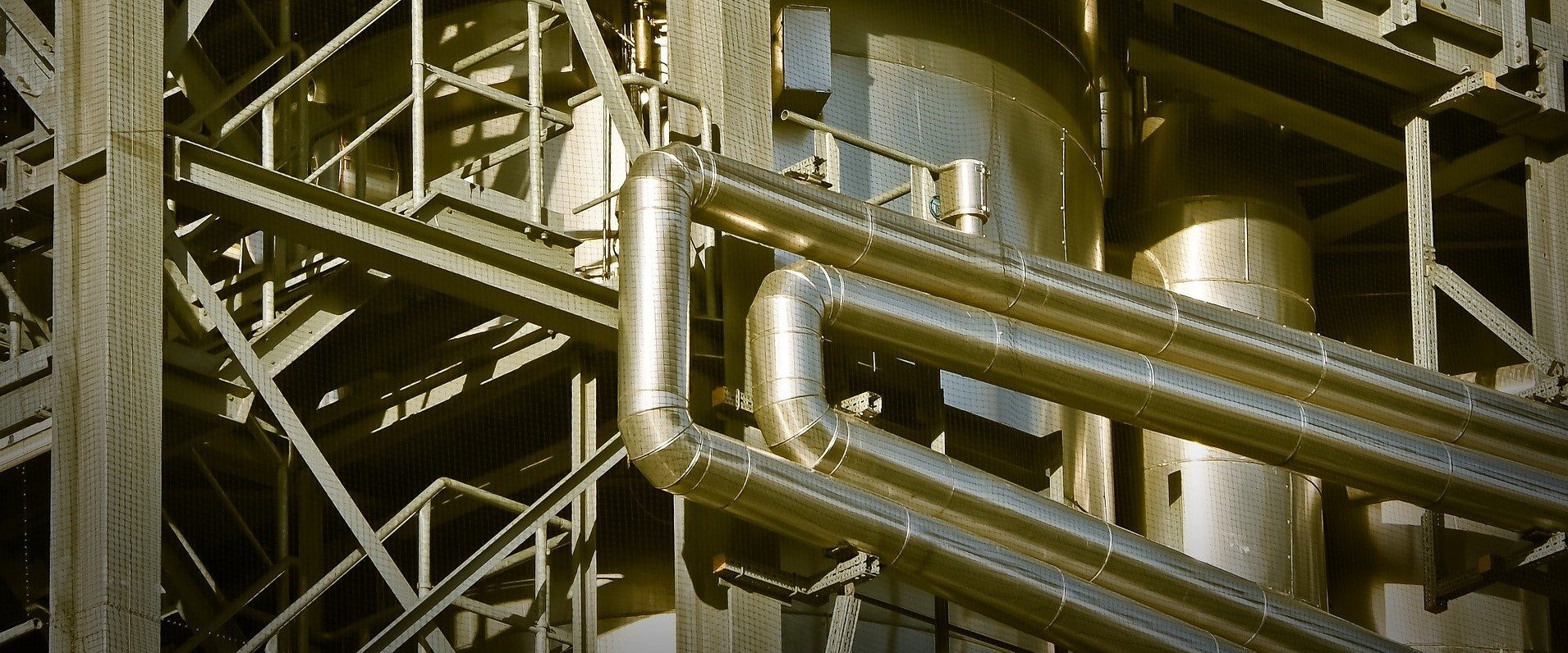
Modern steel production facilities contain dense assemblies of heavy industrial equipment, high-temperature units, and multi-level infrastructure. Accurate spatial documentation is essential for modernization projects, maintenance planning, and integration of new production lines.
3D laser scanning metallurgical plants enables rapid capture of the entire geometry of production facilities without interrupting plant operations. High-resolution point cloud data provides engineers with reliable measurements of blast furnace structures, rolling mill equipment, conveyor galleries, and steelmaking units.
Contact Us Now for a Free Consultation!
Unlike traditional surveying methods, laser scanning records millions of spatial points within minutes. This allows engineering teams to analyze existing plant geometry, detect deviations in structural elements, and plan upgrades with minimal risk of clashes or dimensional errors.
The collected data becomes a precise digital representation of the facility, forming the foundation for engineering design, reconstruction planning, and digital plant documentation.
Operational Challenges in Steel Production Facilities
Steel production environments present unique technical challenges for industrial measurement and documentation. Equipment is typically arranged in compact layouts with restricted access zones and continuous production processes.
Key measurement challenges include:
- massive furnace structures with limited access platforms
- dense networks of pipelines and cable trays
- high elevations within casting and rolling halls
- vibration from heavy machinery
- thermal deformation in furnace zones
Traditional measurement approaches are often impractical in these conditions because they require multiple manual measurements and extended shutdown periods.
Laser scanning allows engineers to capture spatial data remotely from safe locations while maintaining measurement accuracy across large industrial volumes.
What Laser Scanning Captures in Metallurgical Plants
Industrial scanning projects typically focus on critical production infrastructure and structural components that influence engineering decisions.
Typical objects captured during scanning include:
Blast furnace structures
- furnace shells
- gas exhaust systems
- charging platforms
- hot blast pipelines
Rolling mill equipment
- rolling stands
- cooling beds
- conveyor systems
- billet handling equipment
Steel production utilities
- oxygen supply lines
- cooling water systems
- ventilation ducts
- electrical cable trays
The resulting spatial dataset contains detailed geometry of both equipment and surrounding infrastructure, allowing engineers to work with reliable measurements throughout the design process.
Role of Laser Scanning in Plant Modernization
Metallurgical plants frequently undergo phased modernization projects. New equipment must be installed within existing production halls while maintaining compatibility with current infrastructure.
Without accurate spatial data, installation errors can lead to:
- equipment misalignment
- piping conflicts
- insufficient maintenance clearance
- delays during installation
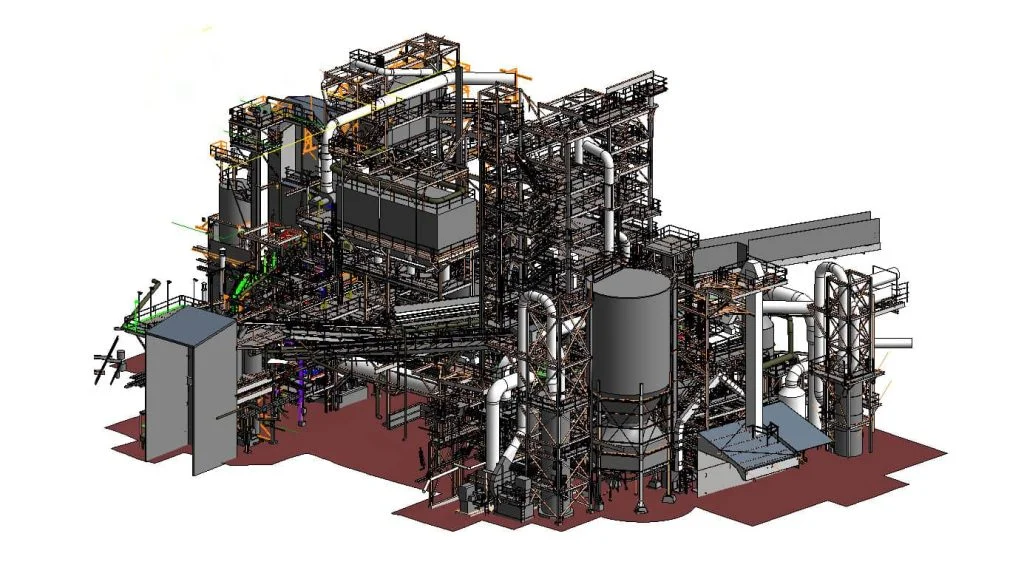
Laser scanning provides a digital foundation for modernization planning.
Engineers can use the data to:
- verify equipment installation zones
- design replacement machinery foundations
- plan pipeline rerouting
- coordinate structural modifications
This approach reduces engineering uncertainty and supports precise planning before construction begins.
Data Processing and Digital Plant Documentation
The raw output of industrial scanning is a point cloud dataset, which contains millions or billions of spatial coordinates representing surfaces of the scanned environment.
To make the data usable for engineering teams, the dataset undergoes several processing steps.
Typical processing stages include:
- Point cloud registration
Multiple scans are combined into a unified coordinate system. - Noise filtering and data cleaning
Irrelevant reflections or moving objects are removed. - Geometric verification
Accuracy is checked against reference control points. - Model preparation
The data is prepared for engineering software environments.
These datasets can be integrated with digital engineering workflows such as:
- structural modeling
- plant layout development
- equipment installation planning
For further engineering use, point clouds may be processed through point cloud data preparation workflows provided within services such as Point Cloud Processing and Scan-to-BIM modeling.
Integration with Industrial Engineering Workflows
Laser scanning data supports several engineering disciplines working within metallurgical plants.
Mechanical Engineering
Precise equipment geometry allows engineers to design replacement parts and auxiliary systems without direct manual measurements.
Structural Engineering
Structural deformation in furnace support frames, platforms, and steel columns can be analyzed using scanned geometry.
Piping Engineering
Existing pipeline routes can be verified before designing additional cooling or gas supply systems.
For detailed digital models used in engineering design, scanned data is often converted into structured models through BIM Modeling workflows.
Unique Technical Features of Metallurgical Facilities
Steel plants contain several technical systems that significantly influence scanning methodology.
Blast Furnace Shell Geometry
Blast furnaces are massive cylindrical structures with multiple external support rings, platforms, and gas exhaust pipelines. Capturing their exact geometry is essential when upgrading furnace components or installing monitoring systems.
Continuous Casting Lines
Continuous casting machines operate along long linear tracks. Accurate spatial data is required to align rollers, mold supports, and cooling systems during maintenance or upgrades.
Rolling Mill Equipment Alignment
Rolling stands must maintain strict alignment tolerances. Laser scanning enables engineers to verify spatial relationships between rolling stands, drive systems, and cooling infrastructure.
These technical characteristics require scanning workflows adapted specifically for metallurgical production environments.
Advantages of Laser Scanning Compared with Traditional Surveying
Industrial laser scanning provides several advantages when documenting large steel production facilities.
High data density
Millions of measurement points capture the full geometry of equipment and structures.
Rapid data acquisition
Large production halls can be documented within hours rather than weeks.
Reduced site exposure
Engineers spend less time in hazardous areas of the plant.
Improved planning reliability
Design teams work with real measurements instead of approximations.
These benefits make scanning particularly valuable during plant modernization and infrastructure upgrades.
Engineering Applications in Steel Production
Laser scanning data is used in multiple engineering tasks within metallurgical facilities.
Typical applications include:
- reconstruction of outdated plant documentation
- installation planning for new furnaces
- modernization of rolling mills
- pipeline redesign for gas or cooling systems
- verification of structural deformation in production halls
The digital dataset can also serve as the basis for preparing technical documentation such as as-built drawings for metallurgical plants, providing engineers with updated facility layouts.
Reverse Engineering of Industrial Equipment
Metallurgical plants often operate equipment that has been in service for decades. Original technical drawings may be missing or outdated.
Laser scanning enables the reverse engineering of large industrial components such as:
- furnace casings
- conveyor structures
- ladle handling systems
- maintenance platforms
Using scanned geometry, engineers can reconstruct accurate digital models of existing equipment and design compatible replacement parts.
Safety Considerations During Scanning
Steel production environments require strict adherence to industrial safety procedures.
Scanning operations must account for:
- high temperature zones near furnaces
- overhead crane movement
- restricted access platforms
- hazardous gas pipelines
Field teams typically coordinate scanning activities with plant maintenance departments to ensure safe access and minimal disruption to production.
Remote scanning positions and high-range laser scanners allow most measurements to be performed from secure locations.
Future Role of Digital Plant Measurement
Digital spatial documentation is becoming an integral component of steel plant asset management.
Point cloud datasets enable long-term monitoring of:
- structural deformation
- equipment relocation
- pipeline expansion
- facility modernization stages
Combined with engineering models, these datasets contribute to the development of digital plant environments used for maintenance planning and production optimization.
FAQ
What is 3D laser scanning used for in metallurgical plants?
3D laser scanning is used to capture accurate spatial data of steel production facilities, including blast furnaces, rolling mills, and industrial infrastructure. The resulting point cloud allows engineers to analyze equipment placement, structural geometry, and available installation space for modernization projects.
Can laser scanning be performed while the steel plant is operating?
Yes. Most scanning work can be performed during normal plant operations because the equipment captures geometry remotely. This minimizes the need for production shutdowns while still providing accurate measurements of the facility.
How accurate is laser scanning for industrial facilities?
Modern industrial scanners typically achieve millimeter-level accuracy. When properly registered and verified, the resulting dataset provides reliable measurements suitable for engineering design and reconstruction planning.
What deliverables are produced after scanning?
Typical project deliverables include:
- registered point cloud datasets
- sectional measurements of equipment areas
- 3D plant models
- updated engineering drawings
These outputs support engineering design, plant modernization, and infrastructure documentation.

