

BIM for Data Center Infrastructure: Improving Accuracy, Coordination, and Future Expansion
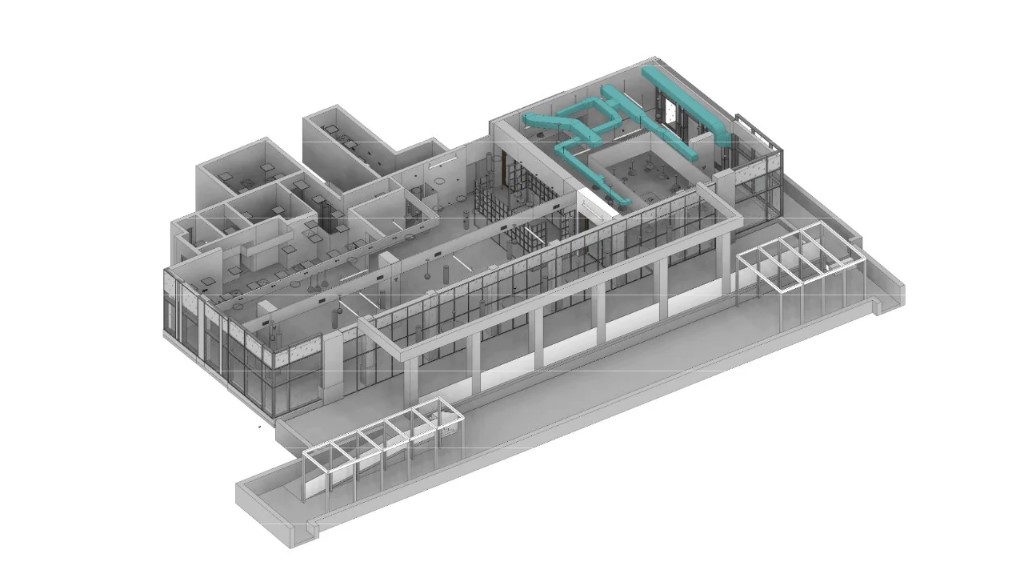
Modern data centers are among the most technically complex buildings constructed today. Every square meter contains critical infrastructure, including electrical systems, cooling equipment, fire protection, security systems, cable management, and server installations that must work together without interruption.
Designing and maintaining this infrastructure requires more than traditional 2D drawings. Building Information Modeling (BIM) provides a coordinated digital representation of the entire facility, helping engineers, architects, contractors, and operators collaborate more efficiently throughout the building lifecycle.
Contact Us Now for a Free Consultation!
Whether constructing a new facility or upgrading an existing one, BIM creates a reliable foundation for better planning, reduced construction risks, and long-term facility management.
What Is BIM for Data Center Infrastructure?
BIM is a digital process that combines architectural, structural, and MEP information into a coordinated 3D model. Unlike conventional CAD drawings, BIM stores both geometry and engineering information, allowing every project participant to work from the same dataset.
For data centers, BIM models typically include:
- Structural framework
- Server rooms
- Raised floors
- Electrical distribution
- UPS systems
- Backup generators
- HVAC equipment
- Cooling infrastructure
- Fire suppression systems
- Cable trays
- Security systems
Accurate BIM Modeling Services provide a single source of truth throughout design, construction, operation, and future modernization.
Why Data Centers Require BIM
Unlike conventional commercial buildings, data centers contain thousands of interconnected engineering components operating within extremely limited tolerances.
Project teams must coordinate:
- electrical power distribution;
- redundant backup systems;
- precision cooling;
- cable routing;
- equipment clearances;
- maintenance access;
- structural supports;
- fire protection.
Without proper coordination, even minor conflicts between systems can delay construction, increase costs, or create operational risks.
BIM significantly improves coordination before work begins on site.
Key Infrastructure Systems Modeled in BIM
A complete BIM model represents every major building system required for reliable operation.
Structural Components
Columns, beams, slabs, foundations, equipment supports, and maintenance platforms.
Mechanical Systems
Cooling units, chilled water piping, air handling equipment, CRAH and CRAC systems, ductwork, and ventilation.
Electrical Infrastructure
Switchgear, transformers, UPS systems, generators, power distribution units (PDUs), cable trays, and electrical rooms.
Fire Protection
Detection systems, sprinkler layouts, clean-agent suppression systems, emergency equipment, and evacuation routes.
IT Infrastructure
Server racks, equipment layouts, cable routing, containment systems, and future expansion zones.
BIM Workflow for Data Center Projects

Successful BIM implementation typically follows a structured workflow.
1. Existing Conditions Capture
For existing facilities, projects begin with 3D Laser Scanning to capture precise building geometry without interrupting operations.
2. Point Cloud Processing
Collected scan data is registered, cleaned, and processed into an accurate point cloud representing the entire facility.
3. Existing Building Documentation
The verified point cloud becomes the basis for accurate Existing Building Documentation, ensuring designers work with current conditions rather than outdated drawings.
4. BIM Modeling
Engineers develop coordinated BIM models containing architectural, structural, and MEP systems.
5. BIM Coordination
All disciplines are reviewed together to eliminate design conflicts before construction.
6. Clash Detection
Potential collisions between systems are identified digitally instead of during installation.
7. Construction Documentation
Approved BIM models generate coordinated drawings, schedules, and documentation.
8. Facility Management
After project completion, BIM continues supporting maintenance, renovations, and future infrastructure expansion.
Benefits of BIM for Data Center Infrastructure
Implementing BIM throughout the project lifecycle provides significant advantages.
Improved Coordination
All project disciplines work from a coordinated model, reducing misunderstandings between teams.
Fewer Construction Conflicts
Digital coordination identifies clashes before construction begins.
Better Decision-Making
Engineers can evaluate equipment layouts, maintenance access, and expansion options earlier in the design process.
Reduced Rework
Accurate models minimize costly modifications during construction.
Faster Project Delivery
Improved collaboration accelerates both design and construction phases.
Better Facility Management
BIM models remain valuable long after construction, supporting maintenance and future upgrades.
BIM During Data Center Expansion
Many projects involve expanding existing facilities rather than constructing new buildings.
Common expansion projects include:
- new server halls;
- additional cooling capacity;
- upgraded electrical systems;
- increased rack density;
- new cable infrastructure;
- modernization of existing equipment.
By combining 3D Laser Scanning, Existing Building Documentation, and BIM, engineers can accurately integrate new infrastructure into existing facilities while minimizing operational disruption.
BIM Supports Digital Twin Development

Although BIM and Digital Twins are closely related, they serve different purposes.
BIM provides the structured engineering model used during planning, construction, and documentation.
A Digital Twin extends that model by connecting it with operational data collected from sensors, monitoring systems, and building management platforms.
For many organizations, BIM becomes the foundation for future Digital Twin implementation.
Why Accurate Existing Conditions Matter
The quality of every BIM model depends on the accuracy of the existing building information.
Many data centers have undergone years of modifications that are no longer reflected in original drawings.
Capturing current conditions through 3D Laser Scanning allows engineers to produce reliable Existing Building Documentation before BIM modeling begins.
This significantly reduces uncertainty during renovation and expansion projects.
Why Choose ScanM2
ScanM2 delivers comprehensive digital documentation solutions for complex engineering facilities, including modern data centers.
Our services include:
- 3D Laser Scanning
- Existing Building Documentation
- Point Cloud Processing
- BIM Modeling
- BIM Coordination
- Digital Twin Solutions
We help engineering teams reduce project risks while creating accurate digital information for future operations.
Conclusion
Modern data centers demand exceptional accuracy, coordination, and long-term planning. BIM enables project teams to manage increasingly complex infrastructure through a coordinated digital environment that supports every phase of the facility lifecycle.
When combined with 3D Laser Scanning, Existing Building Documentation, and precise point cloud processing, BIM provides the reliable foundation needed for successful construction, modernization, and future expansion.
FAQ
Why is BIM important for data center infrastructure?
Can BIM be created for existing data centers?
What systems are included in a data center BIM model?
Does BIM help reduce construction conflicts?
Can BIM support future data center expansion?
Is BIM the same as a Digital Twin?
Plan Your Next Data Center Project with Confidence
Accurate BIM models help eliminate design conflicts, improve collaboration between engineering teams, and provide reliable documentation for construction, modernization, and future expansion.
From 3D laser scanning to coordinated BIM models, ScanM2 delivers complete digital documentation solutions for complex facilities, including mission-critical data centers.
Contact our team today to discuss your project and discover how BIM can improve accuracy, reduce project risks, and support long-term infrastructure management.

