

Reverse Engineering Services for Monuments of Architecture and Archaeology
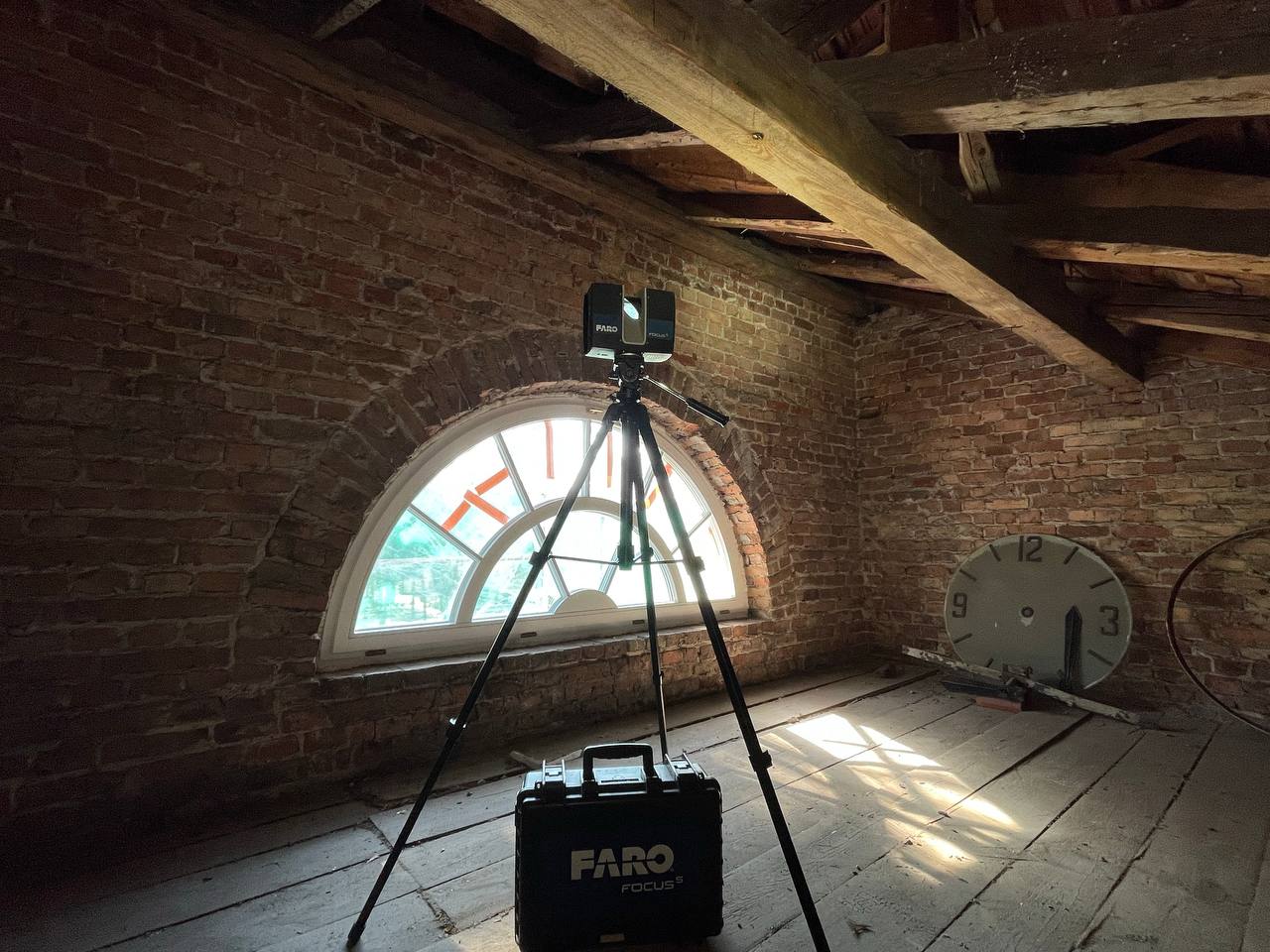
Historic monuments often contain damaged, weathered, or missing architectural elements that must be accurately reconstructed before restoration can begin. In many cases, original drawings no longer exist, and manual measurements cannot capture the complex geometry required for faithful reproduction.
At ScanM2, we provide Reverse Engineering Services for Monuments of Architecture and Archaeology, transforming laser scan data into precise CAD and 3D models for restoration, conservation, manufacturing, and digital preservation. Our specialists recreate complex architectural details while preserving the historical character and geometric accuracy of every heritage asset.
Contact Us Now for a Free Consultation!
Whether restoring castles, churches, museums, sculptures, or archaeological monuments, we help architects, conservators, and engineers rebuild historical elements with confidence.
When Reverse Engineering Is Required for Heritage Restoration
Reverse engineering is essential whenever original design information is unavailable or historical elements have been damaged over time.
Typical applications include restoring deteriorated stonework, recreating missing decorative features, reproducing ornamental components, repairing structural elements, and developing accurate digital models for heritage conservation projects.
Using data collected through our 3D Laser Scanning Services for Monuments of Architecture and Archaeology, every reconstructed element is based on measured geometry rather than assumptions.
Reverse Engineering Applications for Historical Monuments
Decorative Stonework
Reconstruction of damaged carvings, cornices, moldings, and ornamental details.
Columns and Capitals
Accurate digital reconstruction of historic structural and decorative columns.
Historic Façades
Modeling missing façade elements while preserving architectural proportions.
Sculptures and Monuments
Digital recreation of damaged sculptures and heritage monuments for restoration.
Architectural Details
Reconstruction of arches, windows, doors, balustrades, staircases, and complex historical features.
Our Reverse Engineering Workflow
Reality Capture
High-precision laser scanning captures existing geometry without physical contact.
Point Cloud Processing
Raw scan data is registered and optimized using our Point Cloud Processing Services for Monuments of Architecture and Archaeology.
Surface Reconstruction
Complex geometry is converted into accurate digital surfaces.
CAD and 3D Modeling
Our specialists develop engineering-ready CAD models and accurate 3D representations.
Model Verification
Every reconstructed component is compared against the original scan data to ensure maximum accuracy.
Project Delivery
Final models are delivered in formats suitable for restoration, manufacturing, BIM workflows, and engineering documentation.
Project Example: Restoring a 19th-Century Historic Residence
ScanM2 supported the restoration of a 19th-century historic private residence by creating accurate digital models of its existing architectural elements using advanced reverse engineering techniques.
Following high-precision laser scanning, our specialists reconstructed the building’s complex geometry, including façades, columns, decorative moldings, roof structures, and interior architectural details. The processed point cloud was transformed into precise CAD and 3D models, providing architects with reliable reference data for restoration and reconstruction.
House scanning Process & Results


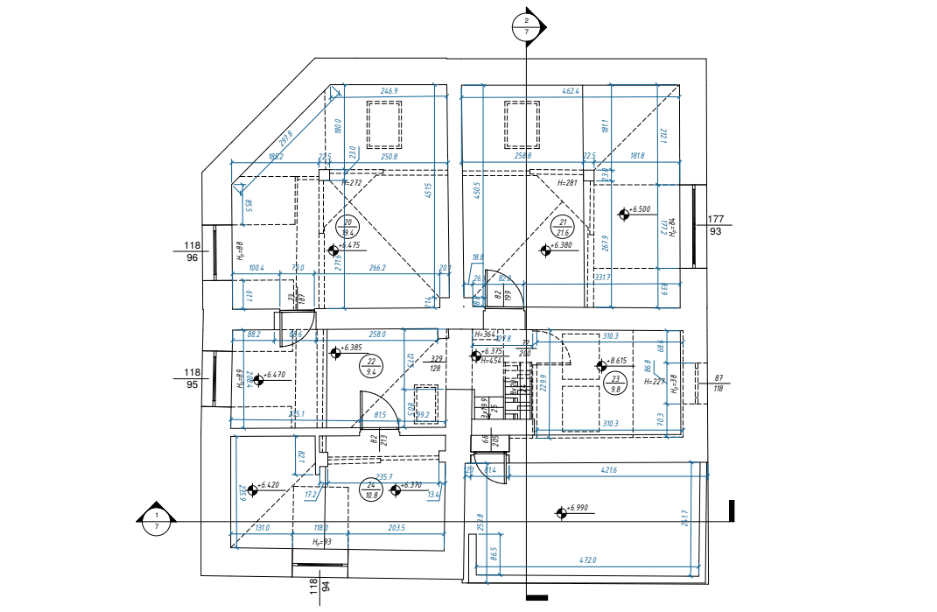
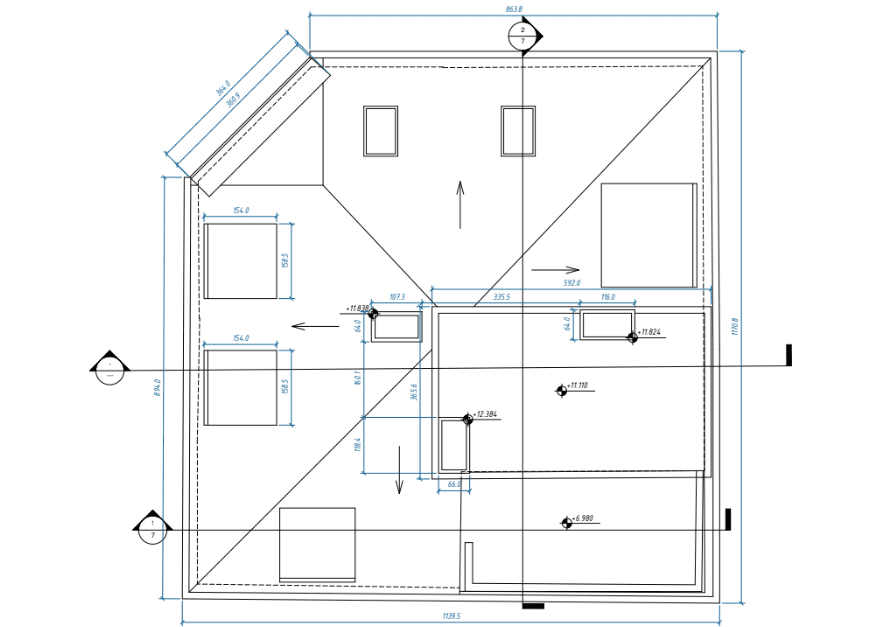


The resulting digital models enabled the project team to recreate damaged or irregular architectural features with confidence while preserving the original proportions and historical character of the residence. By combining reverse engineering with accurate reality capture, ScanM2 helped establish a dependable digital foundation for restoration planning and long-term heritage preservation.
Explore Our Complete Heritage Project Portfolio →
Deliverables for Heritage Reverse Engineering Projects
Depending on project requirements, we provide:
- CAD models
- Surface models
- Solid models
- Parametric models
- Manufacturing drawings
- STEP files
- IGES files
- STL files
- BIM-ready geometry
- Restoration documentation
Projects requiring complete digital documentation can also benefit from our Scan to BIM Services for Monuments of Architecture and Archaeology and BIM Modeling Services for Monuments of Architecture and Archaeology.
Benefits of Reverse Engineering for Heritage Conservation
Preserve Historic Geometry
Accurately reproduce complex architectural forms that would be difficult to measure manually.
Restore Missing Elements
Reconstruct damaged or missing components using verified scan data.
Improve Restoration Accuracy
Reduce uncertainty during restoration by providing reliable digital models.
Support Manufacturing
Prepare accurate geometry for CNC machining, stone carving, casting, or other fabrication methods.
Preserve Cultural Heritage
Create permanent digital records of architectural elements for future conservation and research.
Why Choose ScanM2 for Heritage Reverse Engineering
Reverse engineering historical monuments requires expertise in laser scanning, digital modeling, and architectural conservation.
ScanM2 combines advanced reality capture technologies with engineering experience to deliver accurate digital reconstructions that support restoration, manufacturing, BIM workflows, and long-term preservation of cultural heritage.

