

BIM Modeling for Hydroelectric power station
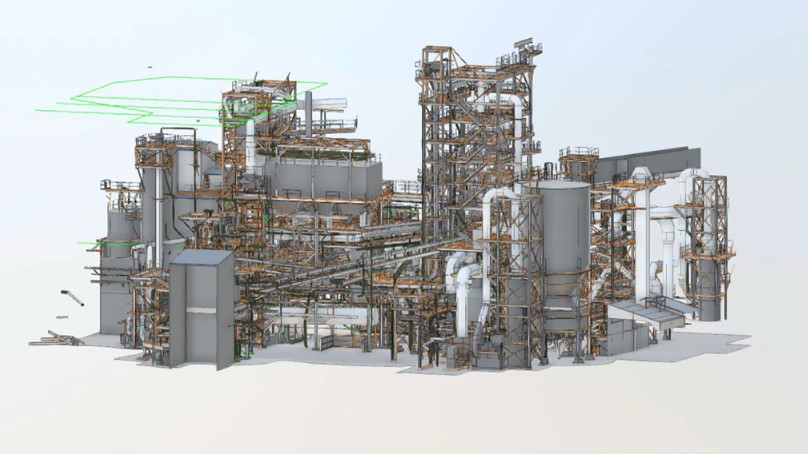
Hydroelectric power stations are complex engineering facilities where structural systems, heavy machinery, hydraulic infrastructure, and auxiliary equipment operate within interconnected spaces. Modernization and reconstruction projects require a coordinated understanding of these systems, particularly when new equipment must be integrated into existing buildings.
ScanM2 provides BIM Modeling Services for Hydroelectric Power Stations, developing digital models of powerhouse structures, turbine halls, mechanical installations, piping systems, and other relevant infrastructure. Our models support engineering coordination, renovation planning, equipment replacement, and existing-condition documentation.
Contact Us Now for a Free Consultation!
A Hydroelectric BIM Model Must Reflect Engineering Relationships
A useful BIM model of a hydroelectric facility is more than a three-dimensional representation of its buildings. It must provide the geometric and informational structure required to understand how equipment, supporting construction, technical spaces, and engineering systems relate to one another.
For example, replacing a generator may affect surrounding equipment clearances, access routes, lifting arrangements, piping connections, and structural interfaces. Modeling these elements together allows the engineering team to review spatial constraints before installation begins.
BIM Modeling for Turbine Halls and Powerhouse Buildings
The powerhouse is a central part of a hydroelectric installation. It contains major generating equipment, structural components, operational areas, and technical systems that must remain coordinated throughout the facility’s lifecycle.
Depending on the project, a powerhouse BIM model can include floor levels, walls, columns, beams, roof structures, equipment foundations, openings, platforms, and relevant architectural components.
This creates a common spatial reference for architects, structural engineers, mechanical specialists, and contractors involved in modernization or reconstruction.
Representing Turbines, Generators, and Major Equipment
Major generating equipment defines many of the spatial and operational constraints inside a hydroelectric powerhouse. BIM models can represent the external geometry, installation envelopes, mounting locations, and relevant interfaces of turbines, generators, and auxiliary machinery.
The required detail depends on the engineering objective. General coordination may require simplified equipment geometry, while a replacement project may require more detailed representation of connection points, surrounding supports, and installation clearances.
Where internal mechanical components are not visible or measurable, their geometry must be established using reliable manufacturer information, engineering drawings, or other verified sources rather than assumed from external measurements.
Structural BIM Models for Hydroelectric Reconstruction
Hydroelectric facilities contain reinforced concrete structures, steel framing, equipment foundations, access platforms, and other load-bearing elements. Their geometry can directly influence the feasibility of proposed equipment or building modifications.
Structural BIM modeling provides a coordinated representation of the elements required for the project. This may include:
- Powerhouse columns, beams, and structural walls
- Floor slabs and equipment openings
- Equipment foundations and supporting structures
- Steel platforms and access structures
- Roof framing and overhead structural elements
- Connections between existing and proposed construction
A geometric BIM model does not replace structural calculations or investigations of concealed reinforcement and material properties. These remain separate engineering requirements.
BIM for Penstocks and Hydraulic Infrastructure
Hydroelectric projects may involve large penstocks, pressure piping, intake structures, discharge passages, and associated civil works. These elements can have complex geometry and significant spatial relationships with the powerhouse and surrounding terrain.
BIM models can represent the required visible or otherwise verified geometry of hydraulic structures and associated equipment. This supports coordination of modifications, structural interfaces, access arrangements, and connections between different parts of the facility.
Submerged, concealed, or inaccessible geometry requires suitable supplementary survey information before it can be modeled reliably.
Mechanical and Piping BIM for Auxiliary Systems
In addition to major generating equipment, hydroelectric power stations contain numerous auxiliary mechanical installations. Cooling systems, pumps, valves, tanks, compressed-air equipment, and service pipelines may occupy densely arranged technical spaces.
Mechanical BIM models can represent relevant equipment and piping routes to support layout changes, replacement planning, and coordination with existing building structures.
Modeling these systems is particularly useful where new equipment must fit between existing pipework, structural supports, electrical installations, and maintenance access zones.
BIM Coordination Across Multiple Engineering Disciplines
Hydroelectric modernization involves specialists working with different types of technical information. Architectural, structural, mechanical, and electrical design models may need to be reviewed together to identify spatial conflicts.
A coordinated BIM environment allows project teams to compare the location and dimensions of relevant elements, review interfaces, and communicate proposed changes using a shared spatial reference.
When the required disciplines and systems are included in the modeling scope, BIM can support geometric clash detection between proposed installations and existing infrastructure.
Planning Equipment Replacement with BIM
Replacing major equipment in an existing hydroelectric facility requires careful consideration of the available space. Equipment dimensions are only one part of the problem: access openings, overhead clearances, existing platforms, adjacent machinery, and structural interfaces may all affect the installation process.
A BIM model can provide the geometric foundation for evaluating these constraints. New equipment models can be compared with the existing-condition model to support installation planning and identify potential spatial conflicts.
For individual components requiring geometric reconstruction, our Reverse Engineering Services for Hydroelectric Power Stations can support the development of project-specific component geometry.
Modeling Existing Conditions Before Power Plant Upgrades
Older hydroelectric installations may have undergone multiple equipment replacements, piping modifications, and structural alterations. Existing drawings do not always reflect the current physical configuration.
When reliable digital information is unavailable, 3D Laser Scanning Services for Hydroelectric Power Stations can capture accessible existing geometry for subsequent modeling.
The measured point cloud provides a spatial reference for reconstructing the relevant building and equipment elements. Our Scan to BIM Services for Hydroelectric Power Stations focus specifically on converting this survey information into a structured existing-condition model.
BIM Models for Individual Units or Entire Facilities
Not every project requires a complete model of the hydroelectric power station. Modeling scope should follow the engineering task and the areas affected by planned work.
A project may focus on one turbine-generator unit, an auxiliary equipment room, a technical gallery, or a specific piping installation. Larger reconstruction programs may require coordinated models covering multiple buildings and infrastructure zones.
Defining the model boundaries early helps avoid unnecessary production effort while ensuring that the relevant interfaces are included.
Level of Development for Hydroelectric BIM Models
Different engineering tasks require different levels of geometric and informational detail. A model intended for general facility planning does not need the same component representation as a model used to coordinate equipment replacement.
Before production, the project team should define which elements need to be represented, how accurately their geometry must be modeled, and what additional information is required.
Greater detail is not automatically better. The objective is to create a model that contains the information necessary for the intended engineering decisions.
Using BIM Models for Renovation and Reconstruction Planning
Hydroelectric reconstruction may involve new equipment foundations, modified access platforms, changes to building openings, replacement piping, or alterations to existing technical spaces.
BIM models allow designers to review these proposed changes in relation to the existing facility. The model can serve as a common geometric reference during design development, technical coordination, and preparation of construction documentation.
BIM Modeling Workflow for Hydroelectric Power Stations
The modeling process is organized around the project’s technical objectives rather than a fixed level of detail for every facility.
- Define model requirements. Establish the project scope, engineering disciplines, required components, and deliverable formats.
- Review available source data. Evaluate existing drawings, point clouds, equipment information, and other relevant documentation.
- Prepare geometric references. Organize the source information and establish the coordinate system and model structure.
- Develop BIM elements. Model the required architectural, structural, mechanical, and infrastructure components.
- Coordinate model geometry. Review spatial relationships and interfaces between the included systems.
- Perform quality control. Check the model against available source information and the agreed requirements.
- Deliver project files. Prepare the BIM model and associated outputs in the required formats.
Preparing Point Cloud Data for BIM Development
When the model is developed from laser scanning data, point cloud quality directly affects the efficiency of geometric reconstruction. Scan positions must be registered, aligned, and organized so that modelers can interpret the relevant surfaces and components.
Our Point Cloud Processing Services for Hydroelectric Power Stations prepare measured datasets for BIM production, CAD documentation, and engineering use.
BIM Modeling or 2D As-Built Documentation?
A full BIM model is not always necessary for a limited engineering task. When the primary requirement is to document existing dimensions, floor layouts, sections, elevations, or equipment locations, conventional measured drawings may provide the appropriate result.
Our As-Built Drawings Services for Hydroelectric Power Stations support projects requiring accurate 2D documentation rather than a coordinated information model.
Hydroelectric BIM Modeling Deliverables
The deliverable package is determined by the modeling scope and intended engineering workflow. It can include:
- Coordinated 3D BIM model of the required facility areas
- Architectural and structural BIM components
- Selected mechanical equipment and piping models
- Existing-condition geometry for modernization planning
- Model files in agreed native and exchange formats
- Plans, elevations, and sections where required
- Supporting model documentation as defined in the project scope
Develop a BIM Model Around Your Hydroelectric Project
The value of a hydroelectric BIM model depends on how effectively it supports the project’s engineering requirements. Whether the objective is equipment replacement, powerhouse reconstruction, piping coordination, or facility documentation, the model should contain the geometry and information needed for the next project stage.
ScanM2 develops project-specific BIM models for complex industrial and energy facilities, combining measured existing conditions with structured digital geometry for engineering coordination and modernization planning.

