

Reverse Engineering for Churches and temples
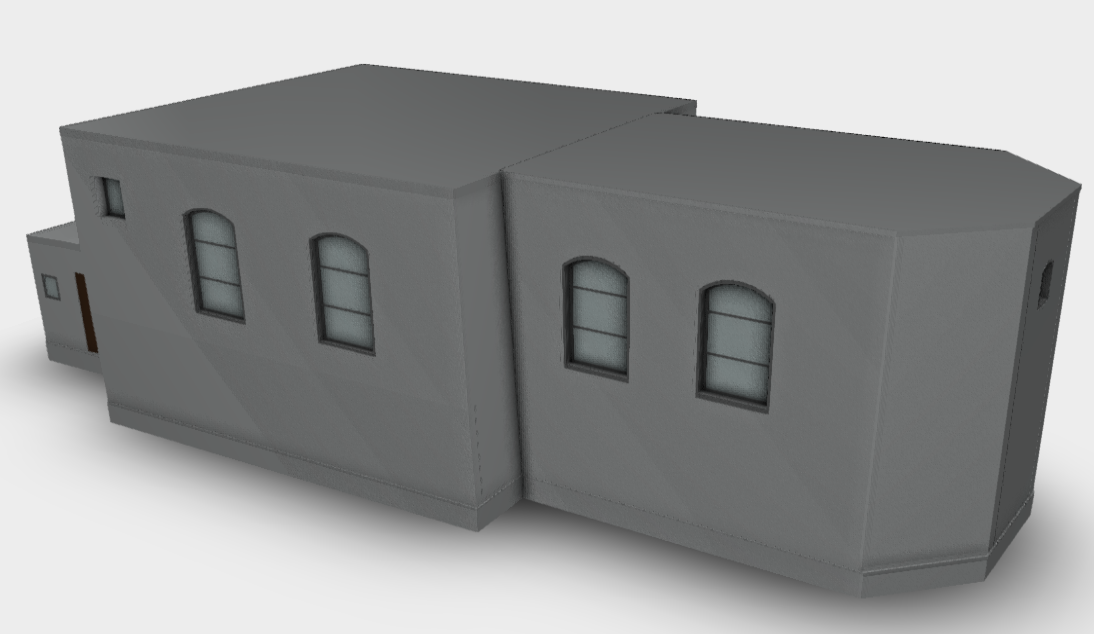
Historic churches and temples often contain unique architectural elements that have been damaged, altered, or completely lost over time. Original construction drawings are frequently unavailable, making it difficult to reproduce decorative features or structural components with the accuracy required for restoration. Reverse engineering allows these elements to be digitally reconstructed using precise survey data.
At ScanM2, we provide Reverse Engineering Services for Churches and Temples, transforming laser scan data into highly accurate 3D models of architectural details, structural components, and historic building elements. Our solutions support architects, engineers, conservation specialists, stone workshops, and restoration contractors working to preserve cultural heritage.
Contact Us Now for a Free Consultation!
Why Reverse Engineering Is Important for Historic Churches
Many historic churches have undergone centuries of repairs, renovations, and reconstruction. Decorative features may be partially damaged, structural elements may have deformed, and original design documentation is often unavailable.
Using reverse engineering, existing geometry captured during 3D Laser Scanning for Churches and Temples can be converted into accurate digital models that reproduce the building’s current condition or recreate missing architectural elements for restoration.
Challenges of Reverse Engineering Heritage Buildings
Complex Historic Geometry
Domes, vaulted ceilings, arches, columns, bell towers, and stone façades rarely follow perfectly regular geometry. Every architectural element requires careful digital reconstruction.
Missing Architectural Details
Many churches have lost decorative ornaments, sculptures, cornices, capitals, or façade details due to weathering, structural damage, or previous restoration work.
High Accuracy Requirements
Even small deviations can affect the production of replacement elements or the coordination of restoration works.
Preservation Standards
Reverse engineering for protected heritage buildings must preserve the original architectural character while producing engineering-grade digital models.
Our Reverse Engineering Workflow
Every project follows a structured workflow developed by ScanM2.
Laser Data Collection
Projects begin with 3D Laser Scanning for Churches and Temples, capturing precise geometry of the building and its architectural features.
Point Cloud Processing
The collected scan data is registered and optimized through Point Cloud Processing Services for Churches and Temples, producing a clean and accurate point cloud.
3D Reconstruction
Our specialists recreate architectural components using advanced CAD and surface-modeling software. Missing or damaged elements can be reconstructed based on the surrounding geometry and existing historical evidence.
Quality Verification
Each reconstructed model is compared with the original point cloud to ensure dimensional accuracy before delivery.
Historic Church Reverse Engineering Project
A restoration project involved a historic church with several damaged stone ornaments and decorative façade elements that could no longer be reproduced using traditional measurements.
Using high-resolution laser scan data, ScanM2 reconstructed the original geometry of the damaged features and produced accurate 3D CAD models for manufacturing replacement components. The digital models allowed restoration specialists to recreate architectural details while preserving the historical appearance of the building.
Examples of Reverse Engineering for Churches and Temples
Church and Temple BIM Modeling Projects


What Can Be Reconstructed
| Architectural Element | Application |
|---|---|
| Domes | Restoration and reconstruction |
| Bell Towers | Structural rehabilitation |
| Stone Façades | Heritage conservation |
| Arches and Vaults | Structural analysis |
| Columns and Capitals | Replacement manufacturing |
| Decorative Ornaments | Conservation projects |
| Sculptures | Digital preservation |
| Roof Structures | Engineering assessment |
| Historic Details | Accurate reproduction |
Applications of Reverse Engineering
Heritage Restoration
Reverse engineering allows damaged architectural elements to be accurately recreated while preserving their original geometry.
Replacement Manufacturing
Digital models can be used for CNC machining, stone carving, casting, and fabrication of replacement components.
Structural Rehabilitation
Engineers use reconstructed models to analyze damaged structural elements before repair.
BIM Development
Reverse-engineered geometry can be integrated into BIM Modeling Services for Churches and Temples and Scan to BIM for Churches and Temples, improving project accuracy.
Digital Heritage Preservation
Historic churches can be digitally archived for future restoration, research, and long-term conservation.
Benefits of Reverse Engineering
Working with ScanM2 provides:
- highly accurate reconstruction of historic architecture
- digital reproduction of damaged or missing elements
- engineering-grade CAD models
- improved restoration accuracy
- reduced manual measurements
- compatibility with CAD, BIM, and manufacturing software
- support for conservation and heritage authorities
- reliable documentation for future restoration work

