

Scan to BIM for Condensation Electric Power Plant
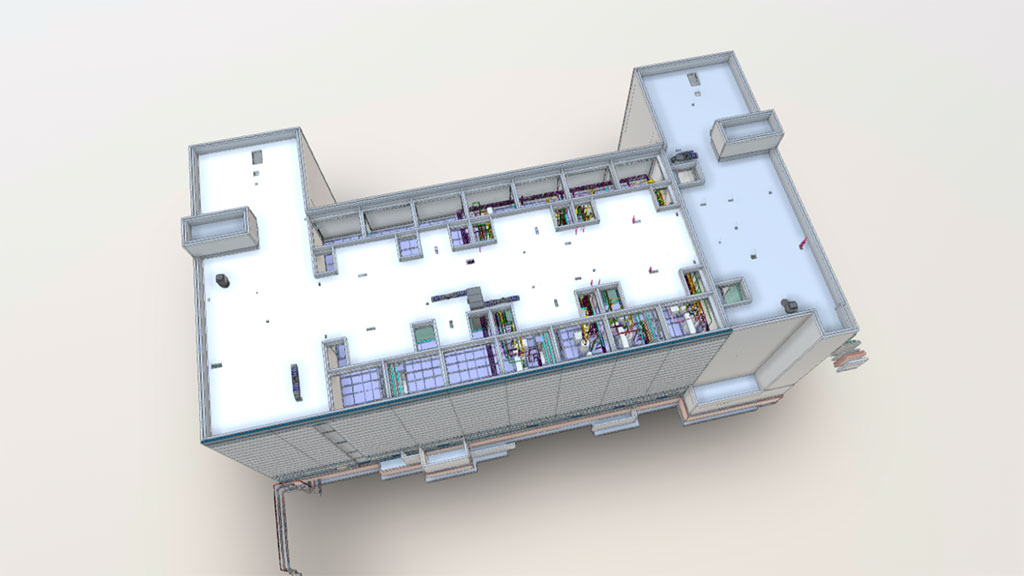
Engineering teams modernizing a condensing power plant need more than a collection of drawings and isolated equipment measurements. They need a coordinated view of existing structures, turbine installations, condensers, and steam-cycle systems so that proposed modifications can be evaluated against the actual facility configuration.
ScanM2 provides Scan to BIM Services for Condensing Power Plants, converting registered laser scanning data into structured existing-condition BIM models. These models support turbine and condenser replacement, piping modifications, building reconstruction, and multidisciplinary engineering coordination.
Contact Us Now for a Free Consultation!
A Coordinated Digital Model Before Reconstruction Begins
Condensing power plants contain interconnected systems that cannot always be redesigned independently. A change to a turbine installation may affect condenser connections, supporting structures, adjacent piping, or maintenance access.
An existing-condition BIM model brings relevant plant geometry into a common digital environment. Engineers can review spatial relationships, compare proposed equipment with existing installations, and coordinate changes between technical disciplines.
The model is developed from measured source data rather than assuming that original construction drawings accurately represent the current facility.
What Information Should the BIM Model Include?
The content of the model depends on the planned intervention. For a condensing power plant, the most important elements often relate to generating equipment, steam-cycle installations, and the structures supporting them.
| Model area | Existing-condition elements | Typical use |
|---|---|---|
| Turbine-generator unit | Equipment envelopes, foundations, adjacent platforms | Equipment replacement coordination |
| Condenser installation | Condenser housing, accessible connections, surrounding structures | Condenser modernization and layout planning |
| Steam piping | Pipe routes, bends, valves, selected supports | Connection and routing coordination |
| Powerhouse structure | Columns, beams, floors, openings, access platforms | Structural interface review |
| Auxiliary systems | Pumps, heaters, tanks, and selected piping | Mechanical system upgrades |
The agreed model requirements determine which components are included, how they are represented, and what technical attributes accompany their geometry.
Condenser Geometry as a Key Modeling Priority
The condenser is an essential part of the steam cycle. Its location and connections influence the arrangement of the turbine area, cooling-water systems, condensate extraction equipment, and associated piping.
During modernization, engineers may need to assess the dimensions of an existing condenser housing, the position of accessible connection interfaces, and the space available for replacement equipment.
Scan to BIM can reconstruct the relevant external geometry from suitable point cloud measurements. Internal tube arrangements, concealed components, and technical operating parameters require verified equipment records or additional investigation.
Modeling the Turbine Hall Around Engineering Interfaces
A turbine hall model should be developed around the engineering tasks it must support. For example, replacing a turbine-generator unit may require detailed representation of equipment foundations, nearby structural elements, floor elevations, access openings, and overhead clearance zones.
Other parts of the building may only require simplified geometry. This approach focuses modeling effort on the interfaces most likely to influence design decisions.
Integrating Steam and Feedwater Systems into the Model
Steam and feedwater systems extend across multiple equipment areas and elevations. Their physical routes may have been altered during previous upgrades, creating differences between historical drawings and the installed configuration.
Registered point clouds provide geometric references for modeling visible pipe routes, bends, valves, supports, and nearby obstacles.
Where engineering metadata is required, it should be obtained from reliable plant records rather than inferred solely from surface geometry.
Three Levels of Modeling Scope
Not every condensing power plant project requires the same model coverage. The appropriate scope can be organized around the intended reconstruction activities.
Equipment-Focused Model
A limited model covering one turbine, condenser, pump installation, or other major component, together with the nearby geometry relevant to replacement or modification.
Building or Generating Unit Model
A broader model representing the turbine hall, boiler area, structural systems, and selected mechanical installations associated with a generating unit.
Coordinated Multi-Area Model
A model combining multiple buildings or technical zones within a consistent coordinate framework, supporting larger modernization programs and coordination between engineering work packages.
How Existing-Condition BIM Supports Design Coordination
The primary engineering value of Scan to BIM is the ability to compare planned modifications with measured existing conditions.
When new equipment and proposed piping are represented in compatible models, engineers can identify potential geometric conflicts with existing structural members, machinery, and technical installations.
This can support:
- Evaluation of replacement equipment envelopes
- Review of proposed piping routes and connection areas
- Identification of spatial conflicts with existing structures
- Coordination between mechanical and structural design teams
- Planning of access openings and maintenance clearances
- Preparation of model-based engineering documentation
Distinguishing Measured Geometry from Assumed Information
Laser scanning captures accessible surfaces, not every physical characteristic of a power plant component. Insulation can conceal pipe geometry, equipment housings can hide internal mechanisms, and structural finishes may obscure embedded elements.
During BIM development, it is important to distinguish geometry reconstructed from measurements from information derived from drawings, manufacturer records, or engineering assumptions.
Where critical features cannot be verified, additional measurements or technical investigation may be required before the model is used for detailed design.
Developing BIM Models from Existing Point Clouds
A new scanning campaign is not always necessary. Existing registered point clouds may be suitable for BIM development if they provide sufficient coverage and geometric detail.
Before modeling, the available data should be reviewed for registration quality, coordinate consistency, completeness, and compatibility with the intended modeling workflow.
When additional measurements are needed, our 3D Laser Scanning Services for Condensing Power Plants can provide updated survey data for the relevant facility areas.
Our Scan to BIM Production Workflow
The production process is structured around the engineering model requirements rather than simply converting every visible point into a BIM element.
- Define the intended use. Establish the modernization tasks, required disciplines, model boundaries, and geometric accuracy expectations.
- Evaluate source measurements. Review point clouds, registration information, and existing technical records.
- Establish the model framework. Configure coordinates, levels, model organization, and relevant engineering categories.
- Reconstruct existing elements. Develop the required equipment, structural, piping, and building geometry.
- Review geometric consistency. Compare modeled components with the measured source data.
- Prepare coordinated outputs. Deliver the agreed BIM files and relevant model documentation.
Model Deliverables for Engineering Teams
The final package is defined by the project scope and the software requirements of the design team.
- Existing-condition BIM models of selected generating unit areas
- Structured models of turbine hall and condenser surroundings
- Relevant piping and mechanical equipment geometry
- Architectural and structural model elements
- Native BIM files and agreed exchange formats
- Model-derived plans and sections where specified
- Documentation of relevant modeling limitations
A Digital Foundation for Phased Power Plant Modernization
Condensing power plant reconstruction may involve several stages, from turbine and condenser upgrades to modifications of boiler equipment and auxiliary systems.
A coordinated existing-condition BIM model can support successive engineering activities, provided that the digital information is updated when the physical facility changes.
ScanM2 develops Scan to BIM models for complex energy infrastructure, providing measured geometric references for modernization planning, design coordination, and technical documentation.

